
Alleged Capcom leak details how Monster Hunter Wilds will run on the future Nintendo Switch 2


New unofficial information about the highly anticipated Monster Hunter Wilds has surfaced online, this time focusing on a rumored successor to Nintendo Switch, tentatively called Switch 2. An alleged technical data leak details Capcom’s efforts to optimize the ambitious title for Nintendo’s hardware, revealing a set of graphical strategies to ensure stable performance.
The information, circulating on international forums, points to a multifaceted approach that aims to balance visual fidelity with gameplay fluidity, a crucial aspect for the action franchise. Embora to Capcom has officially confirmed the game only for PlayStation 5, Xbox Series
The veracity of the leak has not yet been confirmed by the developer, who remains silent on the matter. However, the technical details presented are consistent with the known capabilities of the company’s graphics engine and common optimization practices in the gaming industry, which lends a degree of plausibility to the claims.
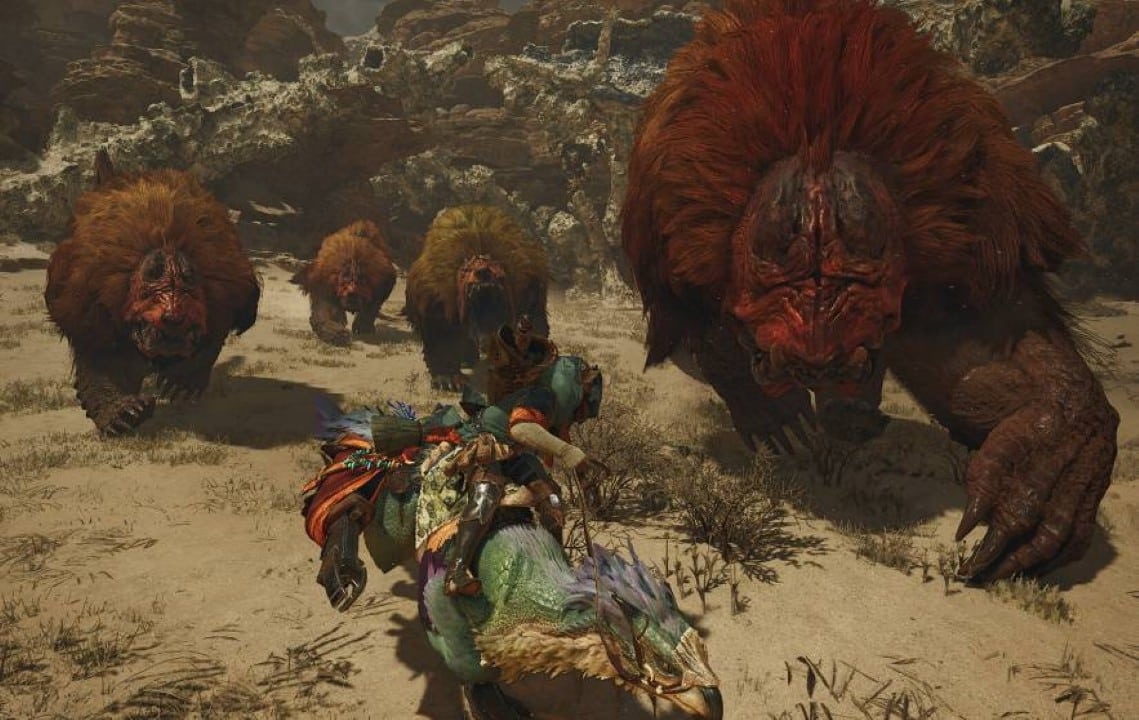
The flexibility of RE Engine as a pillar of optimization
The central point of the alleged leak is the intensive use of RE Engine, Capcom’s proprietary graphics engine. The document suggests that the engine’s scalable architecture is key to allowing Monster Hunter Wilds to run competently on the Nintendo Switch 2 hardware, which, while expected to be a significant leap forward over its predecessor, will still compete with more powerful desktop consoles.
Capcom has already demonstrated the versatility of RE Engine in the original Nintendo Switch with titles like Monster Hunter Rise. Esse game was praised for its performance and visual quality, proving that the engine can be adapted to different hardware specifications without compromising the core gameplay experience.
For the version of Wilds in Switch 2, the strategy would be to take this scalability to a new level. The developer would be focused on optimizing memory usage and processing power to deliver the vast dynamic ecosystems promised in the trailers, but with specific technical adjustments for the platform.
These adjustments would not be limited to simple reductions in the quality of textures or models. The leak indicates deep work on the engine’s core to manage resources more efficiently, ensuring the action remains fluid even during confrontations with multiple large monsters on screen.
Specific techniques for console performance
The leaked document describes several optimization techniques that are being implemented. One of them is a feature called “FastLoadMode”, designed to manage the loading of data from extensive maps in a more agile way. Isso would minimize interruptions and ensure smoother transitions between different areas of the game world, one of the main attractions of Wilds. Além In addition, the Nível of
Another crucial point would be the rendering system. Capcom would be using advanced “occlusion culling” methods, a technique that prevents the processing of objects that are not in the player’s field of vision. In a game with dense, overgrown environments like Monster Hunter Wilds, this approach is critical to keeping the frame rate stable. The combination of these strategies aims to ensure that the experience in Switch 2 is robust, even if it does not achieve the same graphical fidelity as the PlayStation 5 and Xbox Series X|S versions.
Performance comparisons and visual expectations
According to the leaked information, the performance target for Monster Hunter Wilds in Nintendo Switch 2 would be equivalent to the “low to medium” settings of the PC version. Isso suggests that Capcom would prioritize a stable frame rate, possibly 30 frames per second (FPS), over a higher native resolution.
This goal is considered realistic and in line with what is expected from the new Nintendo hardware. Para players, this would translate into a smooth and responsive gaming experience, which is more important in an action title than 4K resolutions or cutting-edge graphical effects like ray tracing, which would likely be absent or very limited in this version.
The visual quality would still be a notable leap compared to any game in the series previously released on a Nintendo console. Espera The vibrant art direction and detailed monster models, characteristics of the franchise, are preserved, even with the graphical optimizations necessary for the platform.
Resource management in dynamic environments
One of the biggest technical challenges of Monster Hunter Wilds is the promise of more dynamic and interactive ecosystems. The trailers suggest the presence of a greater number of monsters simultaneously on screen, in addition to extreme weather events and environments that react to the actions of players and creatures. Para o Nintendo Switch 2, managing all these elements would require an extremely intelligent use of hardware resources. The leak points to a rendering system that dynamically prioritizes the most important elements in the scene, such as the player and monsters in direct combat. Objetos and visual effects that are more distant or less crucial to gameplay would be reduced in quality in real time to free up processing power. Essa approach, known as dynamic resolution, adjusts the number of pixels rendered each frame to maintain performance, resulting in an image that may appear slightly less sharp in moments of high intensity, but which ensures the fluidity of the action, avoiding sudden drops in frame rate that could harm the player’s experience.
The source and credibility of the information
It is important to note that the information originated on discussion forums and has not been officially verified. Portanto, should be treated as rumors until Capcom or Nintendo pronounce on a possible version of Monster Hunter Wilds for Switch 2.
The strategic positioning for Nintendo
Launching a title of the caliber of Monster Hunter Wilds in the successor to Switch would be a huge victory for Nintendo. The franchise has a massive and loyal fan base, especially on handhelds, as proven by the smash success of Monster Hunter Rise.
Securing the presence of one of the biggest third-party releases early in the new console’s lifecycle would significantly strengthen its game library and attract a broad audience seeking large-scale experiences in a hybrid format.
Implications for the future of the franchise
The existence of a version for Switch 2 would also reinforce Capcom’s multiplatform strategy for the series. By covering all major platforms, the company would maximize the game’s reach, allowing different audiences to experience its new take on monster hunting.
The long-standing partnership between Capcom and Nintendo suggests that a launch on Switch 2 is highly likely. The question that remains is how well the experience will translate to hardware, and the details in this leak, if true, offer an optimistic glimpse into the developer’s efforts to achieve that goal.



