
BYD boss rules out hybrid for Dolphin Mini due to lack of demand in China and viability

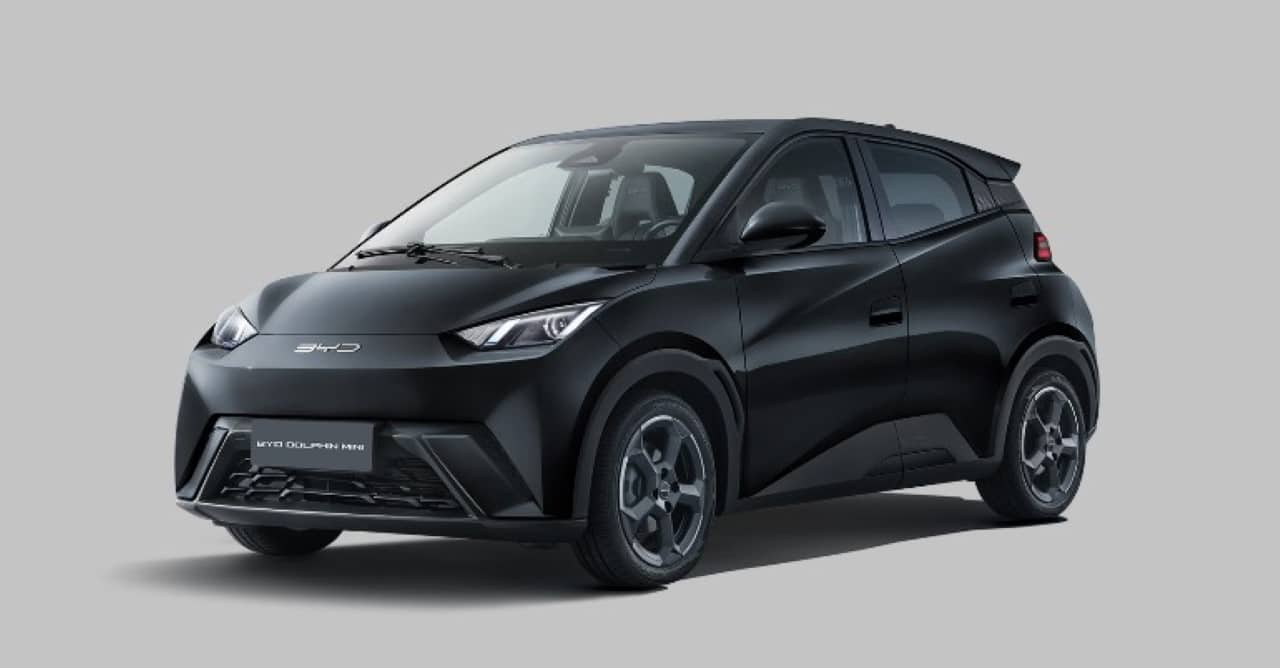
BYD’s senior vice president on the Brasil, Alexandre Baldy, ruled out the possibility of a plug-in hybrid version for the Dolphin Mini. The statement came in a recent interview, where the executive responded directly about the idea of adapting the electric subcompact hatch to a PHEV system. Ele highlighted that the project was evaluated by the research and development team, but there is no forecast for this configuration.
The decision is mainly based on the reality of the Chinese market, the world’s largest in new energy vehicles. Lá, 88% of hatchbacks sold are electric, especially those for urban use like the Dolphin Mini. The purely electric configuration meets daily needs well, making the inclusion of a combustion engine unnecessary.
Despite the wave of transformations from electric vehicles to plug-in hybrids in various segments, the Dolphin Mini maintains its identity as a 100% battery-powered vehicle. Essa choice preserves the mechanical simplicity and competitive costs that contribute to your success in Brasil.

Technical and market reasons for exclusion
The inclusion of a combustion engine and additional components for a hybrid system would significantly increase the price of the model. In the Chinese market, equivalents like the Wuling Hongguang Mini EV cost very low in direct conversion, and adding hybrid traction would eliminate the economic advantage.
The compact size of the Dolphin Mini also presents an obstacle. With just 3.78 meters long and a wheelbase of 2.50 meters, space in the engine compartment is already tight with the electrical package. Adaptar a hybrid powertrain, even BYD’s smallest, would require significant redesign and compromise efficiency.
Comparison with other BYD models
BYD advances with hybrid versions in other vehicles for the Brasil in 2026. Modelos like Yuan Pro and
These configurations suit more varied usage profiles, including long trips where electrical recharging may be limited. The focus on plug-in hybrids in these segments reflects the brand’s strategy of offering alternatives for different demands.
Dolphin Mini continues to prioritize the urban environment. Sua electric autonomy and low recharging cost position it as an ideal option for short, daily trips.
Leadership of Dolphin Mini in Brasil
The electric hatch is consolidated as the best-selling battery-powered vehicle in the country. In 2025, it comfortably led the tram rankings, benefiting from local assembly in Camaçari (BA) since the end of last year. The 2026 version, the only GS for R$119,990 with five seats, maintains affordable prices and standard features.
Recent updates have improved dynamics and equipment, whilst preserving original features. National production reduces logistical costs and strengthens competitiveness against rivals.
Chinese market conditions and implications
At China, urban subcompact hatches are mostly electric due to efficiency and charging infrastructure. Marcas as well as Chery, Geely and Wuling offer similar options, all without a combustion engine, reinforcing the viability of the pure electric format.
Including hybrids in Dolphin Mini could make the product more expensive globally. The lack of scaled demand in the main market makes development unfeasible in economic terms.
Future evolution perspective
Although currently discarded, the Chinese automotive industry is highly dynamic. Caso If there is greater pressure from external markets or changes in the economic account, BYD could reevaluate the project.
For now, the Dolphin Mini continues as a dedicated electric vehicle. Essa strategy maintains its leading position in the entry-level electrified segment in the Brasil.
Focus on urban efficiency
The model perfectly suits city use. Sua battery
Energy efficiency stands out in the Brazilian market. The cost per kilometer driven is below R$0.09 in average fare, reinforcing the attractiveness for consumers concerned about savings.
BYD local assembly and expansion
The Camaçari factory begins full production in July 2026. Isso includes expansion to more models, with a focus on electrification.
Dolphin Mini directly benefits from this structure. Local assembly allows for quick adjustments and competitive pricing.
Competition in the electrical segment
Rivals emerge in the entry-level segment. Modelos and Geely EX2 compete for space, but Dolphin Mini maintains an advantage in sales and recognition.
The absence of a hybrid version does not compromise its position. The electric focus serves the majority of urban buyers who prioritize cost-benefit and sustainability.
Preserved technical characteristics
The compact electrical assembly optimizes internal space. With five real seats, the hatch offers practicality for small families.
Safety features include six airbags and electronic assistants. The suspension adjusted in the 2026 line improves comfort on uneven surfaces.
BYD Global Strategy
The brand differentiates lines by region. Na Europa, PHEV hatches appear in similar segments, but adapted to local demands with greater mixed infrastructure.
At Brasil, Dolphin Mini reinforces the commitment to affordable trams. The decision avoids unnecessary complexity in a high-volume urban model.



