
Comet 3I/Atlas exposes weaknesses and Avi Loeb defends planetary defense system with lunar bases


The passage of comet 3I/Atlas by Sistema Solar reinforced the warning of astrophysicist Avi Loeb about the urgent need for a global advanced observation network. The object, the third confirmed interstellar visitor, revealed limitations of current instruments in accurately identifying bodies from other stellar systems. Loeb, professor at Universidade Harvard, defends the construction of telescopes at Lua and interception missions to distinguish natural rocks from possible technological artifacts.
Discovered in July 2025 by the ATLAS system in Chile, comet 3I/Atlas presented a hyperbolic trajectory that confirms an origin external to Sistema Solar. Observações from the Hubble telescope and other probes recorded anomalies such as non-gravitational accelerations and variations in chemical composition. Esses data fuels the debate about the current capacity to monitor objects that cross space near Terra.
The scientific community has been following the topic since the detection of ‘Oumuamua in 2017 and 2I/Borisov in 2019. The arrival of a third object in less than a decade indicates that Sistema Solar receives interstellar visitors more frequently than previously estimated. Essa reality demands more robust infrastructure for collecting detailed data.
Limitations of current observation methods
Ground-based telescopes face barriers imposed by the atmosphere, which distorts images and reduces spatial resolution. Objetos like 3I/Atlas moves at high speed, offering short observation windows that make complete analysis difficult. The lack of high-definition images prevents accurate determination of shape, composition and internal structure.
The limited cadence of current observatories compromises continuous monitoring of the sky. Quando an interstellar object is detected, the time available for adjustments and data collection is usually insufficient. Isso generates uncertainty in the interpretation of phenomena such as non-gravitational accelerations, which may result from the release of gases or other processes.
Comet 3I/Atlas exhibited brightness variations and signs of rapid rotation after perihelion in October 2025. Dados of Hubble captured rare alignment in January 2026, but the distance still restricted the quality of the images. Especialistas highlight that these structural restrictions affect not only scientific research, but also the assessment of potential risks.
Integrated and coordinated network proposal
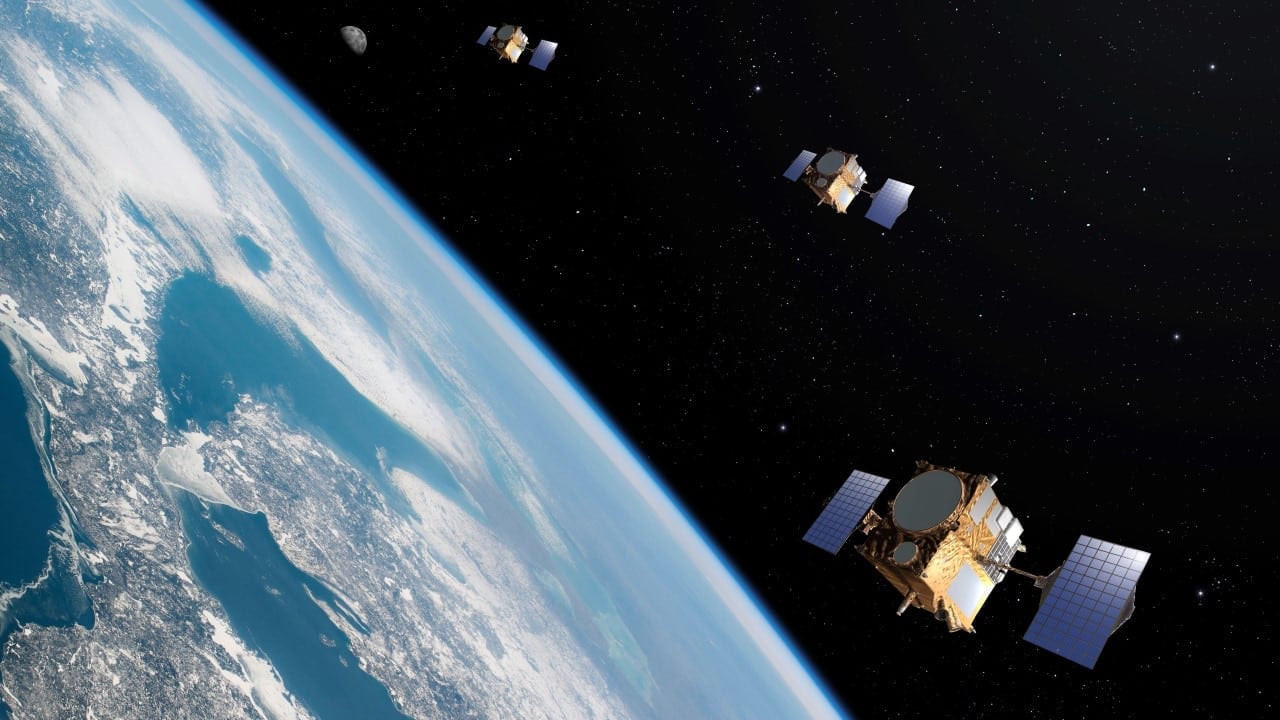
Avi Loeb and collaborators present a scalable observational architecture model that combines terrestrial and space equipment. The system provides real-time operation, with automatic data exchange between observatories to maximize monitoring time. The approach seeks to eliminate gaps in sky coverage and speed up responses to new detections.
The installation of a second observatory similar to the Vera C. Rubin in the northern hemisphere would guarantee complete monitoring of the celestial sphere. Dois powerful telescopes on opposite sides of the equator would significantly increase the discovery rate of fast, faint objects. Essa duplication represents the first step towards continuous coverage.
- Early detection of hyperbolic trajectories;
- Accurate calculation of orbits in a few hours;
- Automatic prioritization of targets of high scientific interest;
- Immediate activation of complementary resources.
Global coordination would avoid duplication of efforts and focus resources on priority targets. Loeb emphasizes that current infrastructure is not keeping up with the expected increase in the detection rate of interstellar objects. The proposed network would resolve this gap systematically.
Advantages of the lunar telescope
The lunar surface offers an ideal environment for high-resolution optical observations due to the absence of atmosphere and low seismic activity. An interferometer installed there would produce images capable of revealing details of objects at distances of millions of kilometers. Essa capacity would allow it to identify surface and structural features with unprecedented precision.
Telescopes at Lua would overcome terrestrial limitations and provide definitive data on the nature of interstellar visitors. Clear Imagens would distinguish natural form from possible artificial configurations on meter scales. The stability of the lunar soil would facilitate long-term operations without interference.
Current technology already allows the transport and assembly of instruments on Lua through robotic missions. Projetos and Lunar Crater Radio Telescope demonstrate the technical feasibility of large selenite structures. The gradual implementation would start with compact modules and progress to larger arrays.
Lunar resolution would eliminate ambiguities seen in previous cases like ‘Oumuamua. Cientistas would obtain direct evidence about composition and dynamics without relying exclusively on remote spectroscopy. Esse advance would represent a qualitative leap in the astronomy of interstellar objects.
Selective interception missions
The top level of the proposal involves sending probes to directly encounter selected objects. Missões of this type would collect physical samples and proximity images only in cases of high scientific value or potential risk. Early planning, based on early detection, would enable trajectory adjustments.
The hierarchy of priorities would direct limited resources to the most relevant targets. Objetos that exhibit significant anomalies would receive special attention for definitive clarification. The maneuverability of modern ships allows for course corrections when the target is identified early enough.
Recent experiences with missions such as DART and OSIRIS-REx demonstrate technological maturity for rapid encounters. Adaptar such expertise for interstellar targets would require advance planning and timely launch. The high cost would justify selective application in a few cases per decade.
Context of planetary defense
The possibility, however remote, of interstellar objects containing functional technology motivates early warning systems. Loeb classifies unlikely high-impact events as Cisnes Negros that deserve adequate preparation. The proposed network would meet both scientific and security objectives.
Dual-use infrastructure would benefit both astronomical research and risk monitoring. Agências Spaces already maintain defense programs against asteroids that could be expanded. The inclusion of interstellar objects would broaden the scope without requiring completely new structures.
The international community debates the governance of sensitive data obtained through this network. Clear Protocolos would ensure transparency and responsible sharing of information. The focus remains on collecting solid scientific evidence regardless of the origin of objects.
The experience with 3I/Atlas reinforces the urgency of investments in advanced infrastructure. Recent Observações revealed a 7.1-hour rotation and unusual chemical composition after perihelion. Esses data, although compatible with natural processes, highlights the need for more powerful tools.
Necessary technological advances
The development of lunar interferometers requires progress in adaptive optics and data transmission. Parcerias between space agencies and the private sector would accelerate implementation. NASA’s Missões Artemis pave the way for the installation of scientific equipment on Lua in the coming years.
The integration of artificial intelligence will optimize the automatic analysis of large volumes of data. Algoritmos will identify anomalous patterns in real time and suggest priority targets. Essa automation will compensate for the increasing amount of detections expected with operational Vera C. Rubin.
Comet 3I/Atlas will continue to be monitored as it moves away from Sol on its escape trajectory. Long-range Observações will provide additional data on its evolution. The object serves as a case study for future infrastructure planning.



