Flamengo’s Arrascaeta challenges arbitration analyst over São Paulo penalty decision, sparking debate

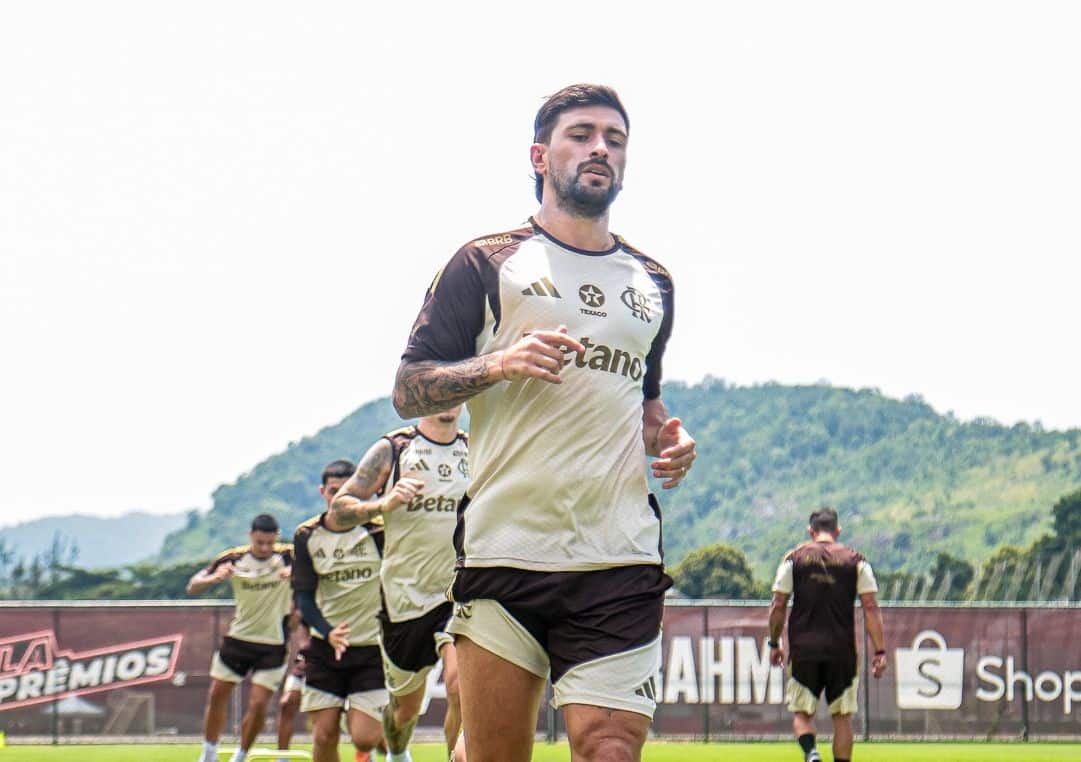
Giorgian de Arrascaeta, Flamengo’s number 10, publicly challenged arbitration analyst Paulo Caravina on social media recently. The dispute centers around a controversial penalty decision from the Brasileirão match against São Paulo, played on Wednesday, February 28. Flamengo ultimately lost the opening-round game 2-1 at Morumbis.
The contentious moment occurred late in the match when Arrascaeta, after a rebound from goalkeeper Rafael, attempted a shot but fell, claiming contact from São Paulo defender Alan Franco. Referee Wilton Pereira Sampaio allowed play to continue, dismissing appeals for a penalty.
Caravina subsequently analyzed the incident, stating it was accidental and commending the referee for not awarding the penalty. This assessment sparked Arrascaeta’s direct online rebuttal, highlighting the ongoing tensions surrounding officiating decisions in high-stakes matches.
The disputed Morumbis incident
The match between Rubro-negro and Tricolor, marking the first round of the Brazilian Championship, ended with a 2-1 victory for the São Paulo team. However, the game was predominantly defined by a contentious moment involving a potential penalty on Giorgian de Arrascaeta during the final stages of the encounter at São Paulo’s Morumbis stadium.
In the pivotal play, the Uruguayan midfielder skillfully seized a rebound from goalkeeper Rafael and immediately went for goal. Despite failing to convert the opportunity, he subsequently fell to the ground, vehemently protesting an alleged touch from São Paulo’s player, Alan Franco. On the field, head referee Wilton Pereira Sampaio decisively waved off any foul, permitting the game to proceed without a penalty being awarded.
Analyst’s judgment and player’s retort
Following the match, arbitration expert Paulo Caravina offered his professional assessment of the incident on social media, categorizing the contact as accidental and commending the referee for not awarding the penalty. This public validation of the referee’s decision quickly drew significant attention, setting the stage for a direct challenge from the player involved. Caravina’s firm stance highlighted his belief that the on-field call was consistent with current regulations.
In a swift and direct online response, Arrascaeta expressed profound disagreement with Caravina’s analysis, challenging the expert’s interpretation of the play. He questioned, “Paulo, analyze the shot and tell me if it didn’t disrupt the way I finalized. Even the force on the ball is different.” The Flamengo midfielder further pressed his point by inviting Caravina to “make the test and get a touch on your foot when striking the ball,” emphasizing the perceived impact on his ability to finish the play effectively.
Clarifying contact versus impediment
Caravina promptly engaged with Arrascaeta’s challenging inquiry, providing a nuanced explanation of the official rules surrounding contact in football. He acknowledged the impact of the contact, stating, “Hey idol! It will disrupt, but destabilization in football, according to the rule, is permitted, as long as it does not impede.” The analyst elaborated on the critical distinction, agreeing that the contact indeed interfered with Arrascaeta’s action but asserting that it did not fundamentally prevent him from completing his shot. This perspective forms the basis of his argument that no penalty should have been called, emphasizing that while a player’s action might be affected, it must be completely blocked for a foul to be warranted under current regulations, a point of ongoing contention between players and officials regarding interpretation of the laws.
VAR’s frame-by-frame analysis
While Flamengo players were actively appealing to referee Wilton Pereira Sampaio on the field, the Video Assistant Referee (VAR) system simultaneously conducted a meticulous frame-by-frame review of the controversial play. The communication between the on-field official and the VAR room provided crucial insights into their decision-making process.
Wilton Pereira Sampaio, reflecting on his initial call, articulated his immediate perception, stating, “They say he was tripped first. For me, he first shoots, then there’s contact, an action of play.” This preliminary assessment guided his decision to allow the game to continue, emphasizing the sequence of events as he perceived them in real-time.
Rodrigo D’Alonso Ferreira, a key VAR assistant, initiated his analysis by affirming that “he had the priority to shoot.” This established the context for evaluating the subsequent contact, focusing on whether Arrascaeta’s primary action was sufficiently affected by the defender. The VAR team meticulously scrutinized the defender’s movements and the nature of the contact.
D’Alonso Ferreira continued by noting that “the São Paulo player comes, does not change his run.” This observation was central to the VAR’s argument, suggesting that Alan Franco’s movement was natural and not specifically aimed at fouling Arrascaeta. Wilton then added, “This charge, this contact, was not enough for me,” reinforcing his field decision based on the perceived insufficient impact of the contact.
Maintaining the on-field call
The VAR further elaborated on its conclusions, stating, “As Arrascaeta goes to shoot, he puts his leg back; the São Paulo player does not change his stride at any moment, and he finishes.” This detailed breakdown aimed to support the view that the contact was a natural part of the game, rather than an impeding foul.
Rodrigo D’Alonso Ferreira definitively concluded the VAR review, instructing, “May continue, follow the field decision, he does not change his stride. Arrascaeta, when he goes to take the shot, puts his leg back and his leg hits the São Paulo player, and even so, he completes the play.” Wilton then communicated to the players on the field, “The player does not impact Arrascaeta’s shot,” solidifying the decision.
Ongoing debate on officiating standards
The public dialogue between a prominent football player and an arbitration expert highlights the intense scrutiny surrounding refereeing decisions in top-tier professional leagues. Such exchanges frequently bring to the forefront differing interpretations of the Laws of the Game between those who enforce them and those who participate directly.
These debates often revolve around the subjective nature of contact, intent, and the impact on a player’s ability to execute a play. Even with the aid of advanced technology like VAR, the application of rules like “impeding” versus “desestabilizing” remains a complex area, leading to ongoing discussion and sometimes controversy.
As football continues to evolve, these dialogues contribute to shaping officiating standards and training. The continuous feedback from players and analysts ensures that the rules and their application are consistently reviewed, aiming for greater clarity and consistency in high-stakes matches in the 2025 season and beyond.
Player-official communication challenges
The incident underscores the persistent challenge of communication and interpretation between players and officials, even when supported by technology. Bridging this gap remains vital for fostering mutual understanding and maintaining confidence in the fairness of critical decisions that shape match outcomes.