

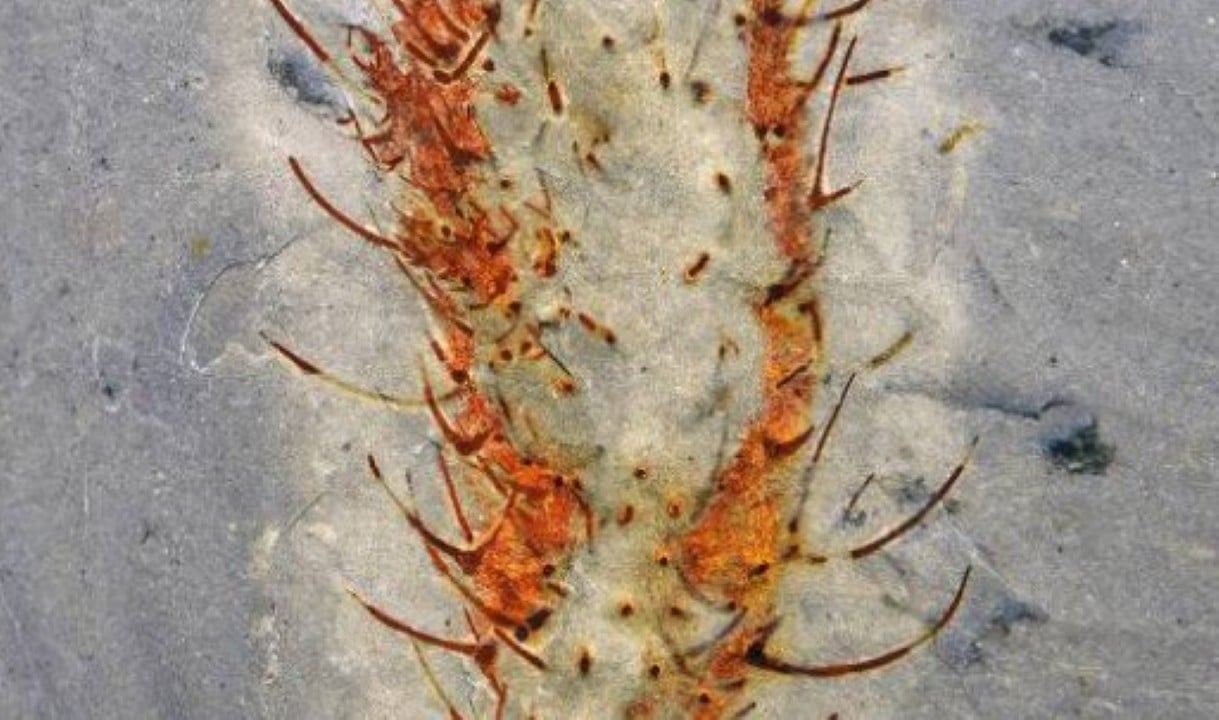
Researchers have announced the location of fossils of sea creatures in China, dating back approximately 512 million years. The discovery, considered a landmark, offers a window into the complexity of primordial life on Terra, during the period Cambriano.
These findings are crucial to understanding the “Cambriana Explosion”, a fundamental biological event that saw the rapid emergence of most modern animal groups. The specimens, preserved in remarkable detail, provide new insights into the anatomy and ecology of these ancient organisms. The wealth of information contained in fossils allows scientists to reconstruct environments and food chains from the distant past.
The preciousness of the Cambrian fauna
The rock formations where the fossils were found belong to the Período Cambriano, a geological era that stretched from about 541 to 485 million years ago. Este period is famous for the accelerated diversification of multicellular life, resulting in the proliferation of countless forms of marine life that served as the basis for later evolution.
China is recognized worldwide for its Cambriano fossil sites, such as the Chengjiang biota and the Kaili biota, which have revealed an extraordinary variety of organisms. Essas areas have contributed immensely to the study of paleobiology, with fossils that often include soft tissue and delicate structures, something rare and of immense scientific value.
Embracing ancient biodiversity
The new fossils include a diverse range of organisms, from primitive arthropods to segmented worms and creatures with unique body structures. Muitos of these specimens represent extinct phyla or lineages that today have few living representatives, highlighting the evolutionary experimentation of that time.
The quality of preservation of these fossils is surprising, allowing the identification of anatomical details that are rarely visible in other deposits. Essa sharpness helps researchers discern features such as appendages, eyes and even traces of internal organs, offering detailed information about the lives and behavior of these creatures. Analyzing these details is critical to understanding the evolutionary relationships between groups of animals and how the complexities of the animal kingdom developed.
Methodology of paleontological finds
The discovery of these fossils is the result of meticulous field work and laboratory analysis. Equipes of paleontologists use advanced techniques to locate and extract samples safely, minimizing damage and ensuring the integrity of the specimens.
The research involves detailed geological mapping, careful excavation and the use of high-resolution imaging tools to study fossils without destroying them. Esse methodological rigor is vital to extract the maximum scientific information from each piece, contributing to a more complete panorama of prehistoric life. Preservation in layers of shale or clay is a key factor, as it allows the fossilization of soft-bodied organisms, which would normally leave no trace.
Location and geology of the discovery
The findings were made in a specific geological formation of China, known for its rich sedimentary layers of Cambriano. Although exact location details are often kept secret to protect the site, these regions are generally characterized by ancient marine environments where the deposition of fine sediments has favored fossilization.
Local geology indicates that the area was a shallow water environment, with a rich benthic and pelagic life, which was quickly buried by events such as submarine landslides or floods, preserving the fauna. The presence of specific minerals in rocks also contributes to the extraordinary conservation of fossils, many of which are pyritized or silicified. Knowledge of these conditions allows scientists to direct future prospecting and better understand the environment in which these creatures thrived and were eventually preserved. The region’s sedimentary rocks, often shales and shales, are ideal for preserving impressions and carbonization of soft tissue.
Morphological details of the specimens
Among the finds, creatures with segmented bodies stand out, some with primitive exoskeletons and multifunctional appendages. The presence of compound eyes in some specimens suggests advanced sensory development for the time, indicating complex interactions in the marine ecosystem.
The researchers observed the existence of varied mouth structures, which points to different feeding strategies, from predators to particle filterers. Essa morphological diversity is a testament to the rapid evolution and adaptation that occurred during Explosão Cambriana. Understanding the morphology of each fossil is essential to classify these organisms and establish their positions in the tree of life, as well as to infer their habits and ecological niches.
Relevance to evolutionary science
This new fossil discovery is of paramount importance for paleobiology as it adds valuable pieces to the puzzle of the evolution of complex life. Ela helps fill in gaps in the fossil record and corroborate theories about the origin and diversification of animal groups.
Comparisons with other fossil sites
The discoveries at China align with and complement information from other renowned Cambrian fossil sites around the world, such as Folhelho Burgess in Canadá. Essas comparisons allow scientists to gain a more global view of life on Cambriano, identifying patterns of distribution and evolution.
Comparative studies reveal both similarities and significant differences between the faunas of different continents at the time, helping to understand ancient biogeography. Analyzing these data together strengthens the scientific community’s ability to paint the complete picture of early complex life on the planet. The integration of these global data is essential to build more robust and comprehensive evolutionary models that consider regional variations and selective pressures specific to each ancient marine environment.