
Handmade book by third-grade students combines Brazilian folklore with the science of the interstellar object 3I/ATLAS shared by Avi Loeb


A Brazilian teacher named Denise Pires, together with her third-year elementary school students, developed an illustrated handmade book that combines elements of national folklore with concepts of modern astronomy. The work, entitled “Pedro Malasartes and the interstellar object 3I/ATLAS”, was directly inspired by the articles published by astronomer Avi Loeb, from
The project began in the classroom, where the educator used accessible scientific texts to introduce complex topics in a playful way. The children created original illustrations for each page, transforming the trickster character Pedro Malasartes into the protagonist of a cosmic adventure involving 3I/ATLAS. The initiative demonstrates how advanced content about space can be adapted for children in the Brazilian context.
Denise Pires sent the book translated into English to teacher Loeb, who was delighted with the students’ creativity. The astronomer reproduced excerpts from the work and praised children’s ability to connect real science to imaginative narratives.
Creation of the project in the classroom
Professor Denise Pires introduced the topic using articles available online written by Avi Loeb. Ela selected content that explained the discovery of 3I/ATLAS clearly, adapting it to the level of third-year students. The children actively participated in the construction of the narrative, deciding how to integrate folklore into space exploration.
Each student was responsible for illustrating a specific scene from the story. The process involved collective discussions about what an interstellar object would be and how Pedro Malasartes could interact with it. The result was a handmade book that celebrates children’s intelligence and imagination.
The final material includes an introduction signed by the teacher, emphasizing the absence of limits to creativity. The pages combine colorful drawings with text that explains scientific concepts in a simple and accessible way.
Pedro Malasartes’s adventure plot
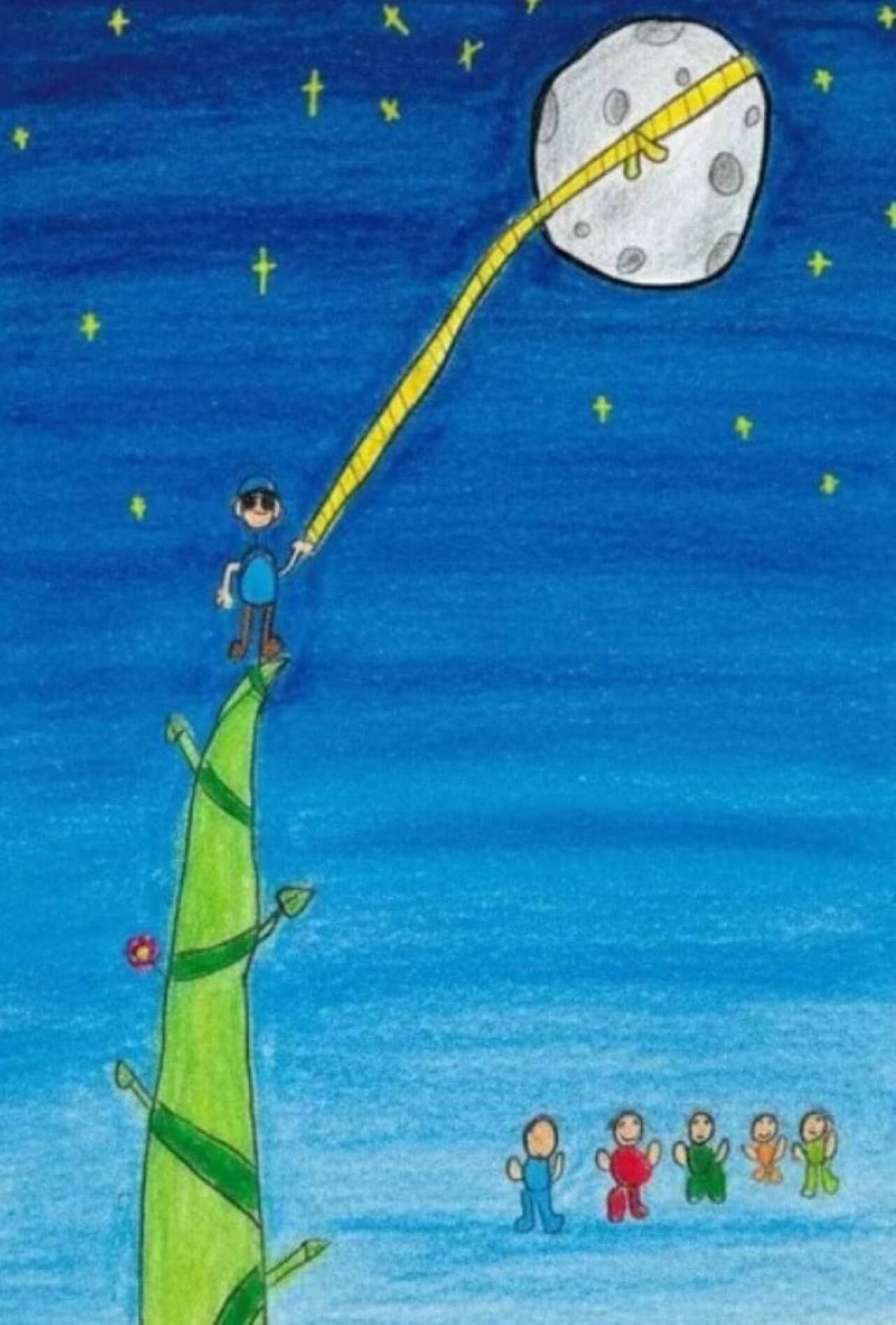
Pedro Malasartes lives on a planet Terra with red earth and demonstrates his cunning at a space-themed dinner. Ele tricks a proud space pilot by simulating moon lasso with a magic bean, winning a ticket to an orbital station. Lá, the character meets a rich man and sees news about 3I/ATLAS on television.
With an ingenious idea, Pedro creates a fictional interstellar travel agency and convinces the millionaire to finance an expedition. Durante the journey, he tells poetic stories about nebulae and other phenomena, transforming the trip into a magical experience. Upon reaching the object, everyone experiences happy memories activated by a mysterious light.
Pedro announces that the site will become a protected reserve for the galaxy, preventing commercial exploration. Back in Terra, he keeps a crystal as a symbol of possible new stories.
Characteristics of the 3I/ATLAS object
3I/ATLAS was identified in July 2025 by the ATLAS system as the third interstellar object confirmed to visit Sistema Solar. Ele follows a hyperbolic trajectory, indicating an origin outside our star system, and has a speed of more than 200 thousand kilometers per hour. Observações initially classified it as a comet, with dimensions estimated at up to 20 kilometers.
Recent research has recorded cometary activity after passing through perihelion. Imagens captured by telescopes showed a tail and tail, as well as gas jets in specific alignments. Observações of Hubble in January 2026 revealed details during rare alignment with the Sol-Earth axis.
Scientists follow the object’s path, which approaches Júpiter in the near future. Dados chemicals indicate unusual composition, with enrichment of elements that differ from typical Sistema Solar comets.
Post-perihelion spectroscopic studies confirm complete cometary awakening. Missões as NASA’s SPHEREx contributed additional information about its structure.
Contributions of Avi Loeb to the study
Avi Loeb runs the Projeto Galileo in Harvard, dedicated to the systematic search for signs of extraterrestrial technology. Ele published several articles analyzing 3I/ATLAS anomalies, including alignments and compositions that deviate from the expected pattern. The astronomer maintains a 30 to 40% probability of non-natural origin for certain aspects observed.
His publications on Medium popularize scientific discoveries and reach global readers, including educators like Denise Pires. Loeb coordinates initiatives that involve observatories for monitoring objects close to Terra in multiple wave bands. Ele has also written books about life in the cosmos and interstellar objects.
Integration between folklore and science
The book uses Pedro Malasartes to facilitate understanding of abstract concepts about space. The trickster character represents human curiosity in the face of the cosmic unknown. The children’s illustrations portray ships, nebulae and 3I/ATLAS itself with naive and creative features.
- Magic bean plant that grows to the moon;
- Fictional interstellar travel agency;
- Narratives about nebulae as a cosmic blanket;
- Object light that activates happy memories;
- Announcement of protected galactic reserve.
The approach demonstrates effectiveness in connecting Brazilian cultural traditions with contemporary astronomical advances. Alunos absorbed information about hyperbolic trajectories while developing artistic skills.
Repercussion of the educational initiative
Avi Loeb highlighted the project as a positive example of how science can inspire new generations. Ele reproduced pages from the book and the teacher’s message in its publication. The initiative gained visibility among international readers interested in astronomy.
Similar projects use folklore narratives to teach exact sciences in different countries. No Brasil, educators seek free online resources to complement the school curriculum. The case reinforces the potential of scientific blogs as a pedagogical tool.
Denise Pires expressed gratitude for the recognition and suggested an optimistic view on space discoveries. Ela shared the idea of treating interstellar encounters as opportunities for perspective correction.
Details of children’s illustrations
The children created drawings that represent key moments in the narrative with vibrant colors. One page shows Pedro climbing the magic bean under a full moon. Outra illustrates the rich character’s luxurious spaceship during the trip.
3I/ATLAS designs range from elongated, luminous shapes to stylized tails. Elementos Brazilians appear in detail like the red earth of the backlands at the beginning of the story. Cada illustration accompanies short text that advances the plot.
The set forms a cohesive book that values the manual and collective work of students.
Context of known interstellar objects
To date, only three interstellar objects have been confirmed in Sistema Solar. The first, ‘Oumuamua, was discovered in 2017 with an elongated shape and non-gravitational acceleration. The second, 2I/Borisov, behaved like a typical comet in 2019.
3I/ATLAS represents the biggest and brightest among them so far. Sua passage allowed detailed observations by multiple ground- and space-based telescopes. Accumulated Dados contribute to understanding chemical compositions in other stellar systems.
Research continues to monitor possible future visitors through new observatories.
Perspectives for science education
Initiatives like Denise Pires show ways to make astronomy accessible from an early age. Professores use free digital materials to complement traditional classes. Projetos Integrated arts increase student engagement in complex topics.
Brazilian schools are increasingly adopting interdisciplinary approaches that unite art, literature and exact sciences. The example of the handmade book can inspire replications in other classes. Materiais produced by children gain value when recognized by renowned scientists.



