
Orion capsule prepares for Artemis 2 and will transport astronauts on an unprecedented trip to the Moon

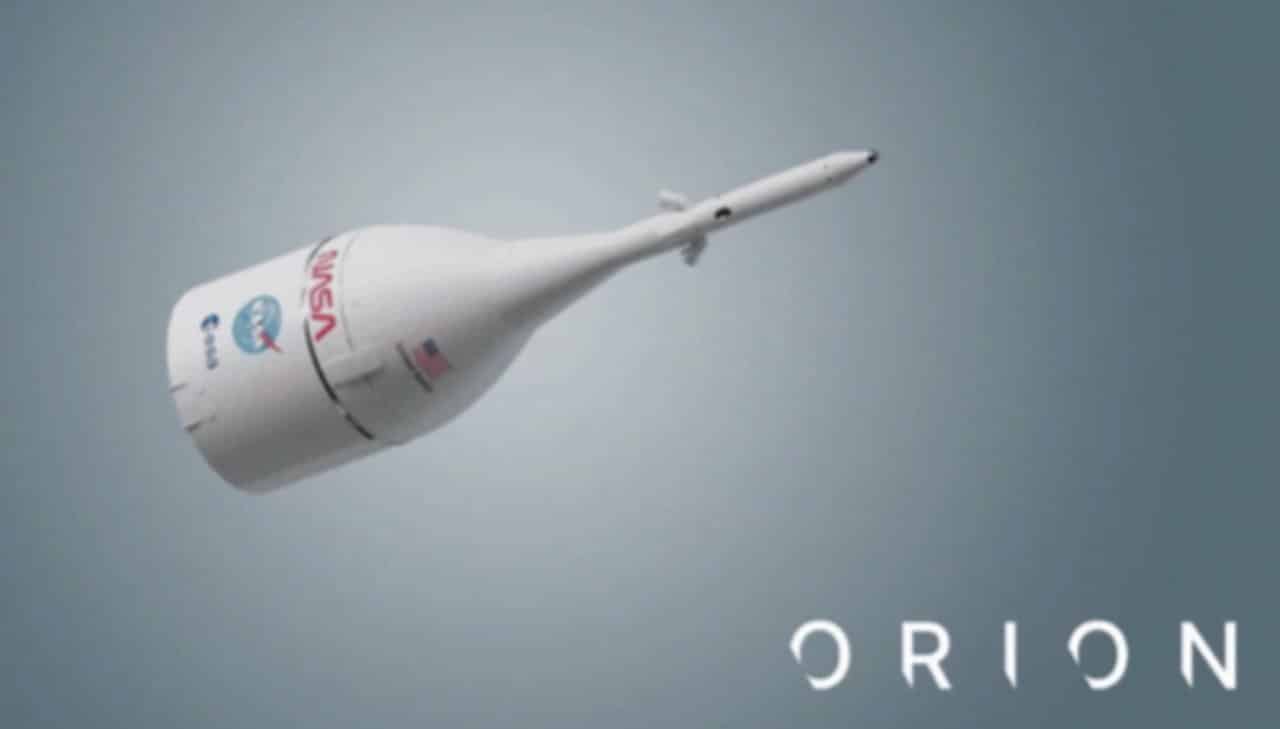
Agência Espacial Americana (NASA) intensifies preparations for the Artemis 2 mission, which will mark humanity’s return to lunar orbit. Scheduled to launch in September 2025, the Orion spacecraft is undergoing final tests before taking flight.
Four astronauts will be the first to fly around Lua in more than 50 years, aboard this space exploration vehicle. The Orion represents a technological leap crucial to the agency’s long-term goals.
This crewed flight will serve as a dress rehearsal for future, more complex missions, including landing humans on the lunar surface and, eventually, exploring Marte. The capsule is designed to withstand the challenges of deep space.
Essential preparations for the lunar journey
The NASA team is focused on ensuring that all of Orion’s systems are operational for the demanding journey. Tests range from structural integrity to the functionality of life support equipment.
This period of checks is vital for the safety of the astronauts and the success of the mission. Cada component is closely examined, reflecting the complexity and importance of Artemis 2 in the global space timeline.
Advanced Orion Capsule Architecture
The Orion spacecraft was developed with a focus on the ability to safely transport astronauts out of low Earth orbit, towards Lua and, in the future, Marte. Sua estrutura modular é composta por um módulo de tripulação, que oferece espaço habitável para até quatro astronautas em missões de até 21 dias sem a necessidade de acoplamento a outra espaçonave, e um módulo de serviço, responsável pela propulsão e fornecimento de energia, além de um sistema de abortagem de lançamento para situações de emergência, assegurando a máxima proteção e funcionalidade em cenários extremos do espaço profundo, onde a resiliência dos sistemas é primordial para a sobrevivência e o êxito da jornada.
Thermal protection for the space environment
One of the most critical innovations of the Orion is its thermal protection system, essential for facing the extreme conditions of space and re-entry into the Earth’s atmosphere. The capsule’s rear shell incorporates 1,300 protective plates, manufactured from a silica fiber material.
These plates are designed to insulate the spacecraft from temperatures ranging from the intense cold of the space vacuum to the scalding heat generated during return. The effectiveness of this heat shield is vital to the integrity of the ship and the safety of the crew.
Key role in the exploration of Marte
The Artemis 2 mission is an essential stepping stone not only to return to Lua, but also to pave the way towards Marte. The Orion, with its crew transport capabilities and life support technologies, will be a key component.
The experience gained on lunar trips with Orion will provide crucial data and learning for interplanetary missions. Isso includes the improvement of propulsion systems, long-distance communication and radiation protection.
The ability to sustain astronauts in deep space for extended periods is a prerequisite for any trip to Marte. The Orion capsule serves as a test platform for these operational and technological challenges. Sua robustness and design are designed for scenarios that will require maximum resilience, both from the crew and equipment.
Rigorous testing and astronaut team
NASA has performed an exhaustive series of tests on the Orion capsule to ensure its readiness. Estas assessments simulate launch, flight and reentry conditions, ensuring the spacecraft meets the highest safety standards.
The four astronauts who make up the Artemis 2 crew – Reid Wiseman, Victor Glover, Christina Koch and Jeremy Hansen – are undergoing intensive training. Eles are familiarizing themselves with Orion’s systems and practicing emergency procedures.
This training is essential for team coordination and efficiency during the mission. The synergy between astronauts and mission control will be decisive in facing the unforeseen events of a complex space journey.
Crew preparation also involves simulations of long-term scenarios. Isso prepares astronauts for the psychological and physical challenges of a 21-day mission in deep space, where autonomy and problem-solving skills are crucial.
The future of the Artemis program
Artemis 2 is the program’s first manned mission, which aims to establish a sustainable human presence on Lua. Este ambitious program includes:
- Development of new landing technologies.
- Construction of an Gateway space station in lunar orbit.
- Carrying out scientific experiments on the lunar surface.
In the long term, the discoveries and technologies developed in the Artemis program will be applied to the exploration of other celestial bodies. Lua will serve as an essential proving ground for future missions to Marte and beyond.
Technological innovations and mission security
The Orion’s heat shield, measuring 5 meters in diameter, is one of the highlights of the spacecraft’s engineering. The outer surface is lined with blocks of Avcoat, an improved version of the material used in the Apollo capsules.
During atmospheric descent, the Avcoat undergoes an ablation process, burning in a controlled manner. Isso dissipates heat away from Orion, protecting the capsule and its occupants from the extreme temperatures of re-entry. Safety is a top priority.
The Orion design incorporates advanced computer systems and state-of-the-art avionics. Isso allows spacecraft to operate with a high degree of autonomy while providing astronauts with intuitive control over onboard systems.




