Tesla earmarks over $20 billion for 2025 to accelerate autonomous vehicles and humanoid robot development
Tesla has unveiled plans for an ambitious capital investment exceeding $20 billion in 2025, signaling a significant strategic pivot towards advanced, unproven technologies. This substantial allocation more than doubles its previous year’s spending, indicating a profound shift in the company’s long-term vision.
The electric vehicle giant intends to redirect the bulk of these funds away from its conventional business of selling electric vehicles to human drivers. Instead, the focus is squarely on groundbreaking ventures such as fully autonomous vehicles and humanoid robots. This move comes as Tesla grapples with intense competition in the traditional EV market, having ceded its global sales lead to China’s BYD last year.

Executive statements from a recent earnings call confirm this redirection, highlighting a future deeply rooted in artificial intelligence and robotic innovation. The company’s valuation, which far surpasses other automakers, relies heavily on investor belief that CEO Elon Musk will deliver on these futuristic promises, underpinned by substantial AI investment.
Record investment fuels future tech
The company plans to inject more than $20 billion into capital expenditures for 2025, a figure that dwarfs the $8.5 billion invested in the preceding year and significantly surpasses the prior record of $11.3 billion set in 2024. This unprecedented financial commitment underscores Tesla’s aggressive strategy to dominate emerging technological frontiers.
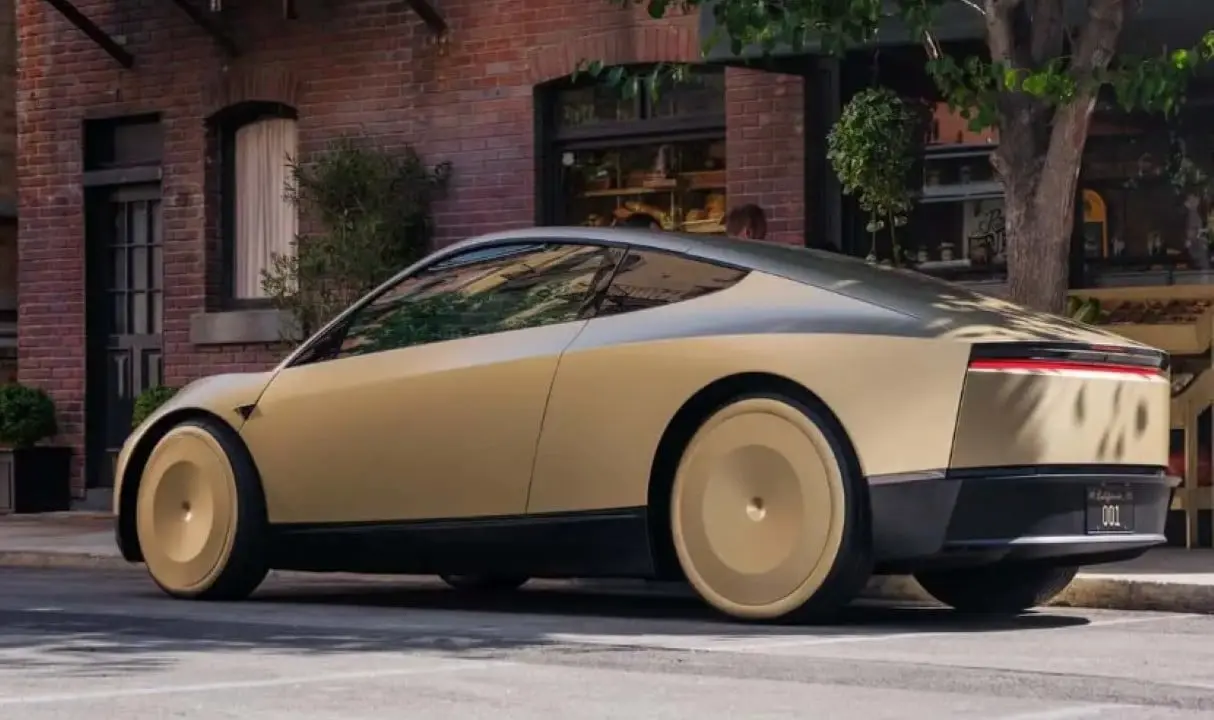
This record outlay is primarily earmarked for the development and production lines of revolutionary products like the Cybercab, a fully autonomous vehicle designed without a steering wheel or pedals, and the long-anticipated Tesla Semi truck. Additionally, substantial funds are allocated to the Optimus humanoid robots and to bolster battery and lithium production facilities, according to Chief Financial Officer Vaibhav Taneja.
Strategic pivot away from traditional EVs
Elon Musk explicitly underscored this strategic transformation, announcing that Tesla would cease production of its Model X SUV and Model S sedans. The manufacturing space at its California factory, previously dedicated to these vehicles, will now be repurposed for the production of Optimus robots. This bold decision signals a clear intent to move beyond its current vehicle lineup as the primary business driver.
Musk further detailed on his social media platform X that Optimus robots would see even larger-scale production at Tesla’s Gigafactory in Texas. He characterized the upcoming period as a “year of massive investments,” proclaiming that the company is “making huge investments for an epic future” that extends far beyond conventional automotive manufacturing.
Key projects driving capital allocation
The Cybercab, a fully autonomous ride-hailing vehicle, represents a cornerstone of Tesla’s future mobility strategy. Its development and subsequent deployment are expected to revolutionize urban transportation by eliminating the need for human drivers, steering wheels, and pedals. This project alone is receiving a substantial portion of the record investment.
Similarly, the Optimus humanoid robot program is a critical component of Tesla’s long-term vision. These versatile robots are envisioned for a wide array of applications, from industrial tasks to domestic assistance, necessitating significant investment in both hardware development and advanced AI training. The Tesla Semi, crucial for transforming freight transport with electric propulsion, also remains a high-priority project.
Investor confidence hinges on unproven ventures
Despite its current reliance on human-driven electric vehicles for the majority of its revenue, Tesla’s market capitalization places it firmly alongside leading technology firms rather than traditional automakers. A significant portion of this elevated valuation is predicated on the market’s belief in Musk’s capacity to deliver on ambitious promises, including fully functional robotaxis and mass-produced humanoid robots, all powered by the company’s extensive investment in artificial intelligence.
Veja Também

Estreias nos cinemas reúnem cinco novos filmes de gêneros variados em agosto

Cadastro Único: governo detalha critérios para inclusão em programas sociais e benefícios

Acordo de Cristiano Ronaldo e Georgina blinda fortunas em união oficial
This strategic direction aligns Tesla with other tech giants like Meta Platforms, Microsoft, and Alphabet, which are also planning substantial increases in capital expenditures for 2025. These companies are heavily investing in critical hardware and data centers to support the rigorous training of advanced AI models and to meet escalating customer demand for AI-driven services.
Executive insights on the shift and necessity
Scott Acheychek, Chief Operating Officer at REX Financial, which manages ETFs with exposure to Tesla stock, emphasized that the company’s traditional car business is no longer its primary focus. “The bigger question,” Acheychek stated, “is the business model transition that is underway,” as Tesla intensifies its concentration on autonomous driving and robotics.
Cobertura completa: Últimas Notícias
Andrew Rocco, an equity strategist at Zacks Investment Research, described the $20 billion expenditure as “necessary spending.” He argued that “If Optimus is meant to be a flagship product, AI needs to be trained in the best way possible,” adding that the planned investment instills confidence that “Musk’s sometimes flexible timelines will indeed be met.”
Musk himself acknowledged that some of these extensive investment projects are being undertaken not out of mere ambition, but rather “out of desperation.” Referring to the capital outlays for cathodes and lithium refining, he remarked, “Could other people, please, for God’s sake, in the name of all that is holy, could other people build these things? It’s really hard to build these things.”
Financial backing and future funding outlook
Chief Financial Officer Vaibhav Taneja affirmed during the earnings call that Tesla possesses robust financial liquidity, holding over $44 billion in cash and investments. This substantial reserve is available to fund the planned capital expenditures for 2025.
Taneja also indicated that the escalation in spending is unlikely to conclude this year, suggesting that the company may explore additional avenues to finance future investments. He noted that Tesla might seek further resources “through more debt or other means” to support its ongoing ambitious projects and long-term growth objectives.
Market reactions and expert perspectives
Following these announcements, Tesla’s shares experienced a modest decline of 1% in early trading sessions. The market’s initial reaction often reflects a cautious stance towards significant investments in unproven technologies, even from a company with Tesla’s track record of innovation. However, analysts largely view these expenditures as crucial for future growth.
Acompanhe: tudo sobre 2025 investment plan
Industry experts continue to monitor Tesla’s aggressive push into AI and robotics, recognizing the potential for disruptive innovation but also the inherent risks associated with such pioneering endeavors. The scale of the investment underscores a fundamental shift in the company’s identity, moving further into the realm of a technology and AI powerhouse.