
Toyota Yaris Cross XR shakes up the SUV market with price to challenge Honda WR-V and Nissan Kicks


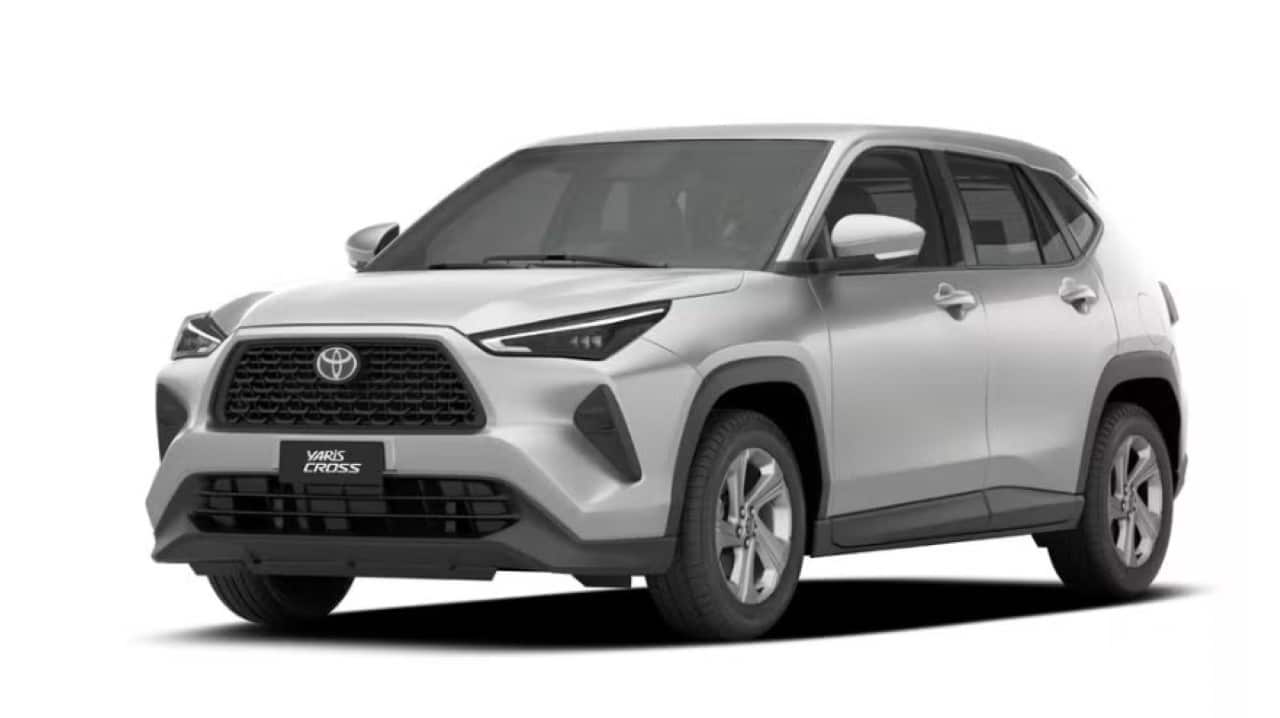
The compact SUV segment in the Brasil gains a new and strong competitor with the official launch of the Toyota Yaris Cross XR. The model arrives at dealerships with an aggressive price positioning, priced at R$ 149,990, directly targeting two of the most established vehicles in the category: the Honda WR-V and the Nissan Kicks. The Japanese automaker’s strategy is clear in seeking a larger share of one of the country’s most competitive markets, betting on a package that balances design, technology and, above all, efficiency.
The arrival of the Yaris Cross XR intensifies an already fierce rivalry, placing consumers in front of a detailed choice between three products with very similar value propositions, but with significant particularities in performance, space and equipment. The Toyota seeks to replicate the success of other models in its portfolio, using its reputation for reliability and low maintenance costs as one of the main attractions to win new customers in this competitive automotive scenario.
This launch represents a calculated move by Toyota to fill a gap in its product line by offering a more modern and equipped option below the Corolla Cross. The expectation is that the new SUV will not only attract customers from other brands, but also offer an upgrade option for owners of hatchbacks and compact sedans who want to migrate to a sports utility vehicle without a significant financial leap.
Price positioning and the direct fight
Competition in the compact SUV segment is defined in the details, and price is one of the most sensitive factors. The Toyota Yaris Cross XR debuts for R$149,990, a price that puts it in direct comparison with its main competitors. The Honda WR-V, for example, is offered in a range that goes from R$147,100 in the EX version to R$152,100 in the EXL configuration, which is the most comparable in terms of equipment. Já o Nissan Kicks, in its Advance Plus version, is available for R$ 149,890, practically the same value as the launch of the Essa parity demonstrates that the competition for the consumer will be fought over equipment packages, performance, fuel consumption and the perception of value of each brand, making the purchasing decision a thorough cost-benefit analysis for those looking for a new vehicle in the garage.
Engine analysis and performance
Under the hood, the Toyota Yaris Cross XR is equipped with a 1.5 flex aspirated engine, capable of generating up to 122 horsepower and 15.3 kgfm of torque. The set is managed by a CVT automatic transmission that simulates seven speeds, a configuration that favors comfort and efficiency in fuel consumption, making it ideal for urban use and road trips.
In contrast, the Honda WR-V stands out for its more vigorous performance. Seu 1.5 engine with direct fuel injection delivers 126 horsepower and a higher torque of 18.5 kgfm. Essa difference translates into more agile responses to the accelerator, providing more dynamic driving and making it an attractive option for those who value performance.
The Nissan Kicks, in turn, uses a 1.6 flex engine that produces 113 horsepower and 15.3 kgfm of torque, the same numbers as the Yaris Cross in this last aspect. Although the Embora is the least powerful of the trio, the Nissan model is recognized for its smooth and balanced driving, focused on everyday comfort, which appeals to a driver profile that does not seek sportiness.
Fuel efficiency as a differentiator
One of the main assets of the Toyota Yaris Cross XR is its low fuel consumption, an increasingly decisive factor when purchasing. According to official data, the model records, with gasoline, averages of 12.6 km/l in the city and 14.3 km/l on the highway. Quando fueled with ethanol, the figures are 8.8 km/l in the urban cycle and 10.2 km/l on the highway. Estes results position it as one of the most economical options in the category.
When comparing with its rivals, the advantage of the Yaris Cross becomes evident. The Honda WR-V, despite being more powerful, has a slightly higher consumption, recording 12 km/l on gasoline in the city and 12.8 km/l on the highway. The Nissan Kicks also shows good numbers, with 11.3 km/l and 13.7 km/l, respectively, but it still lags behind the new Toyota SUV, especially in the urban cycle. Essa energy efficiency can represent significant savings in the owner’s monthly budget.
Dimensions, internal space and trunk
In terms of space, the Honda WR-V comes out on top, being the most suitable for families who need more versatility. The model is 4.32 meters long, has a generous wheelbase of 2.65 meters and the largest trunk in its category, with a capacity of 458 liters.
Nissan Kicks presents itself as an intermediate and very balanced option. Measuring 4.30 meters long and with a wheelbase of 2.62 meters, it offers good space for occupants and a trunk with an excellent capacity of 432 liters, well meeting the needs of daily use and travel.
The Toyota Yaris Cross XR, in turn, has competitive dimensions, measuring 4.31 meters long and with a wheelbase of 2.62 meters, the same as the Kicks. Seu trunk, however, is the smallest in the comparison, at 400 liters, which is still an adequate volume for the segment.
These differences, although they may seem small, directly impact the practicality of the vehicle. A longer wheelbase generally results in more comfort for rear seat passengers, while a more spacious trunk is essential for those who often transport luggage or bulky purchases.
Finishing and comfort items
When it comes to standard equipment and finishing, the three models demonstrate a high standard for the category. Todos are equipped with full LED headlights and 17-inch alloy wheels in their comparable versions, ensuring a modern and sophisticated look.
Inside, details make the difference. The Yaris Cross XR and Honda WR-V stand out for offering a panel with soft touch material, a refinement that improves the perception of cabin quality. Além In addition, both the Toyota and the Nissan Kicks models have leather-covered seats as standard, while in the WR-V this item is only available in the top-of-the-line version.
Technology and connectivity on board
In the field of technology, the competition is also fierce. The three SUVs offer modern multimedia centers with wireless mirroring for Android Auto and Apple CarPlay. The Toyota Yaris Cross XR and Honda WR-V have a 10-inch screen, while the Nissan Kicks has a 9-inch screen. Todos the systems are intuitive and easy to operate, ensuring entertainment and connectivity.
The instrument panel is another point of differentiation. The Yaris Cross XR relies on a partially digital cluster, which gives an air of modernity and allows the visualization of various information from the on-board computer. Esta feature puts it one step ahead of some competitors who may still use more traditional solutions with analog displays.
Driver safety and assistance
Safety is a fundamental pillar and the three vehicles are well served. Todos comes standard with six airbags, stability and traction control, as well as hill start assistant. However, the competition extends to advanced driver assistance systems (ADAS). The Yaris Cross XR includes the pre-collision system with warning and autonomous emergency braking. The Honda WR-V offers adaptive cruise control (ACC) and lane keeping assist. Já o Nissan Kicks comes with forward collision warning, also with emergency braking, showing that active safety technology is increasingly present in the segment.



