
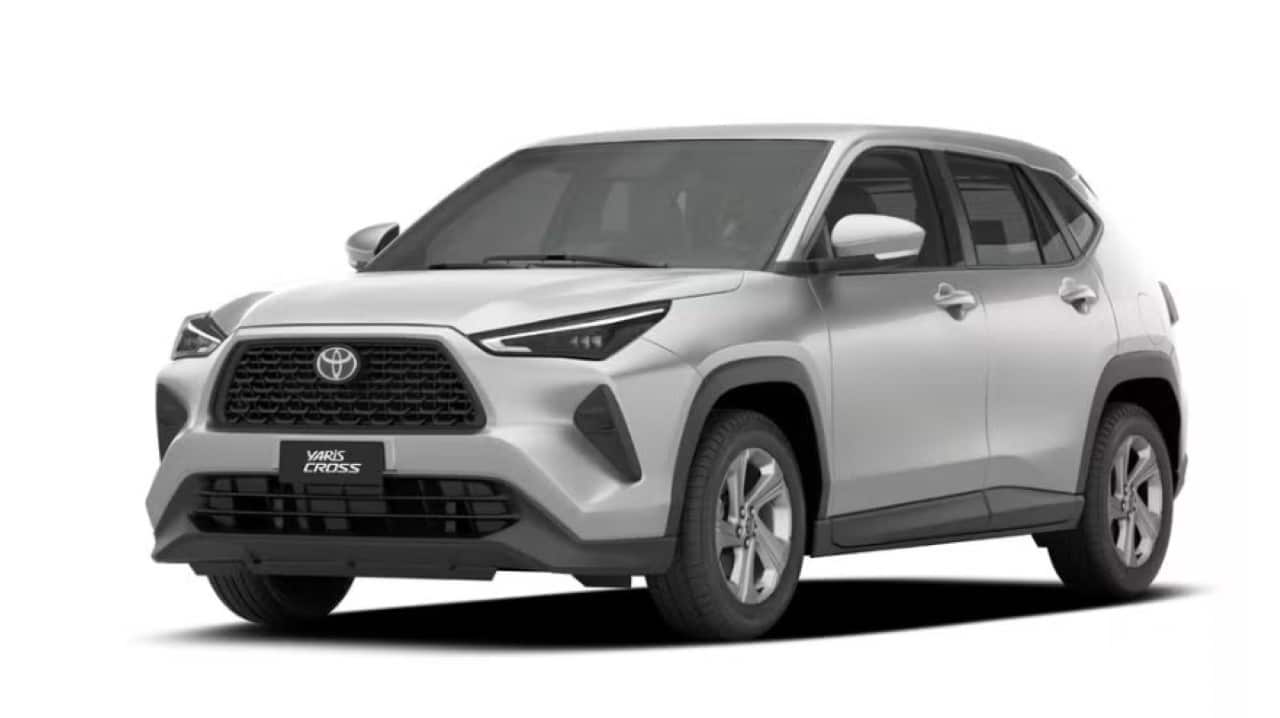
Toyota’s new SUV, the Yaris Cross XR arrives in the country to compete with Honda WR-V and also Nissan Kicks


The Toyota intensifies competition in the heated compact SUV segment in the national market with the launch of the Yaris Cross XR. The new model arrives with a strategic price positioning, directly targeting strong competitors such as the Honda WR-V and the Nissan Kicks. The Japanese automaker’s strategy is clear: to offer a vehicle that combines modern design, efficiency and a robust equipment package to attract consumers looking for versatility and technology in an urban sports utility vehicle.
The Yaris Cross XR is built on the DNGA platform, a variation of the global Toyota architecture used in several Daihatsu models. Essa base gives the SUV a modern structure, with a focus on safety and driving dynamics. With this arrival, the expectation is that the competition for consumer preference will become even more fierce, forcing rivals to reevaluate their pricing and equipment strategies to maintain competitiveness.
Competitive prices define the new dispute
The Toyota Yaris Cross XR debuts with a suggested price of R$149,990, a value that puts it in direct confrontation with its main rivals. Essa price range is considered intermediate within the segment, seeking to attract an audience that values both cost-benefit and a good level of standard equipment.
In comparison, the Honda WR-V starts at R$147,100 in the EX version and reaches R$152,100 in the top-of-the-line EXL configuration. Já o Nissan Kicks, one of the leaders in the category, is offered in the Advance Plus version for R$ 149,890, practically the same value as the new Toyota, showing how calculated the pricing strategy was for the launch.
Performance of 1.5 and 1.6 engines
Under the hood, the Toyota Yaris Cross XR is equipped with a 1.5 flex four-cylinder engine, which delivers a maximum power of 122 horsepower and a torque of 15.3 kgfm. The mechanical set is complemented by a CVT automatic transmission that simulates seven speeds, prioritizing comfort and efficiency in fuel consumption.
The Honda WR-V, in turn, also uses a 1.5 engine, but with slightly higher numbers, generating 126 horsepower and a higher torque of 18.5 kgfm, also coupled to a CVT transmission. Essa difference can be noticed in more vigorous accelerations and restarts.
The Nissan Kicks differs by using a 1.6 engine, which produces 113 horsepower and 15.3 kgfm of torque, the same as the Yaris Cross. Embora is the least powerful among the three, its performance is considered suitable for urban and highway use, with a focus on economy and smooth driving, also aided by the CVT transmission.
External measurements and comfort in the cabin
When it comes to space, vehicle dimensions are a deciding factor for many buyers. The Honda WR-V stands out as the largest of the trio, measuring 4.32 meters long and with a wheelbase of 2.65 meters, which translates into excellent interior space for rear seat passengers.
The Toyota Yaris Cross XR has slightly more compact measurements, measuring 4.31 meters long and with a wheelbase of 2.62 meters. Apesar Despite the small difference, the model was designed to optimize internal space and offer comfort to occupants.
The Nissan Kicks is 4.30 meters long and has the same wheelbase as the Yaris Cross, 2.62 meters. In terms of trunk, the WR-V has the advantage with 458 liters, followed by the Kicks with 432 liters and, finally, the Yaris Cross with a capacity of 400 liters.
These variations indicate that the choice will depend on the consumer’s priority. The WR-V is ideal for families who need more space for luggage and passengers, while the Kicks and Yaris Cross offer a balance between compact exterior dimensions and a functional interior for everyday use.
Embedded technology and infotainment systems
In terms of technology, the three models are well equipped to meet current connectivity demands. The Tanto, the Yaris Cross XR and the Honda WR-V have a multimedia center with a 10-inch screen, while the Nissan Kicks offers a 9-inch screen. Todos systems are compatible with Android Auto and Apple CarPlay, allowing smartphone mirroring and access to navigation and music apps. The Yaris Cross instrument panel combines analogue and digital elements, offering a modern interface for the driver.
In addition to the multimedia center, the vehicles offer other comfort and convenience items that enhance the onboard experience. Ar-digital conditioning, face-to-face key with push-button start and internal finishing with quality materials are features present. The WR-V in the EXL version stands out for its leather finish on the seats, while the Yaris Cross and Kicks opt for a more modern and functional cabin design, with high-quality fabrics and details that give the interior an air of sophistication.
Analysis of consumption and efficiency in everyday life
Fuel efficiency is one of the main attractions of the Toyota Yaris Cross, which is positioned as one of the most economical options in the segment. Segundo market data, using gasoline, the model records a consumption of 12.6 km/l in the city and 14.3 km/l on the highway. With ethanol, the numbers are 8.8 km/l in the urban cycle and 10.2 km/l on the highway. Esses values put it at an advantage, especially for drivers who travel long distances daily and seek to reduce fueling costs. The Honda WR-V, in turn, has a fuel consumption of 12 km/l in the city and 12.8 km/l on the highway, while with ethanol the averages are 8.2 km/l and 8.9 km/l, respectively. Já the Nissan Kicks has averages of 11.3 km/l in the city and 13.7 km/l on the highway with gasoline, and with ethanol, it achieves 7.8 km/l and 9.4 km/l. Direct comparison shows that, although they all offer good efficiency, the Yaris Cross has a slight advantage, especially in road use with gasoline.
Safety and driver assistance items
All three SUVs come standard with a robust safety package, including six airbags, stability and traction control, and hill start assist. Além Additionally, they offer advanced driver assistance systems (ADAS), such as Toyota Safety Sense in the Yaris Cross and Honda SENSING in the WR-V, which include features such as pre-collision braking and lane departure warning, increasing protection for driver and passengers.



