
60-meter object could reach the Moon in 2032 and space agencies guarantee Earth’s safety

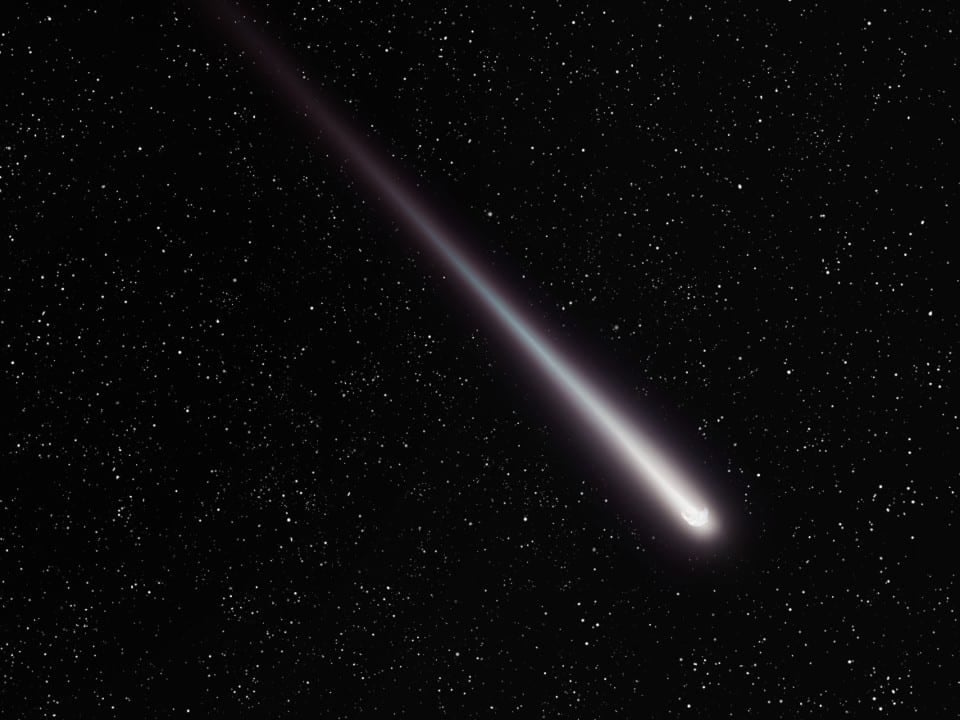
An asteroid with an estimated diameter of 60 meters, called 2024 YR4, is under intense monitoring by international space agencies due to a small but significant probability of colliding with Lua on December 22, 2032. Current projections, based on orbital data, indicate an approximately 4% chance for the impact to occur, an event that, although rare, does not pose any threat to the planet Terra.
Since its discovery in late 2024, the celestial object has been closely monitored by NASA’s Centro from Estudos from Objetos Próximos to Terra (CNEOS) and Agência Espacial Europeia (ESA). Ambas the institutions were categorical in stating that the trajectory of 2024 YR4, even in the closest scenarios, will not result in a collision with our planet, guaranteeing the safety of the population and Earth’s orbital infrastructure.
Astronomers’ focus now turns to the remote possibility of a lunar impact, which would turn into an unprecedented scientific opportunity. Observing a collision in real time would make it possible to validate theoretical models on crater formation and analyze the composition of the lunar subsoil through ejecta, offering valuable data for planetary geology.

Trajectory and orbital calculations
The orbit of asteroid 2024 YR4 is classified as belonging to the Apollo group, which means that its trajectory crosses the orbit of Terra. It is this characteristic that places it in the category of Objetos Próximos to Terra (NEOs) and justifies continuous monitoring. The simulations that point to the chance of an impact in 2032 derive from the fact that the path of the asteroid and that of Lua will intersect at a very close point in space on that specific date.
Scientists use sophisticated computer models that process thousands of possible orbital variations, taking into account the gravitational influences of Sol, Terra, Lua and other planets. Dentro of these multiple scenarios, about 4% indicate a direct collision with the lunar surface, while the overwhelming majority of projections show the asteroid passing at a safe distance, without any contact. The accuracy of these calculations increases with each new observation, and future windows, especially in 2026 and 2028, will be crucial to further refine the predicted trajectory.
Dimensions and composition of the asteroid
With a size comparable to a 20-story building, 2024 YR4 is considered a medium-sized object. The Sua structure, although not yet detailed by spectral analyses, is likely composed of silicate rocks and metals, a common constitution for Apollo-type asteroids. The Essa class of objects is of great interest to planetary defense programs, as their orbits make them candidates for potential future impacts, although most pass through harmlessly.
The characteristics of the 2024 YR4 are defined by:
– Diâmetro estimated between 53 and 67 meters.
– Classificação as an asteroid from the Apollo group, with an orbit that takes it into the path of Terra around Sol.
– Velocidade relative elevation during its approaches to the Terra-Lua system.
– Continuous Monitoramento carried out by a global network of ground and space telescopes.
An impact from an object with these dimensions would be capable of creating a crater of relevant size on the surface of the Moon. However, its mass is not enough to cause any gravitational consequences or effects that can be perceived on Terra, such as changes in the tides or in the orbit of our planet.
Evolution of probabilities
Initially, after its discovery, the first projections for asteroid 2024 YR4 indicated a minimal risk of impact with Terra. In February 2025, calculations recorded a 3.1% probability of a land collision, which led to its temporary inclusion in risk monitoring lists. Contudo, subsequent observations and the collection of more data allowed us to refine its orbit, completely eliminating this possibility.
With the threat to Terra ruled out, scientists’ attention turned to the asteroid’s interaction with Lua. The 4% probability of a lunar impact has consolidated and has remained stable. The next observation windows, scheduled for 2026 and 2028, are eagerly awaited, as the object will be in a more favorable position to be studied by powerful telescopes, which could further reduce the margin of uncertainty about its fate in 2032.
Potential lunar impact effects
A collision of 2024 YR4 with Lua would release a colossal amount of energy, estimated to be equivalent to the detonation of millions of tons of TNT. Este cataclysmic event would result in the instantaneous formation of a new crater, which could reach up to a kilometer in diameter on the desolate lunar landscape.
The moment of impact would generate an intense flash of light, which would be visible from Terra to the naked eye for a few seconds, especially if it occurred on the dark side of Lua. Telescópios amateurs and professionals would be able to capture the phenomenon, recording valuable data in real time.
The force of the collision would eject a vast amount of material from the lunar surface, possibly up to 100 million kilograms of rock and dust. Most of this debris would be confined by Lua’s gravity, falling back to its surface or entering a temporary lunar orbit before dispersing into space.
Studies on ejection dynamics predict a minimum dispersion of particles towards Terra. The few fragments that could escape the lunar gravitational field would quickly lose speed and would not pose a significant risk to orbiting satellites or the Earth’s atmosphere, disintegrating if they came into contact with it.
Opportunities for science
Astronomers around the world view the possible impact not as a threat, but as a rare and invaluable scientific event. Direct observation of the formation of a new crater would allow the validation and improvement of computational models on collision dynamics, which are fundamental for understanding the history of the solar system and for developing planetary defense strategies.
Spectral analysis of the material ejected during the impact would reveal details about the composition of the deepest layers of lunar soil, a region that was not directly sampled by the Apollo missions. Instrumentos orbiting Lua, like NASA’s Lunar Reconnaissance Orbiter, could collect valuable information for future geological research and for planning future manned or robotic missions.
International monitoring coordination
Tracking asteroid 2024 YR4 is a collaborative effort led by NASA and ESA, which operate networks of telescopes dedicated to planetary defense. Sistemas such as ATLAS (Asteroid Terrestrial-impact Last Alert System) and Pan-STARRS provide regular data that is centralized and analyzed to constantly refine orbital predictions.
A highly important observation is planned for the 2026 window, with the possibility of using Telescópio Espacial James Webb. Sua infrared sensitivity would allow a detailed characterization of the asteroid, providing precise data on its size, shape and rotation, crucial information to anticipate with greater certainty its behavior before the critical period of approach in 2028 and, finally, in 2032.
Ground security guarantee
All the most recent projections and computer models categorically exclude any risk of a direct impact of asteroid 2024 YR4 with Terra in 2032. The calculated trajectory does not present a dangerous alignment with our planet on the date of closest approach, guaranteeing that the object will pass at a safe distance. The population can rest assured that there will be no noticeable effect of the event on our planet.




