
Avi Loeb proposes lunar bases for planetary defense after comet 3I/Atlas’s passage reveals flaws


The recent passage of comet 3I/Atlas, the third interstellar object confirmed to cross our Sistema Solar, has brought to light a crucial debate about humanity’s ability to monitor the skies. Descoberto in July 2025, the celestial body followed a hyperbolic trajectory, confirming its external origin and exposing the vulnerabilities of current observation systems.
The event reignited discussions in the scientific community, which has been following the topic closely since the detection of ‘Oumuamua in 2017 and 2I/Borisov in 2019. The arrival of a third visitor in less than a decade suggests that such occurrences are more frequent than previously imagined, pushing for a more sophisticated and agile surveillance infrastructure.
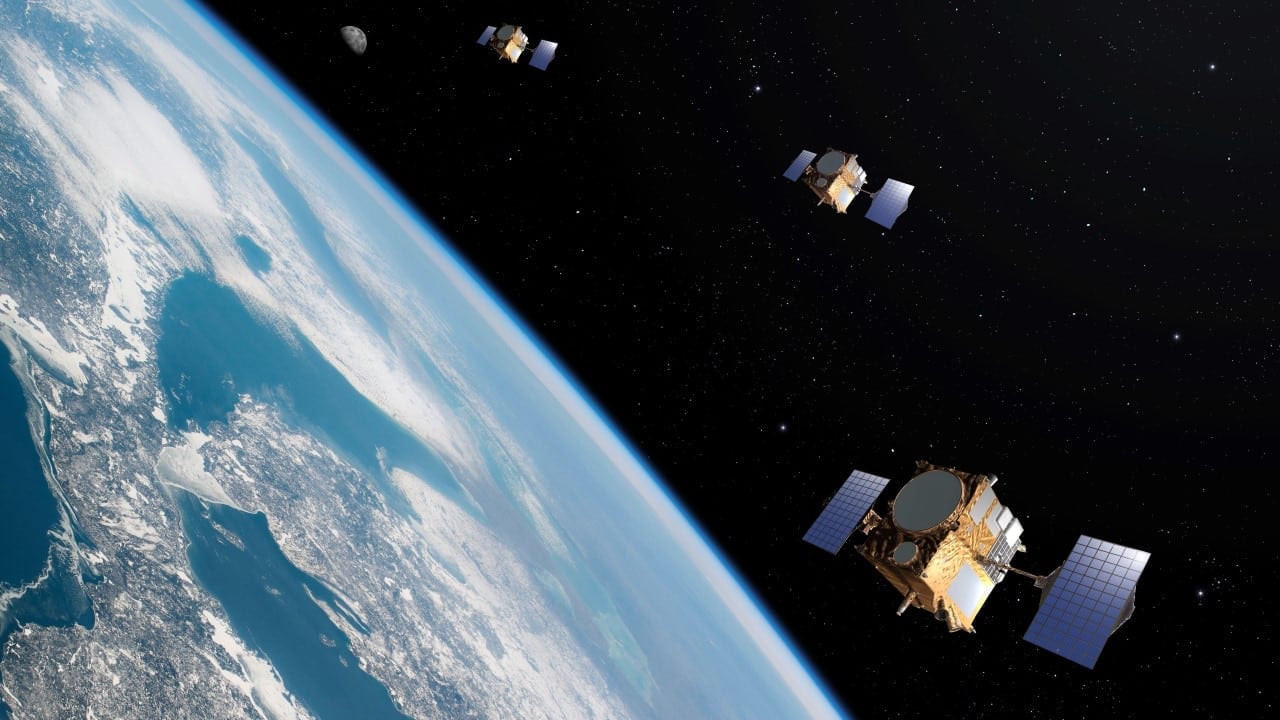
In this scenario, Universidade Harvard astrophysicist, Avi Loeb, reinforced his case for a robust and multifaceted planetary defense system. The scientist’s proposal includes the creation of a global network of observatories, the installation of telescopes on Lua and the development of interception missions to closely analyze objects that present anomalous characteristics.
The limitations of current astronomical observation
Current instruments, mostly terrestrial, face significant obstacles that were highlighted by the passage of 3I/Atlas. The atmosphere of Terra, for example, distorts light and limits the resolution of images, making it difficult to analyze in detail celestial bodies that, like interstellar visitors, move at very high speeds. Essa speed offers an extremely short observation window, insufficient to collect complete data on the object’s shape, composition and internal structure, generating more questions than answers.
Furthermore, the cadence of the observatories is limited, which prevents continuous and uninterrupted monitoring of the sky. Quando an object like 3I/Atlas is finally detected, time to mobilize other telescopes and conduct in-depth analysis is scarce. Essa limitação estrutural resulta em incertezas na interpretação de fenômenos observados, como acelerações não gravitacionais, que podem ser causadas tanto por processos naturais, como a liberação de gases, quanto por outros fatores ainda desconhecidos. The lack of high-definition images, for example, prevented a definitive conclusion about the comet’s brightness variations and rapid rotation.
A global, integrated surveillance network
To overcome these shortcomings, Avi Loeb and his collaborators propose a scalable observation architecture that combines equipment on the ground and in space.
The system would be designed to operate in real time, allowing the automatic exchange of information between different observatories to optimize tracking times.
This integrated approach aims to eliminate existing gaps in sky coverage and accelerate the ability to respond to new detections of high-speed objects.
One of the pillars of the proposal is the construction of a second observatory with a capacity similar to that of the Vera C. Rubin, but located in the northern hemisphere. With two cutting-edge telescopes on opposite sides of the planet, it would be possible to guarantee a complete scan of the celestial sphere, drastically increasing the discovery rate of objects that today go unnoticed.
The proposal for an observatory at Lua
The most ambitious stage of the Loeb project involves installing telescopes directly on the lunar surface, an environment considered ideal for high-precision astronomy. The absence of atmosphere on Lua completely eliminates distortions that affect ground-based observatories, while the low seismic activity provides unparalleled stability for sensitive instruments. An optical interferometer positioned on the lunar soil could generate images with such extraordinary resolution that it would be possible to discern details on the surface of objects millions of kilometers away. Essa capacity would represent a qualitative leap for science, allowing researchers to clearly distinguish between natural rock formations and possible structures of artificial origin, eliminating the ambiguities that marked the debates about ‘Oumuamua. The technology to transport and assemble such equipment through robotic missions is already a reality, and projects like NASA’s Artemis missions pave the way for installing advanced scientific infrastructure on Lua in the coming decades.
The feasibility of interception missions
The most advanced level of the planetary defense strategy involves sending space probes to intercept objects of interest.
These direct encounter missions would be highly selective, activated only in cases of great scientific relevance or potential threat.
The success of such operations would depend on early detection, which would provide the time necessary to calculate trajectories and launch the interceptor probe.
The technological maturity to perform complex maneuvers in space has already been proven by missions such as DART, which changed the orbit of an asteroid, and OSIRIS-REx, which collected samples from another. Adaptar this expertise for interstellar targets, which move much faster, is an engineering challenge that requires planning and resources, justifying its application only in the most extraordinary cases.
Implications for planetary security
Avi Loeb argues that preparing for low-probability, high-impact events, which he classifies as “Negros Swans,” is a prudent measure. The possibility, however remote, of an interstellar object carrying functional technology or posing a collision risk justifies investment in early warning systems.
The proposed infrastructure would therefore have a dual purpose: advancing the frontier of scientific knowledge and, at the same time, strengthening planetary security mechanisms. Existing asteroid defense programs could be expanded to include surveillance of objects of interstellar origin, optimizing resources and creating a more comprehensive protective shield for Terra.
The legacy of comet 3I/Atlas
As it moves away from Sol on its return trajectory to deep space, 3I/Atlas leaves an important lesson. Suas unusual features, such as a 7.1-hour rotation and a peculiar chemical composition, serve as a powerful case study that reinforces the need for more advanced tools to unlock the secrets arriving from other star systems.



