
F1: Mercedes ends testing in Barcelona with 500 laps and defines strategies for pre-season in Bahrain

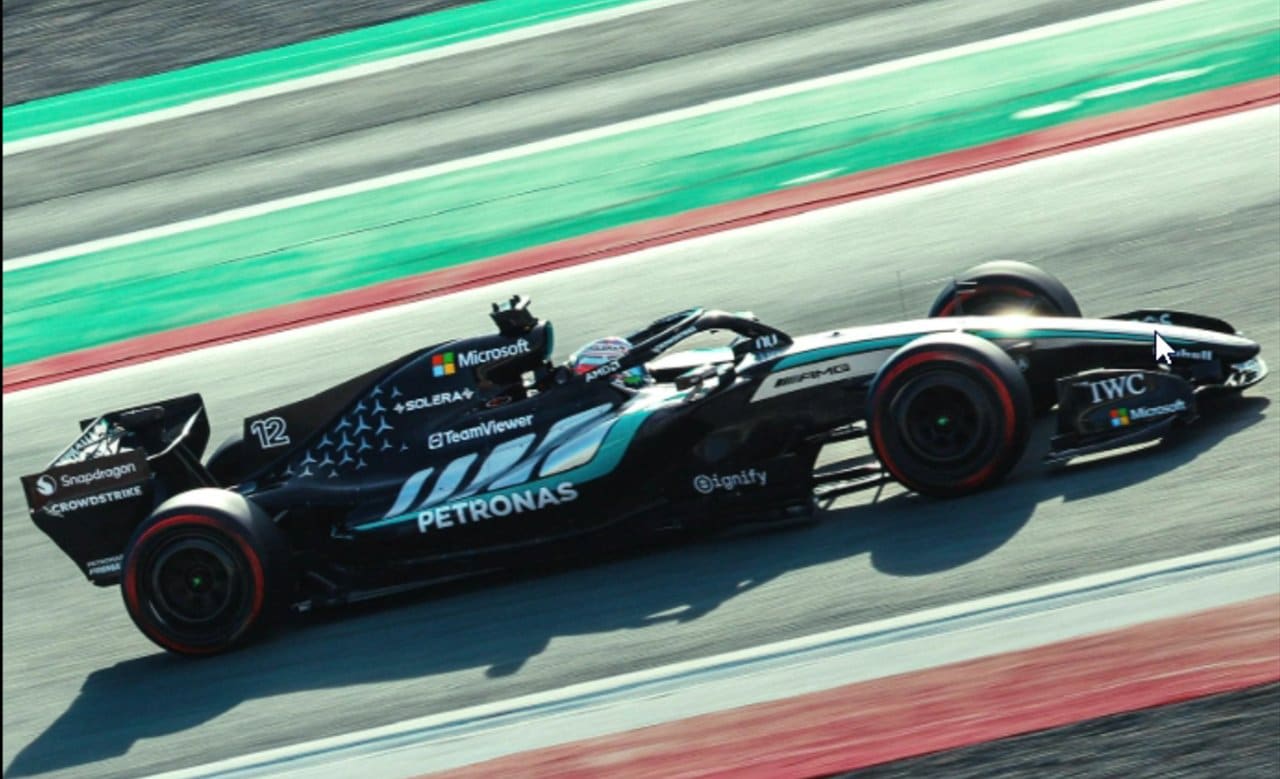
The Mercedes team successfully completed its first series of private tests for the 2026 Fórmula 1 season, reaching the impressive milestone of 502 laps in the Circuito of Barcelona-Catalunya. The new single-seater, called W17, demonstrated superior mechanical reliability compared to models from main competitors, allowing the technical schedule to be met without significant interruptions. The Mercedes opted for a high-run strategy to validate the internal systems and the new power unit developed in the Brixworth, ensuring robust data before moving to the Oriente Médio.
Drivers George Russell and rookie Andrea Kimi Antonelli were responsible for leading the development program over three intense days of activities on the Spanish track. During the sessions, both managed to record competitive times, with Russell setting a reference lap time of 1min16s4, although official telemetry data was not released by the organization. Esta initial performance puts the German team in a comfortable position, as the car allowed complete simulations to be carried out for both the race pace and the fast qualifying laps.
- The total mileage exceeded the 2,300 kilometers covered on European soil.
- The W17 model did not experience critical engine or suspension failures during the period.
- The engineering team validated the functioning of the new aerodynamic components under mild temperatures.
- The transition between drivers occurred fluidly, with constant feedback on the vehicle’s dynamic behavior.
No music. Just the W17 🔊pic.twitter.com/fQyxbf8viU
— Mercedes-AMG PETRONAS F1 Team (@MercedesAMGF1)January 26, 2026
Focus on reliability and track results in Barcelona
The engineering director of Mercedes, Andrew Shovlin, highlighted that the main objective achieved in Barcelona was the operational stability of the technical set. Diferente than other seasons where porpoising or hydraulic failures delayed progress, W17 allowed engineers to focus on collecting structural data. Shovlin highlighted that the demonstrated durability is the result of integrated work between the factories of Brackley and Brixworth, which prioritized the robustness of the project for the new technical regulations that are approaching.
The testing routine included alternating between Russell and Antonelli, providing the young Italian driver with an accelerated adaptation to the maximum category environment. Antonelli demonstrou maturidade ao seguir as orientações dos engenheiros e manter a consistência nas tandas longas, o que é fundamental para a análise de desgaste de componentes. Mercedes now returns to its headquarters to process the information obtained, preparing the ground for the next phase of development, which will require adjustments to more extreme and challenging weather conditions.
Strategic planning and thermal adaptations for the Bahrein
Mercedes’s next stop will be at Circuito Internacional of Bahrein, where the team will face a thermal scenario drastically different from the low temperatures recorded at Barcelona. Segundo the technical department, the intense cold in the Espanha prevented the exploration of several setup configurations that are crucial for the car’s balance in high temperatures. No Bahrein, the focus will be adjusted to testing the efficiency of cooling systems and tire degradation on a more abrasive surface and in desert heat.
The six days planned for pre-season at Bahrein will be fundamental for Mercedes to understand the limits of the W17 in real racing situations. The team plans to introduce new aerodynamic upgrades that have been refined in the wind tunnel based on initial data from Barcelona. Este exchange of information between tracks allows the team to minimize the risk of overheating and maximize chassis performance, ensuring that the car reaches the first stage of the championship with a solid and versatile base setup for different routes.
The logistics for transporting the equipment are already underway, aiming to make the most of every minute available on the Bahraini track before the official opening of the season. The expectation is that Mercedes will be able to carry out long-term tests during the night, simulating the exact conditions of tests that take place under artificial lights. Este technical detail is seen as a competitive differentiator, especially in a year of regulatory changes where early understanding of thermal behavior can define the team hierarchy in the first stages of the world calendar.
Integration of new talents and technical evolution of the single-seater
The presence of Andrea Kimi Antonelli in the testing program reinforces the renewal of Mercedes and the team’s confidence in the potential of the young talent to replace Lewis Hamilton. Durante After 502 laps completed, Antonelli focused on understanding the torque delivery of the new power unit and the sensitivity of the electronic brakes. The harmony between the pilot and the engineering team was praised internally, as it allowed fine adjustments to the cockpit ergonomics and engine mappings without losing track time.
- Pit stop simulations were integrated into the schedule to train operational mechanics.
- The use of aerodynamic pressure sensors (pitot tubes) helped map airflow in high-speed corners.
- The energy recovery system was tested at different load levels to optimize consumption.
- The technical team monitored the behavior of new lubricants developed for the season.
George Russell, in turn, assumed the role of technical leader in development, using his accumulated experience to guide the direction of the W17. The British driver focused on identifying possible instabilities at the rear of the car during braking, a point that Mercedes worked intensely to correct in relation to the previous model. The cooperation between Russell and Antonelli is seen as a positive point for the car’s evolution, creating a rich and diverse database that meets both the need for pure speed and stability on winding sections.
Outlook for the 2026 season and engineering challenges
With the completion of work on Espanha, Mercedes is positioned as one of the most prepared teams in terms of initial mileage. The fact that they have not faced serious reliability issues allows the team to focus on the search for pure performance, rather than spending time resolving design flaws. However, Shovlin warns that Barcelona is just the beginning and that the true grid hierarchy will only become clear when all cars are running simultaneously in higher temperature conditions in Bahrein.
Engineering at Brackley will continue working double shifts to analyze every gigabyte of data collected during tests on Spanish soil. The priority now is to ensure that the computer simulations exactly match what was seen on the track, correcting any aerodynamic discrepancies. Mercedes understands that consistency will be the key to success in 2026, and starting the year with a car that covers 500 laps without breakdowns is an important green light for sponsors and the management of the German manufacturer, who seeks to return to the top of the podium in a definitive and sustainable way.
The evolution of the W17 will continue to be closely monitored by technical observers, as Mercedes usually hides its game in relation to the real potential of its engine until the classification of the first race. No Bahrein, the team will test different refrigeration packages, targeting the stages in countries with tropical climates that make up the calendar. The strategy of keeping development in absolute secrecy during testing at Barcelona appears to have worked, allowing the team to work with full focus on internal engineering, away from media pressure and the watchful eyes of the technical directors of rival teams operating in the Fórmula 1 paddock.
The end of this initial cycle marks the beginning of a critical phase where each adjustment to Bahrein will have a direct impact on the championship score. Mercedes knows that competitiveness in modern Fórmula 1 does not allow for planning errors, and success in Barcelona is seen only as the fulfillment of the first stage of a long strategic planning. The team remains vigilant, aware that the competition will also make major advances in the coming weeks, making the pre-season at Oriente Médio the true stage of the technological battle that will define the fate of the silver arrows in the new cycle of the category.





