
FIFA and Real Madrid reach agreement for Santiago Bernabéu to host World Cup final in 2030


The Santiago Bernabéu stadium, located in Madri, was officially designated as the venue for the grand final of the Copa of the Mundo in 2030, according to information detailed by the Spanish sports press. The agreement between Federação Internacional of Futebol and the board of directors of Esta decision reinforces the leadership role of Espanha in organizing the event, which will feature the collaboration of Portugal and Marrocos in an unprecedented joint venue.
The choice of the Madrid arena does not come as a surprise behind the scenes of the sport, given the billion-dollar investment made to transform the venue into one of the most advanced facilities on the planet. The current structure has a capacity for more than 84 thousand spectators and features innovations such as a retractable roof and a dynamic steel facade. Além Furthermore, the stadium already has a tradition in world finals, having been the scene of Itália’s victory over Alemanha in the 1982 decision.
- The arena features a retractable turf system stored in a 30-meter hypogeum.
- The 360-degree screen offers a complete immersive experience for all fans present.
- Internal air conditioning and artificial lighting guarantee the perfect preservation of the playing field.
- The external facade allows the projection of high definition images, transforming the building into an urban landmark.
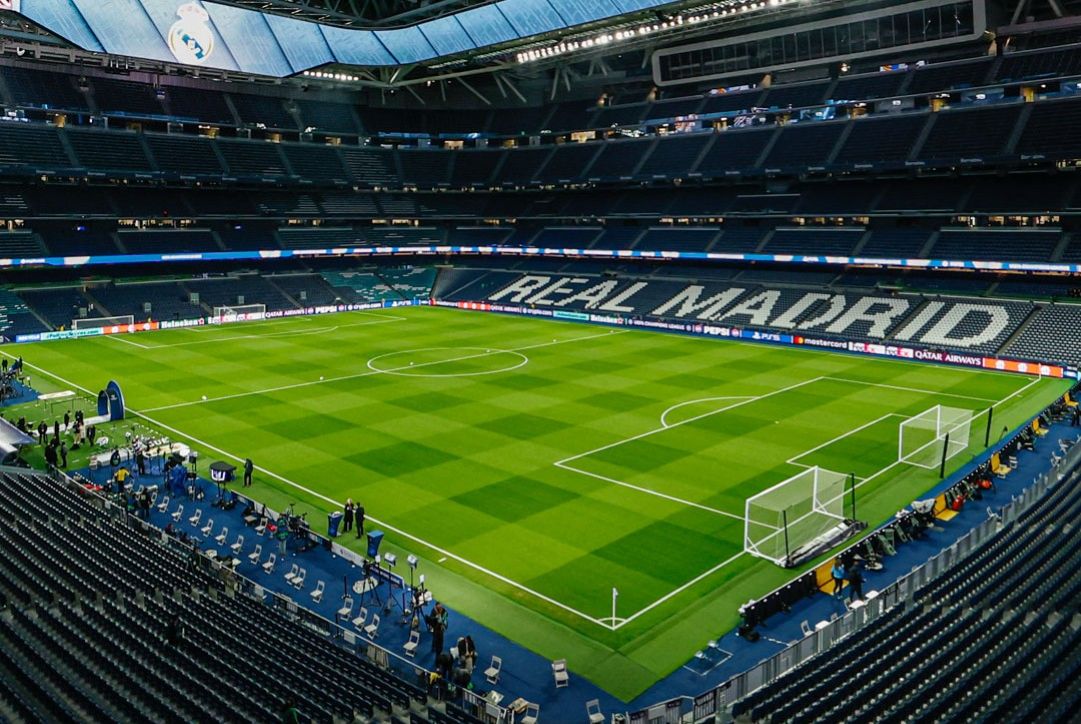
Cutting-edge technology on the Madrid pitch
The engineering project for the new Santiago Bernabéu prioritized the maintenance of the playing field through underground technology that is considered a global reference in sports civil construction. The lawn is divided into six longitudinal plates that are collected in a climate-controlled chamber, where they receive fertilization treatment, controlled irrigation and ultraviolet lights to carry out photosynthesis. Este system allows the arena to host large concerts and events without damaging the surface where elite athletes compete professionally.
Experts in the infrastructure sector highlight that investment in pitch technology is essential to raise the standard of matches in high-level competitions such as the Copa of the Mundo. Manter grass in ideal temperature and humidity conditions, regardless of external weather conditions, places the stadium at a higher level than global competitors. Esta financing and technical execution capacity reflects the financial strength of the Merengue club and the long-term strategic vision of its managers.
Modernization and new business models
The transformation of the stadium into a multipurpose arena aims to maximize financial revenue every day of the year, breaking with the traditional model of operating only on official game days. Bernabéu now functions as an integrated entertainment center that includes museums, official stores and spaces for high-end corporate events. Essa revenue diversification strategy is a trend observed in large global arenas that seek economic sustainability through varied experiences for a diverse audience.
The focus on user experience also encompasses the implementation of quick access technologies and real-time monitored security for all patrons. The use of facial biometrics and fully digital tickets speeds up the entry of thousands of fans, reducing queues and increasing operational comfort. Essas technological tools create a safer ecosystem for families and allow managers to better understand the consumption behavior of visitors within the facilities.
Gastronomy and hospitality as differentiators
The provision of high-quality food services has become an essential pillar for the success of modern arenas, directly influencing the length of time fans spend in the venue. No Santiago Bernabéu, the inclusion of luxury restaurants and VIP hospitality areas attracts an audience looking for more than just watching a football match. Essa approach transforms the stadium into an important gastronomic destination within the Spanish capital, generating value for partner brands and sponsors.
- Restaurants with panoramic views operate daily for tourists and local residents.
- Executive boxes offer personalized services that serve the global corporate market.
- The integration of international food brands strengthens the arena’s commercial presence.
- Exclusive spaces for social events take advantage of the installed industrial kitchen infrastructure.
Qualified food is seen by experts as a form of deep engagement, where fans experience a complete moment of leisure and entertainment. Quando an arena can offer options ranging from quick snacks to sophisticated meals, it expands its market opportunities. The model adopted in Madri serves as an inspiration for other clubs that wish to raise the level of their commercial operations in redesigned stadiums.
Impact on the organization of Copa of Mundo
The confirmation of Santiago Bernabéu as the venue for the final consolidates Federação Espanhola’s plan to maintain its leading role within the 2030 organizing committee. The transport logistics in Madri and the city’s extensive hotel network were determining factors for the agreement to be sealed quickly between the parties involved.
The expectation is that the 2030 tournament will be one of the most profitable in history due to the intensive use of technology and the union of three countries with rich cultures and developed infrastructure. The organizing committee plans to use the event to promote sustainability and technological innovation in global sport. With the final set for Spanish territory, planning now enters a phase of technical detail regarding the flow of fans and international security.
International arena safety standards
The implementation of state-of-the-art security systems is a fundamental requirement for any stadium that intends to host a decision of such global magnitude. The new Bernabéu uses integrated communication networks that allow constant monitoring of all common areas through high-resolution cameras. Esses systems are capable of identifying incidents preventively, ensuring a quick response from security and medical support teams in cases of emergency.
Integrating digital platforms for crowd management facilitates coordination between local police and event organizers during game days. Access control by specific zones prevents overcrowding in sectors and ensures that escape routes are always unobstructed. Este level of organization is what Fifa seeks to ensure that the Copa final of Mundo takes place without complications and offers maximum peace of mind for spectators.
The future of multifunctional stadiums in the world
The trend of transforming football temples into machines for generating daily business is spreading beyond Europa and influencing projects across the entire American continent. Gestores sportspeople look to the Real Madrid model as proof that technology can be converted into direct profit and constant fan base engagement. The ability to host music concerts, conferences and other sports in a short period of time is the competitive differentiator of the twenty-first century.
Stadiums at Argentina, Brasil and Estados Unidos are already beginning to adopt similar concepts, integrating shopping centers and permanent leisure areas into their original physical structures. The Santiago Bernabéu remains at the forefront of this movement, serving as a living laboratory for innovations that will be tested for years to come. The end of 2030 will be the culmination of this transformation process, crowning a decade of architectural and technological renewal in the capital of Espanha.
Cultural and economic heritage for the city
In addition to the sporting aspect, the modernized stadium represents a significant increase in the flow of tourism to Madri, positively impacting the region’s Produto Interno Bruto. Milhares of international visitors travel annually just to visit the club’s facilities and museum, boosting the local services and transport sector. Holding the final of Copa of Mundo enhances this visibility, placing the city at the center of global attention for an extended period during the year 2030.
The legacy of the Santiago Bernabéu renovation will remain for generations to come as an example of how the private sector can revitalize historic landmarks through technology. The collaboration between the public authorities and the Merengue club allowed the work to be completed within the deadlines required for the globalist candidacy. With the structure ready, the focus now turns to hospitality and preparation to welcome national teams from all continents.
1505 words



