
Volkswagen defines Udara as a replacement for Saveiro with hybrid powertrain and national production


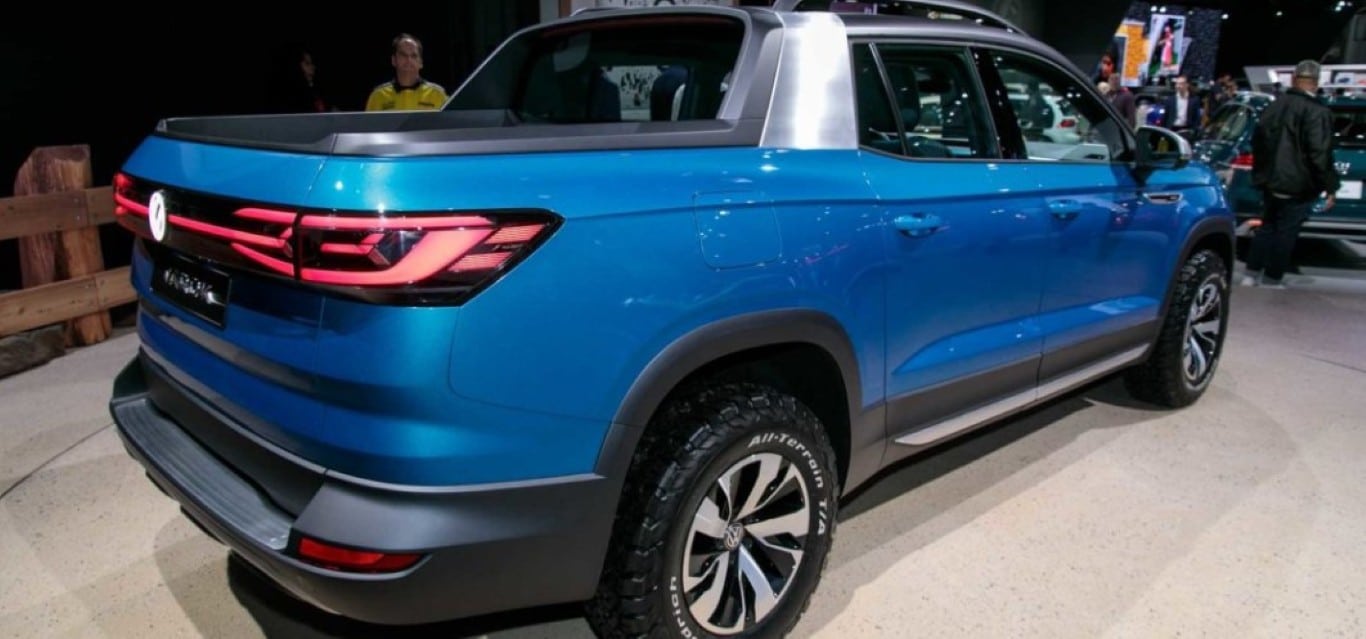
Volkswagen officially confirmed plans for the launch of one of its most strategic projects for the national market, the Udara pickup truck. The new vehicle is scheduled to arrive at dealerships in the first half of 2026 and will have its production centralized at the São José factory of Pinhais, in the state of Paraná. The model’s main mission is to occupy the space that will be left by the iconic Saveiro, which will end its long trajectory of more than four decades.
With the introduction of the Udara, the German automaker intends not only to replace one of its longest-lived products, but also to advance the modernization of its portfolio to meet new environmental regulations and consumer demands. The project positions the pickup in an intermediate segment, between the entry-level models and the Amarok, with the aim of competing directly with consolidated rivals such as the Fiat Toro and the Chevrolet Montana.
The development of the new pickup truck is part of an ambitious Volkswagen investment cycle in the country, which will reach R$16 billion by the year 2028. The basis for the project will be the modern MQB Hybrid platform, the same one that supports vehicles like the T-Cross, but duly adapted to the structural requirements of a cargo vehicle. Essa technological architecture is fundamental to enable the integration of electrification systems.
MQB Hybrid platform and 1.5 TSI Evo2 engine
The Volkswagen Udara’s mechanical set will be powered by the 1.5 TSI Evo2 flex engine, a state-of-the-art unit designed to deliver approximately 150 horsepower. The great innovation lies in its association with a 48-volt mild-hybrid system, also known as mild-hybrid. Essa technology employs a small electric motor that acts as a generator and starter motor, assisting the combustion engine during acceleration and speed recovery. The direct result is a significant reduction in fuel consumption and the emission of polluting gases, ensuring compliance with the strict standards of Proconve L8. Este new engine, which will gradually replace the current 1.4 TSI in other vehicles from the brand, incorporates advanced technologies such as a variable geometry turbo and a cylinder deactivation system to optimize energy efficiency in different driving regimes.
Robust configuration for heavy work
To ensure consistent performance in both urban use and work applications, Volkswagen engineering developed a technical configuration focused on durability and operational efficiency. The transmission selected for the initial versions will be an eight-speed automatic, coupled to a front-wheel drive system. Essa strategic choice aims to optimize fuel consumption and, at the same time, reduce vehicle production and maintenance costs, making it more competitive in the market.
Regarding the rear suspension, the model will adopt a traditional solution that has been widely tested in cargo vehicles: a rigid axle with leaf springs. Esse system was specifically designed to support heavy loads continuously, without compromising the integrity and durability of the assembly. Essa is an essential feature for the entry-level versions, which will inherit the Saveiro’s clientele, focused on professional use and commercial fleets.
Market strategy with versions for all audiences
Volkswagen plans to offer the Udara in a diverse range of versions, seeking to meet different consumer profiles and usage needs. The entry-level configuration will be the direct successor to the Saveiro, with single and extended cab options, simplified finishing and a total focus on functionality and low acquisition and maintenance costs.
This variant will be aimed mainly at the direct sales channel, serving companies, fleet owners and rural producers who need a robust and reliable vehicle for daily work.
For consumers looking for a multifunctional vehicle for daily life and leisure activities, the German automaker is preparing more equipped and refined versions. Esses models will feature a complete package of comfort and technology items inherited directly from the T-Cross SUV.
Price positioning and direct competition
Initial price estimates suggest that the entry-level version of the Udara will start at approximately R$120,000, a competitive level for the work pickup truck segment.
Meanwhile, the top-of-the-line configurations, which will be full of technology, safety features and superior finishing, should reach the R$180,000 range.
This price positioning puts the Udara in direct confrontation with the flex versions of the Fiat Toro and the more complete models of the Chevrolet Montana. With a wheelbase estimated at around 3 meters, the pickup promises to offer generous internal space and a cargo bed with competitive volumetric capacity.
The strategy of focusing on 4×2 traction and leaf spring rear suspension differentiates it from the Montana, which uses a multilink suspension more focused on comfort, and brings it closer to the robustness proposal of the Toro.
Billion-dollar investment in the Paraná plant
The São José factory of the Pinhais, in the Paraná, was the unit chosen to be the production center for the new pickup truck. The industrial complex will receive an investment of R$3 billion, aimed at modernizing assembly lines and adapting processes for manufacturing the Udara.
This strategic decision aims to optimize logistics and production costs, taking advantage of the plant’s already consolidated infrastructure and qualified workforce. Além to supply the domestic market, Volkswagen has plans to transform Udara into an export product, targeting América Latina’s main markets.
The end of an era: farewell to Volkswagen Saveiro
The arrival of Udara on the market will represent the end of a cycle for Volkswagen Saveiro. Lançada in 1982 as a derivative of the Gol, the compact pickup has established itself as an icon on the national automotive scene, with more than 1.5 million units sold throughout its history.
Its recognized robustness and versatility have made it an essential work tool for countless professionals and companies. Contudo, its old platform no longer supports new safety and electrification technologies, motivating the transition to a completely new project.
Development and testing on national soil
Development work on the Udara continues at an accelerated pace, with camouflaged prototypes, known as “mules”, already in the test run phase on national territory. Esses vehicles use bodies from other models, such as the Tiguan SUV, to hide the final design while the engineering team calibrates crucial components such as the engine, suspension and braking system, ensuring the vehicle’s adaptation to the various conditions of use found in the country.



