
James Webb unravels the cosmic web of dark matter with the most detailed map ever produced

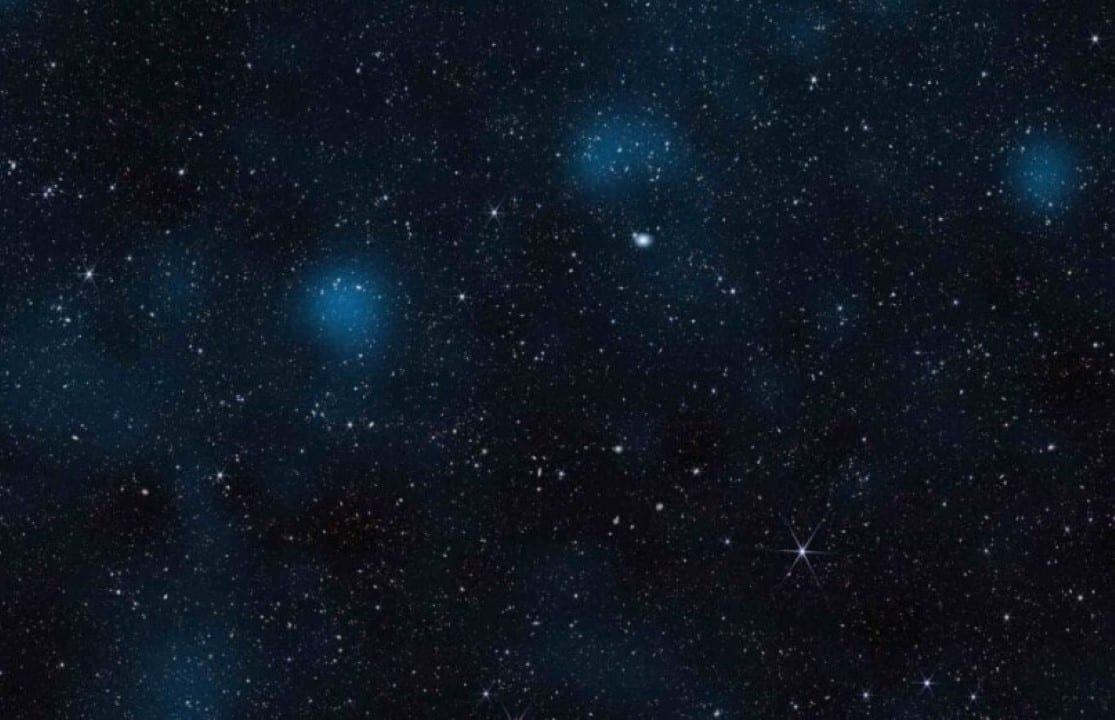
An international team of scientists, using Telescópio Espacial James Webb, released the most detailed map ever created of the distribution of dark matter in the universe. The result, the result of 255 hours of continuous observation in a specific area of the sky, allowed the identification of almost 800,000 galaxies and offered an unprecedented view of how this invisible substance acts as the gravitational basis for the formation of all the cosmic structures we know.
The research, published in the prestigious scientific journal Nature Astronomy, reinforces the understanding that dark matter makes up approximately 26% of the entire universe. Embora cannot be seen directly, its gravitational influence is the driving force that organizes galaxies and clusters over billions of years, functioning as a true cosmic skeleton that supports visible matter.
To achieve this feat, the researchers employed a technique known as weak gravitational lensing. The gravity exerted by dark matter distorts the light coming from distant galaxies, and the precise analysis of these distortions makes it possible to map their presence. The new map obtained has a resolution twice as high as previous surveys carried out by Telescópio Espacial Hubble, revealing previously inaccessible details of the cosmic web.
Używanie tego#JamesWebbmiędzynarodowy zespół kierujący JPL wykonał mapę pierwszego w historii szczegółowego rozmieszczenia jej dystrybucji#materiaoscura.@NASAWebb @NASAJPL @ESA_Webb https://t.co/TAAPamcLrK pic.twitter.com/IPkYaO9Eu3
— AstroSpace.it (@AstrospaceI)27 stycznia 2026 r
A global scientific collaboration
The initiative was led by researchers from Universidade of Durham, in Reino Unido, in close collaboration with NASA and Escola Politécnica Federal of Lausanne, in The teams combined their expertise in cosmology and observational astrophysics to analyze the ultra-high-resolution images captured by James Webb’s advanced infrared instruments.
The essential data for the study was provided by the COSMOS-Webb program, an effort dedicated to observing a vast area of the sky to reconstruct the distribution of mass in the early universe. The joint work was essential to process the massive volume of information and validate the results, which are in full accordance with standard cosmological models on the structural evolution of the cosmos.
The observation focused on the direction of the constellation Sextans, a window to the distant universe. The analysis allowed not only to map dark matter, but also to confirm how it attracts ordinary matter, made up of atoms, giving rise to the formation of stars, planets and, eventually, entire galaxies. Esse hierarchical process of formation is a cornerstone of modern cosmology.
The gravitational lensing technique in detail
Dark matter detection relies on indirect methods, and weak gravitational lensing is one of the most powerful tools available to astronomers. According to the Einstein theory of general relativity, mass bends the fabric of spacetime. Light, as it travels through this curved space-time, has its trajectory deflected, similar to how a glass lens bends light.
When light from a very distant galaxy travels toward Terra, it passes through vast concentrations of dark matter. The gravitational pull of these invisible concentrations acts like a cosmic lens, subtly distorting the image of the galaxy we observe. Essa distortion is minimal and manifests as a slight deformation in the apparent shape of the background galaxies.
The challenge is to measure this deformation statistically in hundreds of thousands of galaxies. Individualmente, the distortion is barely noticeable, but by combining data from a large number of galaxies, scientists are able to reconstruct a map of the mass that caused the effect. The precision of James Webb’s infrared instruments was crucial in capturing these deformations with unprecedented clarity, allowing faithful reconstruction of the total mass field in the observed region.
Comparison with previous observations of Hubble
Dark matter maps previously developed with data from Telescópio Espacial Hubble, although revolutionary for their time, had limited resolution. Eles were able to capture large-scale structures, such as large galaxy clusters and superclusters, but the finer details of the cosmic web remained out of reach.
The new James Webb survey reveals thinner filaments and more compact clumps that were not visible in the Hubble data. Essa’s substantial improvement is due to Webb’s superior ability to observe at infrared wavelengths, allowing it to see older, more distant galaxies whose shapes are essential for gravitational lensing analysis.
The observed structures correspond to a period when the universe was about half its current age, a time when star formation reached its peak activity. The greater clarity of the new map makes it possible to distinguish details of the cosmic network on smaller scales, identifying substructures that indicate ongoing gravitational accretion processes, where matter is channeled along filaments to nodes of greater density.
The details of the identified cosmic distribution
The distribution revealed by the map clearly shows filaments that connect dense clumps of dark matter, forming a vast interconnected network. It is within this structure that visible galaxies meet, like pearls on a cosmic necklace. The brightest regions on the map indicate the highest concentrations of this mysterious substance, which act as the central nodes of the web.
Shortly after Big Bang, dark matter began to clump together into gravitational halos. Esses halos, in turn, attracted cosmic gas and dust, which are common baryonic matter, beginning the process of star and galaxy formation. The map confirms that about 26% of the entire energy density of the universe is made up of this invisible component, a number consistent with previous measurements but now visualized with unprecedented clarity.
In contrast, ordinary matter, which includes all the atoms that form stars, planets and living things, represents only 5% of the total content of the universe. The majority, around 69%, is made up of dark energy, an even more enigmatic force that is responsible for the accelerated expansion of the cosmos. Este energy balance explains the dynamics of the universe on a large scale.
Scientists have also observed how dark matter halos are essential for holding galaxies together. Sem this additional gravity, the centrifugal forces generated by the rotation of galaxies would cause their stars to disperse throughout space. The map therefore provides direct visual evidence of this fundamental structural role that dark matter plays at all scales.
The initial formation of universal structures
Dark matter began its agglutination process in the first moments after Big Bang, long before ordinary matter. Pequenas Density fluctuations in the early universe were amplified by gravity, causing dark matter to clump together into increasingly denser regions. Essa initial clumping created the gravitational “wells” that subsequently captured the baryonic matter. Esse process kicked off the hierarchical formation of the structures we see today, from small dwarf galaxies to the largest superclusters.
Over billions of years, galaxies formed and evolved within these dense halos of dark matter. The current map depicts this network at an intermediate stage of its evolution, showing how the filaments act as cosmic highways, guiding matter toward the high-density nodes where large galaxy clusters form. The end result is a reconstruction of the total mass field with impressive fidelity, offering a direct glimpse into a process that, until now, has been understood primarily through complex numerical simulations.
Confirmation of the composition of the universe
The new observations of James Webb strengthen the standard cosmological model, known as Lambda-CDM. Este model describes the evolution of the universe based on parameters tuned from observational data, including the presence of cold dark matter (CDM) and dark energy (Lambda). The new map provides additional constraints on the properties of dark matter, helping to further refine the model.
The consistency between the detailed map and the Lambda-CDM predictions is a remarkable testament to our current understanding of the cosmos. Ele confirms that the universe is composed of three main ingredients in well-established proportions. Estudos like this are crucial for rigorously testing the foundations of cosmology and for looking for any deviations that might point to new physics beyond the Standard Model.
Advances made in resolution
The resolution achieved by James Webb represents a qualitative leap in our ability to study dark matter. The structures now resolved are twice smaller than those that could be seen in the same field with Hubble, allowing for much more detailed analysis. Essa’s enhanced capability comes from Webb’s larger mirrors and infrared-optimized instruments, which can penetrate cosmic dust and observe more distant galaxies with greater clarity.
Next steps in the investigation
Future observations planned by scientists aim to expand the map to cover additional areas of the sky. Combining this data with information from other telescopes, such as the Euclid and Roman missions, will allow the creation of three-dimensional reconstructions of the cosmic web, offering a dynamic view of its evolution over time. Esses joint efforts promise even more comprehensive and detailed maps in the coming years, deepening our understanding of the fundamental nature of the universe.



