
Black Lotus used by Ayrton Senna in 1986 victories will be auctioned for R$63 million

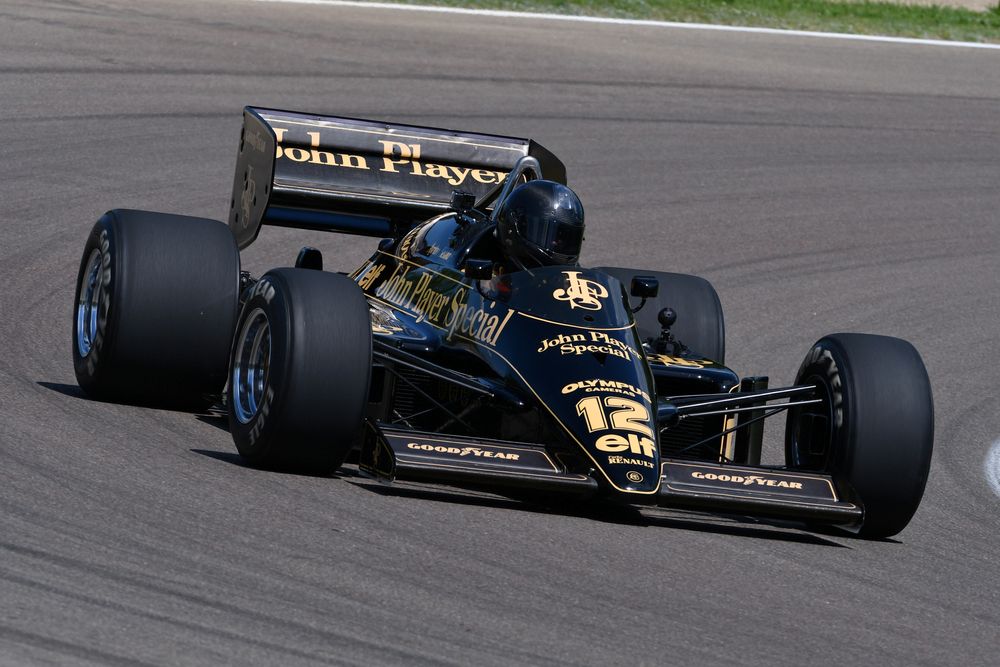
The luxury collectibles and global motorsport market is preparing for one of the most anticipated events of the season with the announcement of the auction of the historic Lotus 98T. The vehicle, used by three-time world champion Ayrton Senna during the 1986 Fórmula 1 season, will be offered to the public at an event organized by RM Sotheby’s on March 4th. Avaliado at approximately 12 million dollars, which corresponds to R$ 63.1 million at the current price, the single-seater represents one of the most brilliant periods in the Brazilian driver’s career in the highest category of motor sport. The event will take place at Reino Unido, where the car remains preserved after undergoing a rigorous mechanical and aesthetic restoration process.
The importance of this model lies not only in its financial value, but in its historical performance on the tracks under the command of one of the sport’s greatest idols. Durante the 1986 season, Senna used this specific chassis to achieve memorable victories in the Grandes Prêmios of Detroit, in the Estados Unidos, and of the The car is easily recognized by its black and gold paintwork, colors that have become synonymous with elegance and speed in the history of the Fórmula 1. Além of victories, the Brazilian driver accumulated eight podiums and eight pole positions that year, consolidating his reputation as the best qualifier of his generation.
- The auction will be held at Alton, at Reino Unido, in early March.
- The initial valuation of the vehicle is around R$63.1 million.
- The Lotus 98T model has an engine capable of exceeding 1000 hp.
- The recent restoration was led by British historic vehicle experts.

Technical and mechanical details of the legendary Lotus 98T
Designed by renowned engineer Gérard Ducarouge, the Lotus 98T was a mechanical engineering milestone of the 1980s, weighing just 540 kg in its racing configuration. The carbon fiber and Kevlar chassis housed an Renault V6 turbo engine, known for delivering brutal power that often exceeded the 1000 horsepower mark in rating. Essa’s combination of lightness and brute strength required technical expertise that Ayrton Senna mastered like few others, allowing him to challenge more structured teams at the time.
The vehicle passed through the hands of private collectors over the last few decades and reached its current owner in 2016. To ensure that the single-seater maintained its operating capacity, it was subjected to a complete revitalization by a preparer specializing in classic competition cars. Preservation work included the maintenance of original components and the calibration of electronic systems that were innovative for the period in which the car officially competed.
Ayrton Senna’s performance in the 1986 season
The 1986 season is often cited by analysts as one of the years in which Senna demonstrated greater technical maturity in dealing with the limitations of the Lotus team in the face of the hegemony of Williams and McLaren. With 55 points at the end of the championship, the Brazilian proved that the Lotus 98T was competitive on different types of tracks, from closed street circuits to high-speed tracks. Enquanto Senna accumulated records for fast laps and pole positions, his teammate, Johnny Dumfries, faced difficulties in extracting the same performance from the equipment, scoring just three points.
The victories in Detroit and Espanha are considered fundamental chapters in the driver’s biography, with the dispute on Spanish soil being one of the closest finishes in the history of the category against Nigel Mansell. The car up for auction was the direct instrument of these achievements, which elevates its status from a collector’s item to that of a historical monument of world sport. Interest from international investors is expected to raise the final bid beyond initial estimates, considering the scarcity of original turbo-era models in perfect working order.
Preservation and provenance of the historic vehicle in Reino Unido
The car’s current location at Alton, at Reino Unido, facilitates access for large European and Asian buyers who dominate the high-value vehicle auction sector. RM Sotheby’s, responsible for organizing the event, highlighted that the origin of the chassis is fully documented, which guarantees the authenticity of each part that makes up the Lotus 98T. The recent restoration not only enhanced the visual appearance, but also ensured that the Renault engine can be safely operated by anyone purchasing the machine.
The car’s structure remains faithful to the standards established by Ducarouge, maintaining the aggressive aerodynamics that allowed the Brazilian driver to attack the curves with absolute precision. The auction market has recorded successive records for Fórmula 1 cars driven by champions, and the direct association with the name of Ayrton Senna is a determining factor for the exponential appreciation. Colecionadores see this opportunity as a rare chance to own a piece of engineering that shaped the visual and competitive identity of Fórmula 1 in the 1980s.
Cultural and financial impact of the auction in March
The value of R$63.1 million reflects the mystique that still surrounds the figure of Ayrton Senna around the world, even decades after his last race. The auction is not only seen as a commercial transaction, but as an event to preserve global sporting memory that attracts the attention of fans and investors from different countries. Especialistas point out that maintaining the original “John Player Special” livery is one of the biggest attractions for the public, given the nostalgic charge that the black and gold colors carry for motorsport enthusiasts.
Holding this event in March puts historic motorsport in the spotlight again, reinforcing how track technology from the past still fascinates new generations of engineers and drivers. The amount raised will be closely monitored by art and antiques markets, serving as a thermometer for the appreciation of assets linked to sports legends. The expectation is that the final buyer will keep the vehicle in private exhibitions or in museums dedicated to the history of speed, ensuring that the legacy of the Lotus 98T remains accessible for study and appreciation.
Technological legacy of the Lotus in the era of turbo engines
The Lotus 98T represented the pinnacle of the British team’s development before a period of technical decline that would come in the following years. Extensive use of rudimentary telemetry and the introduction of more complex engine management systems allowed Senna to squeeze out every fraction of a second available on European and American tracks. Essa’s incessant search for technical perfection was a mutual characteristic between the pilot and the engineering team led by Ducarouge at the time of competitions.
Even with the evolution of simulators and modern carbon fiber, the 1986 chassis is still studied for its structural efficiency and weight distribution. The auction allows for an analysis of how fuel restrictions and turbo pressure influenced racing strategy, making each Grande Prêmio a challenge of intelligence and mechanical endurance. By purchasing the black Lotus, the new owner takes with them an essential part of the evolution of safety and performance that defines the contemporary Fórmula 1 today.
The global classic racing car market
The appreciation of classic race cars has outpaced other types of traditional investments over the past five years, driven by growing demand for items with a proven track record. Veículos that beat Grandes Prêmios and were driven by icons like Senna, Schumacher or Fangio occupy the top of the market value pyramid. The auction of the Lotus 98T takes place at a time of liquidity in the luxury market, where tangible assets of high historical relevance are sought after as a way of diversifying assets.
Auction houses like RM Sotheby’s invest heavily in targeted marketing to ensure the news reaches key investors in Mônaco, Suíça and Transport logistics for a vehicle of this size require extreme care, especially after the detailed restoration that made it ready for display. The reserve price and market estimates confirm that the Lotus brand, associated with the talent of Senna, remains one of the most valuable and respected on the international automotive scene.





