
Comet 3I/ATLAS: hypothetical impact simulation in Madrid reveals extreme consequences

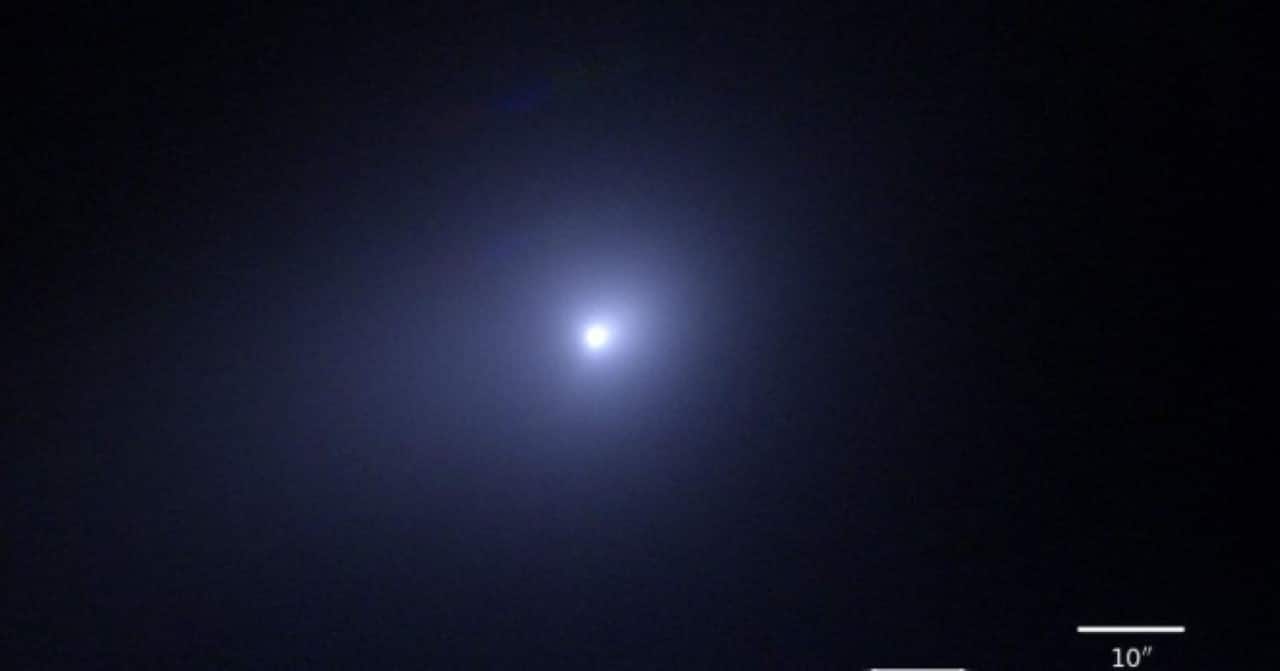
The interstellar comet 3I/ATLAS, the third confirmed object originating from outside Sistema Solar, has attracted worldwide attention since its discovery in July 2025. Ferramentas online and Asteroid Launcher allow simulating hypothetical collision scenarios, including impacts on cities like NASA and other agencies emphasize that the comet follows a safe trajectory, at minimum distances of around 1.8 astronomical units from the planet.
Recent observations highlight the scientific importance of the object, with a rare alignment in January 2026 facilitating detailed studies of its composition and structure. Public interest has increased with viral simulations exploring “what if” the comet struck dense urban areas.
- Discovery occurred on July 1, 2025 by the ATLAS telescope at Chile.
- Hyperbolic orbit confirms interstellar origin.
- No danger of collision with Terra recorded.
Discovery and trajectory of the comet
Comet 3I/ATLAS was initially identified as a magnitude 18 point, moving at high speed in the southern sky. Early Observações, including images of Zwicky Transient Facility, made it possible to trace its entry into Sistema Solar from June 2025 onwards.
Its hyperbolic orbit, with an eccentricity greater than 6, indicates that the object is not gravitationally bound to Sol and will leave the system definitively after passing. Perihelion occurred on October 29, 2025, at 1.356 astronomical units, within the orbit of Marte, but still at a safe distance.
The excessive hyperbolic velocity of 58 km/s is the highest recorded among known interstellar objects. Essa characteristic suggests origin in an ancient region of Via Láctea, possibly billions of years old.
Physical characteristics revealed
Estimates of the core range between 0.5 and 5.6 kilometers in diameter, with recent data from Hubble and JWST pointing to around 2.6 kilometers in some analyses. The elevated mass sets 3I/ATLAS apart from previous visitors like ‘Oumuamua and Borisov.
The comet presents intense activity, with a coma rich in carbon dioxide and a notable presence of methane, as well as water vapor and atomic nickel. Elevated CO2/H2O ratio indicates formation beyond the ice line of CO2 in your original system.
Spectroscopic observations detected the release of gases even at great distances from the Sol, activating already at 6.4 astronomical units. The ionic and dust tail extends hundreds of thousands of kilometers.
Rare alignment in January 2026
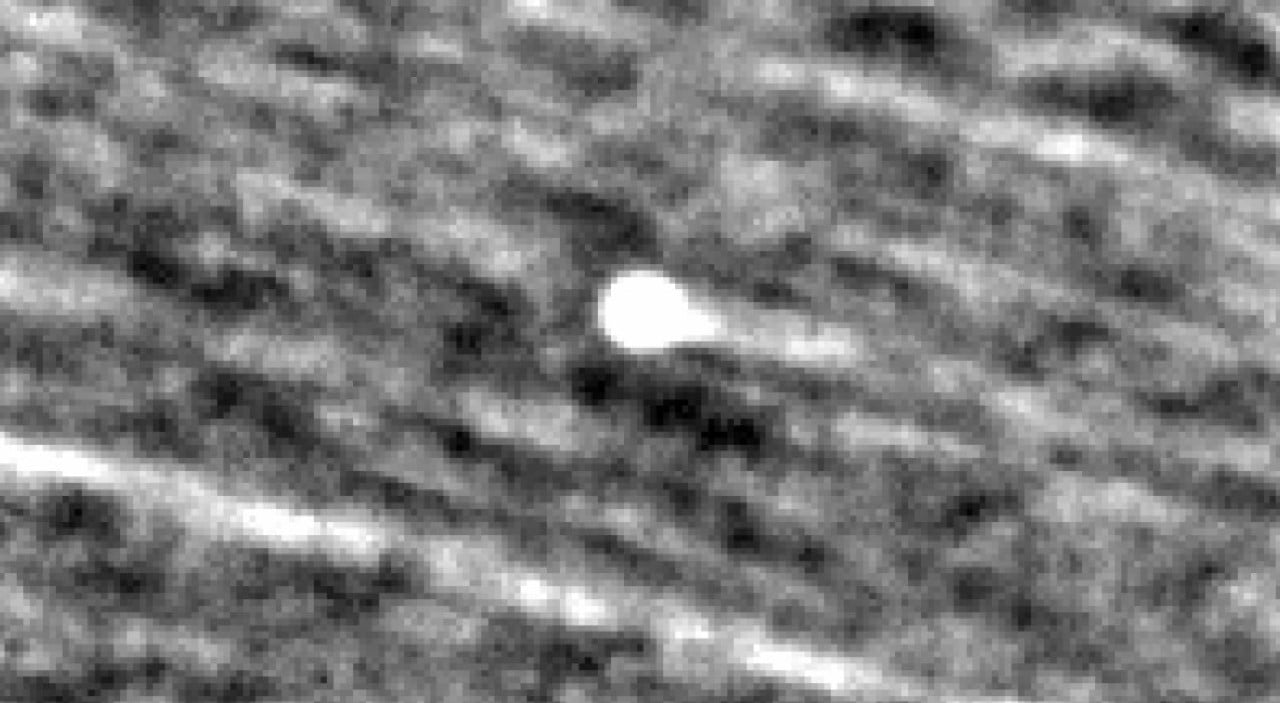
The period between January 19 and 26, 2026 marked a special configuration, with the comet almost aligned between Terra and Sol. Essa oppositional geometry allowed detailed observations of albedo and surface structure.
Space telescopes like TESS and Hubble have captured brightness variations associated with the rotation, estimated to take about 15 to 16 hours. The low angular phase facilitated studies that are rarely repeated in decades.
Scientists highlight unique opportunity to compare interstellar matter with comets from Sistema Solar. Dados collected include polarimetry and infrared spectra.
Observations by multiple instruments
Space agencies have mobilized extensive resources to accompany 3I/ATLAS. Hubble imaged in July and November 2025, while JWST analyzed composition in August and December.
Missions such as Psyche, Lucy and Europa Clipper recorded the comet during their trajectories. Observatórios terrestrials, including Very Large Telescope and Gemini, contributed color and polarization data.
- Hubble: upper limit of 5.6 km for core.
- JWST: dominant methane and CO2 detection.
- TESS: extended monitoring in January 2026.
- MAVEN: hydrogen envelope around the coma.
Hypothetical impact simulations
Tools like Asteroid Launcher, developed by Neal Agarwal, have gained popularity by allowing you to configure parameters of celestial objects and visualize effects in specific locations. Usuários include an approximate diameter of 440 meters, a speed of 246 thousand km/h and a cometary composition for extreme scenarios.
In the case of a simulated impact at Puerta of Sol, at Madri, the model predicts a crater measuring 3.8 kilometers in diameter and 439 meters deep. The energy released would be equivalent to 826 megatons of TNT, surpassing global nuclear arsenals.
The shock wave would generate a boom of 242 decibels, causing immediate victims in a wide radius. Ventos extremes would reach 4 km per second, destroying structures across tens of kilometers.
A magnitude 6.4 earthquake would amplify damage, with widespread collapses. Estimativas indicate more than 1.7 million victims from the air storm alone.
Detailed consequences in the simulation
Immediate vaporization would affect central neighborhoods such as Centro, Salamanca and Retiro. Nearby Municípios, including Getafe and Leganés, would suffer severe lung damage within 18 kilometers.
Up to 24 kilometers, ruptured eardrums would be common, while buildings would collapse up to 41 kilometers. Ejecção of material would form a fireball visible from a long distance.
Such events occur on average every 30 thousand years for objects of this size. The simulation reinforces the importance of planetary surveillance, although 3I/ATLAS does not present a risk.
Importance for planetary defense
The safe passage of the comet highlights the effectiveness of monitoring systems such as ATLAS and NEOWISE. NASA coordinates international efforts to catalog potentially dangerous objects.
3I/ATLAS studies contribute to understanding volatile distributions in exoplanetary systems. Anomalous Composição suggests chemical diversity beyond Sistema Solar.
Scientists emphasize that interstellar visitors offer unique windows into the cosmic past. Dados collected will help future models of planetary formation.
Comet 3I/ATLAS continues its outward journey, reaching Oortian distances within centuries. Sua retrograde trajectory and high velocity remain objects of ongoing analysis.



