
Costa Rica elects Laura Fernández with promise of a hard line against crime and economic continuity

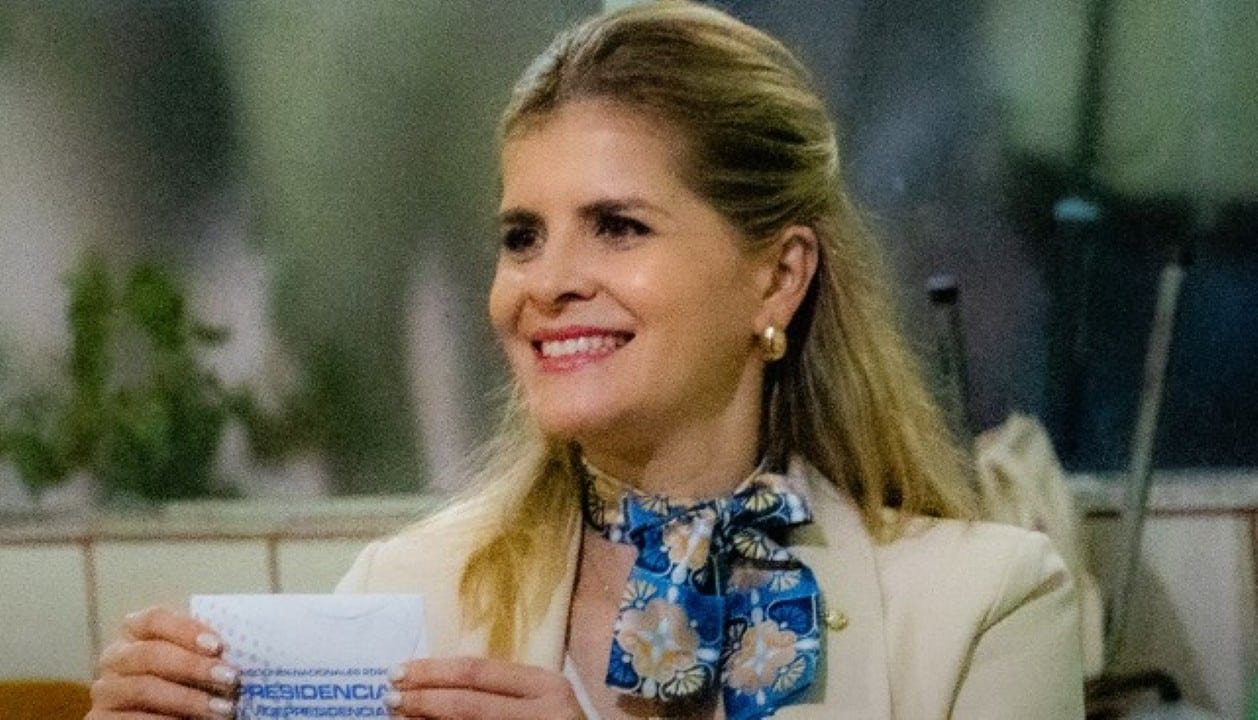
Laura Fernández, from Partido Povo Soberano, was elected the new president of Costa Rica, with her inauguration scheduled for May 8th. The right-wing candidate won a decisive victory in the first round, becoming the second woman to command the Central American nation, a significant milestone for local politics.
His campaign was solidly built on two central promises: to continue the policies of the current president, Rodrigo Chaves, and to implement a rigorous strategy to combat crime. Essa platform resonated with the electorate, who gave Fernández a clear mandate to focus on public safety and the country’s economic stability.
The political scientist’s victory signals a period of consolidation of ongoing government projects, while at the same time proposing to face the nation’s most urgent challenges. In his victory speech, Fernández highlighted the need for institutional reforms and the pursuit of prosperity, describing the electoral result as a “political revolution” carried out through the ballot box.
A decisive electoral triumph in the first round
Laura Fernández secured the presidency by surpassing the necessary mark to avoid a second round. Dados Tribunal Superior Eleitoral’s preliminaries, with 88.43% of the votes counted, showed that she achieved 48.5% of the votes, a considerable advantage over her main opponent,
This result places her among a select group of female leaders in the region and represents a new chapter for Costa Rica, historically recognized as one of the most stable democracies in América Central. The significant victory reflects strong popular endorsement of his governance vision.
Career in public service and strategic leadership
Before running for president, Fernández built a solid career in Costa Rican public service. Atuou as a political advisor and held prominent positions in Ministério, Planejamento Nacional and Política Econômica, where she developed great knowledge about the country’s administrative machinery and its development needs.
His experience was fundamental for the formulation of public policies and implementation of government strategies. Esse deep understanding of the internal mechanisms of government allowed her to articulate a clear and pragmatic electoral platform.
A pivotal moment in her career was her appointment as minister by President Rodrigo Chaves in 2022, a recognition of her technical ability and commitment. Aos 39 years old, the political scientist, who also served as Ministra of Presidência and Planejamento, used this experience to defend the continuity and improvement of existing national projects.
Combating organized crime and drug trafficking
One of the pillars of the future administration of Fernández is its firm stance against organized crime and drug trafficking, problems that have generated great concern among Costa Ricans. Ela promised strict measures to restore security in the country, an urgent issue in a nation that was once synonymous with tranquility.
Among its most forceful proposals is the possibility of temporarily suspending individual rights in specific areas to facilitate the capture of criminals linked to drug trafficking. Embora Although the measure generated criticism from the opposition, it reflects the determination of its administration to adopt drastic actions to contain violence.
Fernández also plans to tighten sanctions against organized crime and continue the project to build a maximum security prison. Inspirado in international models and initiated under the management of Chaves, the project is part of the “Costa Rica Segura Plus 2023-2030” strategy.
The broader strategy aims to combat crime through several fronts, including strengthening police forces, modernizing the justice system and implementing prevention programs. The objective is to reverse the growing feeling of insecurity that affects the population.
Economic stability and growth priorities
The Laura Fernández government plan highlights the economic advances of the current administration as a solid foundation for its mandate, which will extend until 2030.
According to the report “Estado de la Nación 2025”, Costa Rica demonstrated a notable economic recovery between 2024 and the first half of 2025, positioning itself as one of the best performing economies among the members of However, important challenges remain, especially in income redistribution and ensuring long-term fiscal sustainability, areas that the new president has promised to address carefully.
Citizens’ growing concern about security
Despite economic progress, increasing insecurity and the expansion of organized crime are consistently at the top of the concerns of Costa Rica citizens. The perception that security in once peaceful communities has deteriorated has become a palpable source of fear and anxiety across the country. Moradores report a drastic change in their daily lives, like María Isabel Hernández, from San José, who describes how the routine of a quiet neighborhood has transformed. “We went from a neighborhood where people thought twice about going to the corner store because they didn’t know if they were going to go home,” he said. Dados officials from the Organismo of Essa alarming trend, largely attributed to gang disputes over control of drug trafficking, stands in stark contrast to Costa Rica’s former reputation as the “Switzerland of América Central”, forcing Fernández to place public safety as a central pillar of its presidential agenda to restore public trust.
Broad vision for national development
In addition to security and economic stability, the Fernández platform outlines several other crucial objectives. Entre they are committed to rebuilding public trust in the Costa Rica judicial system, which they consider a fundamental component to the functioning of a healthy and robust democracy. Sua administration will also seek to create a more efficient state, promoting greater social inclusion and ensuring the safety of all citizens, regardless of their socioeconomic status. Modernizing education and ensuring long-term environmental sustainability are other important pillars, reflecting a holistic approach to national development that aims to balance growth, social well-being and protection of natural resources.
Tenure and national expectations
Laura Fernández will officially assume the presidency on May 8, succeeding Rodrigo Chaves. Ela will be the second woman to lead Costa Rica, following the term of Laura Chinchilla (2010-2014). Seu government will be closely watched as it navigates the country’s complex challenges.
Strengthening democratic participation
The high voter turnout, which reached 69.5%, significantly exceeded the 56.8% recorded in the 2022 elections.
In his victory speech, Fernández reiterated his commitment to strengthening the country’s democratic institutions. Ela emphasized the importance of returning institutions to the “sovereign people” to generate greater well-being and prosperity, promoting what he called a true political revolution through peaceful and institutional means.



