
Intense solar activity causes class X8.1 explosion and promises aurora spectacle on Earth

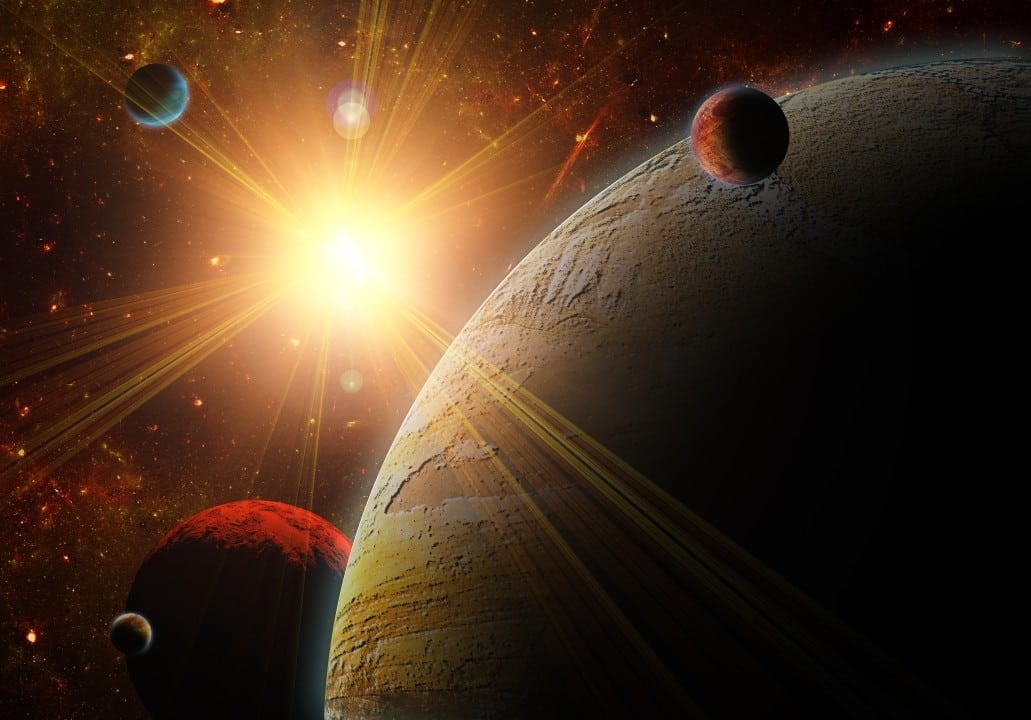
Sol has demonstrated a significant increase in activity recently, releasing a series of energetic eruptions that keep scientists on alert. The star, which governs our solar system, is going through a period of high magnetic instability, resulting in phenomena that can have direct effects on the space environment around our planet.
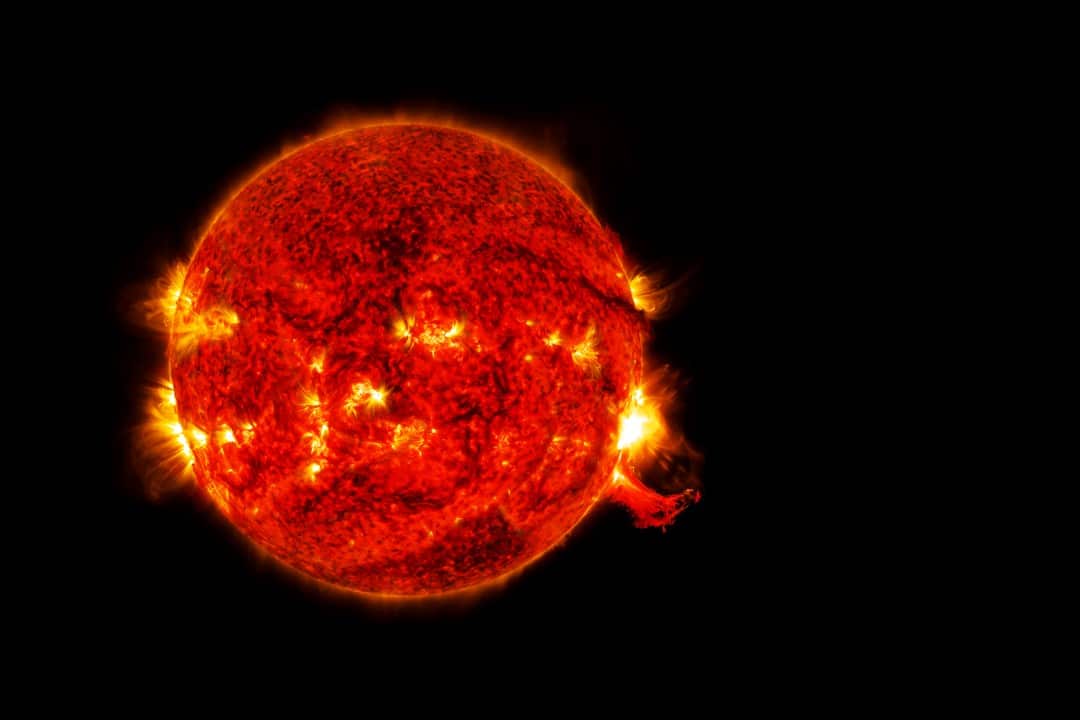
Among the monitored events, an X8.1 class solar flare was recorded, classifying it as one of the most powerful in recent decades. The Este event stands out not only for its magnitude, but also for being part of a sequence of dozens of other smaller explosions and at least three of class X, indicating that the current solar cycle is at a time of peak activity.
The main consequence expected over the next few days is the arrival of a plasma cloud, known as a coronal mass ejection (CME), at Terra. The interaction of this cloud with the planet’s magnetic field has the potential to generate northern lights and southern lights visible at unusual latitudes, in addition to posing risks to technological infrastructures.
The classification and power of solar flares
Solar flares are categorized into a system of letters – A, B, C, M and X – to measure their intensity. Cada class represents a tenfold increase in energy released compared to the previous one, with class A being the weakest and X being the strongest. Dentro of each category, a numerical scale from 1 to 9 indicates relative strength. Contudo, Class X does not have an upper limit, which means explosions can exceed level X9. The recently recorded X8.1 eruption approaches the extreme of this scale, being considered an event of great scientific relevance and one of the brightest observed since the beginning of modern monitoring. Tais explosions are the result of the breaking and reconnecting of extremely complex magnetic field lines on the surface of Sol, releasing a colossal amount of radiation and energy into interplanetary space in a matter of minutes.
What is a coronal mass ejection
It is essential to differentiate a solar flare from an Ejeção from Massa Coronal (EMC), although the two phenomena are often associated. The eruption is the release of electromagnetic radiation, such as X-rays and ultraviolet light, which travels at the speed of light and reaches Terra in about eight minutes.
The EMC, on the other hand, is a gigantic bubble of plasma and magnetic field expelled from the solar corona. Ela travels much more slowly, taking one to three days to reach our planet. It is the arrival of this mass of charged particles that interacts with the Earth’s magnetosphere and triggers geomagnetic storms and auroras.
Risks to technology in orbit and on Terra
Satellites operating in orbit are the most vulnerable to the direct effects of a solar storm. Intense radiation can damage sensitive electronic components, while increased atmospheric drag can alter their orbits. Isso directly affects essential services such as GPS, telecommunications and weather forecasts.
On the surface, the main risk is associated with geomagnetically induced currents (GICs). Durante an intense storm, these electrical currents can flow through power grids, overloading transformers and causing large-scale blackouts. Securing these networks is a growing concern for governments and energy companies.
Communication systems that rely on the ionosphere, such as high-frequency (HF) radios used in aviation and maritime navigation, may also experience disruptions. Solar particles change the density of this atmospheric layer, absorbing or reflecting radio signals in unpredictable ways, which can lead to communications blackouts.
Solar cycle 25 and current activity
The activity of Sol is not constant, following a pattern known as the solar cycle, which lasts approximately 11 years. Este cycle is marked by a period of low activity (solar minimum) and a period of high activity (solar maximum), when the number of sunspots, flares and CMEs increases dramatically.
We are currently in Ciclo Solar 25, which began in December 2019. Initial forecasts indicated that it would be a relatively weak cycle, similar to the previous one. However, the observed activity far exceeded expectations, with a significantly higher number of sunspots and flares than predicted.
Scientists believe that the peak of Ciclo Solar 25 may have already been reached or is very close to occurring. The occurrence of high-intensity eruptions, such as class X8.1, reinforces the idea that Sol is in its most active phase.
Even after the peak, the decline phase of the cycle can still produce energetic events. For this reason, continued surveillance is essential to predict and mitigate the potential impacts of space weather in the coming years.
Constant monitoring by space agencies
Surveillance of Sol is a round-the-clock task carried out by a global network of ground and space observatories. NASA, with missions like Observatório and Dinâmica Solar (SDO), provides ultra-high-resolution images of the star at multiple wavelengths, allowing scientists to track the evolution of active regions in real time.
This data is processed by NOAA’s Centro of Previsão of Clima Espacial (SWPC) at Estados Unidos. SWPC serves as the official weather service for space weather, issuing alerts, warnings and forecasts that are crucial to satellite operators, airlines, power grids and other industries that can be affected by solar storms.
The spectacle of the northern lights and southern lights
Despite the risks, the interaction of solar plasma with the Earth’s atmosphere also produces one of nature’s most beautiful spectacles: the auroras. Quando charged EMC particles collide with oxygen and nitrogen atoms in the upper atmosphere, they excite these atoms, which then release the extra energy in the form of light, creating the colorful, dancing curtains in the night sky.
Lessons from historical events like Carrington
History records solar events of extreme magnitude that serve as a warning. The most famous is the Evento Carrington of 1859, the largest geomagnetic storm ever recorded. At the time, the technology was limited to telegraph systems, which suffered widespread failures, with operators reporting sparks flying from the equipment.
If an event of the magnitude of Carrington occurred today, the consequences for our ultra-technological society would be catastrophic, with the potential to paralyze power grids, communications systems and the internet for weeks or months. Estudar these historical events is vital to understanding the magnitude of the risk and developing more effective mitigation strategies.




