João Fonseca falls in the ATP rankings after elimination at the Australian Open and focuses on the ATP in Buenos Aires

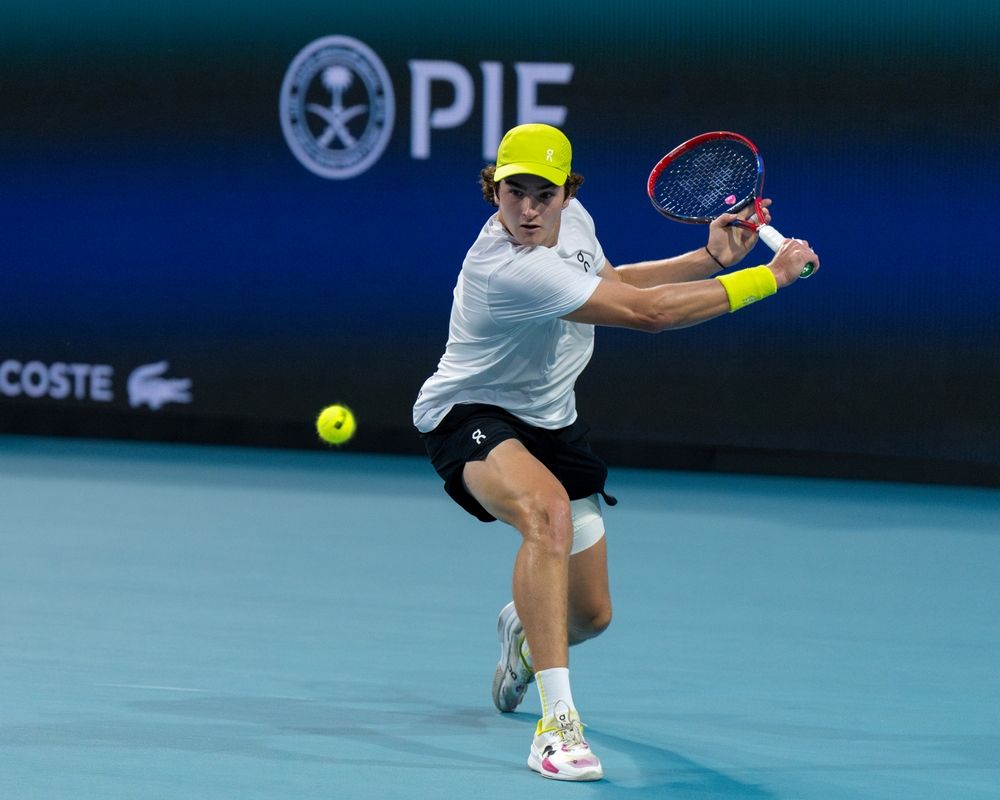
Carlos The Spaniard defeated Novak Djokovic in a historic final at Melbourne, which resulted in significant changes to the Associação top 10 from Tenistas Profissionais (ATP). Enquanto the leaders celebrate, the scenario for Brazilian tennis presents immediate challenges with the fall of João Fonseca in the classification table.
The young Brazilian, who started the season with high expectations, was unable to repeat his performance from the previous year and ended up suffering the consequences in his overall score. The early elimination in the first Grand Slam of the year directly impacted its placement, requiring a quick recovery in the next tournaments of the South American tour. Key highlights from the weekly update include:
- Carlos Alcaraz maintains the isolated lead with 13,650 points after the title;
- Jannik Sinner remains in second place with 10,300 points;
- Novak Djokovic moves up to third place after runner-up in Austrália;
- Alexander Zverev and Lorenzo Musetti complete the group of the five best in the world;
- João Fonseca drops to 34th position after losing important points in Melbourne.
🎾 Calendário of João Fonseca for February and March.pic.twitter.com/UVjZqIz5Hp
—João Fonseca Updates (@fonsecaupdates)January 20, 2026
Performance of João Fonseca on Aberto of Austrália
João The match ended in 3 sets to 1, with partials of 6/4, 2/6, 6/1 and 6/2, in a match where the Brazilian had difficulty maintaining consistency in the decisive moments. With this negative result, the tennis player lost 70 points in the ATP rankings, which resulted in a drop of two positions in the official list released this Monday.
The setback on Australian soil momentarily interrupts the rise that the Brazilian had been charting on the world circuit in recent months. The loss of points is a natural factor within the ATP entry system, where athletes need to equal or surpass their results from the previous year to avoid suffering setbacks in the general classification. Agora, the player’s technical team works to adjust physical and mental conditioning before the start of tournaments on clay courts.
Movements at the top of the world rankings
Carlos Alcaraz’s victory over Djokovic not only secured the trophy for the Spaniard, but also established a comfortable points margin over their direct pursuers. Jannik Sinner, who was in second place, saw Alcaraz move away, although he maintains a considerable gap over Novak Djokovic, who now occupies third place. The Serbian’s rise reflects his regularity in major events, even in the face of the defeat in the Australian tournament’s final.
Another notable change in the rankings was the rise of Lorenzo Musetti to fifth place, although the Italian announced his withdrawal from the Rio Open due to an injury suffered during the Austrália campaign. The top 10 still includes names like Alex, Minaur and Taylor Fritz, who demonstrated solidity during the fortnight in Melbourne. Competitiveness in the upper echelon of world tennis remains high, with little room for error among today’s top ten athletes.
- Alexander Zverev (4,605 points)
- Lorenzo Musetti (4,405 points)
- Alex from Minaur (4,080 points)
- Taylor Fritz (3,940 points)
- Felix Auger-Aliassime (3,725 points)
- Ben Shelton (3,600 points)
- Alexander Bublik (3,235 points)
Recovery and title defense schedule in Buenos Aires
The focus of João Fonseca now turns to the clay season in América of Sul, starting with the ATP 250 of Buenos Aires, scheduled to start on February 9th. Este tournament is of vital importance for the Brazilian, as he enters the competition as the current champion and needs to defend the title won in 2025. A good campaign in the Argentine capital is essential for the tennis player to recover lost positions and gain confidence for the rest of the season.
After competing in Buenos Aires, Fonseca will return to Brasil to compete in Rio Open, which begins the week of February 14th. The Brazilian tournament, in the ATP 500 category, offers a high score and attracts big names on the circuit, representing a golden opportunity for the young athlete to jump again in the rankings. The absence of Lorenzo Musetti in Rio and Janeiro opens a gap in the main draw, which could favor players looking to advance to the final rounds.
Technical analysis and expectations for Rio Open
Preparing for Rio Open requires a quick adaptation from the hard court of Melbourne to the clay of Rio of Janeiro, which tends to favor the playing style of South American tennis players. João Fonseca has demonstrated versatility on different surfaces, but it is on clay that he historically obtains his best victory rates and greatest tactical comfort. The local fans must play a fundamental role in supporting the athlete, who has become the main hope for national men’s tennis after his recent achievements.
Sports experts point out that maintaining the joy of playing and aggressiveness in serving will be fundamental for the Brazilian to overcome his stumble in Austrália. The Rio Open is known for its conditions of intense heat and high humidity, factors that test the physical resistance of all participants. Fonseca has already started specific training to deal with these climatic variables, aiming to arrive at the tournament in the best possible technical shape to face the main seeds.
Context of the ranking and international competition
The competition for intermediate positions in the ATP rankings, between 30th and 50th place, is extremely fierce at the beginning of 2026, with a minimal difference in points between the athletes. Qualquer victory in the initial rounds of level 250 or 500 tournaments can mean a jump of several positions, just as an early defeat can cause sharp drops. João Fonseca is part of this elite group that fights weekly to enter the top 20 and guarantee the seed status in future Grand Slams.
In addition to the Brazilians, other emerging talents from the Estados Unidos and Europa are taking advantage of the South American tour to score points on a surface where many top players choose not to compete. Isso increases the difficulty level to Fonseca, which will need to overcome experienced opponents and clay specialists. The strategy of focusing on tournaments where you already have a history of success seems to be the safest way to stabilize your score in the world rankings in the coming months.
João Fonseca’s situation is a reflection of the constant dynamics of the professional tennis circuit, where defending points is as important as achieving new results. The drop to 34th position serves as a warning for the need for regularity in large events such as Australian Open. With the support of his team and the favorable calendar at América of Sul, the Brazilian has all the necessary tools to reverse the current scenario and seek new historical milestones for his professional career.