
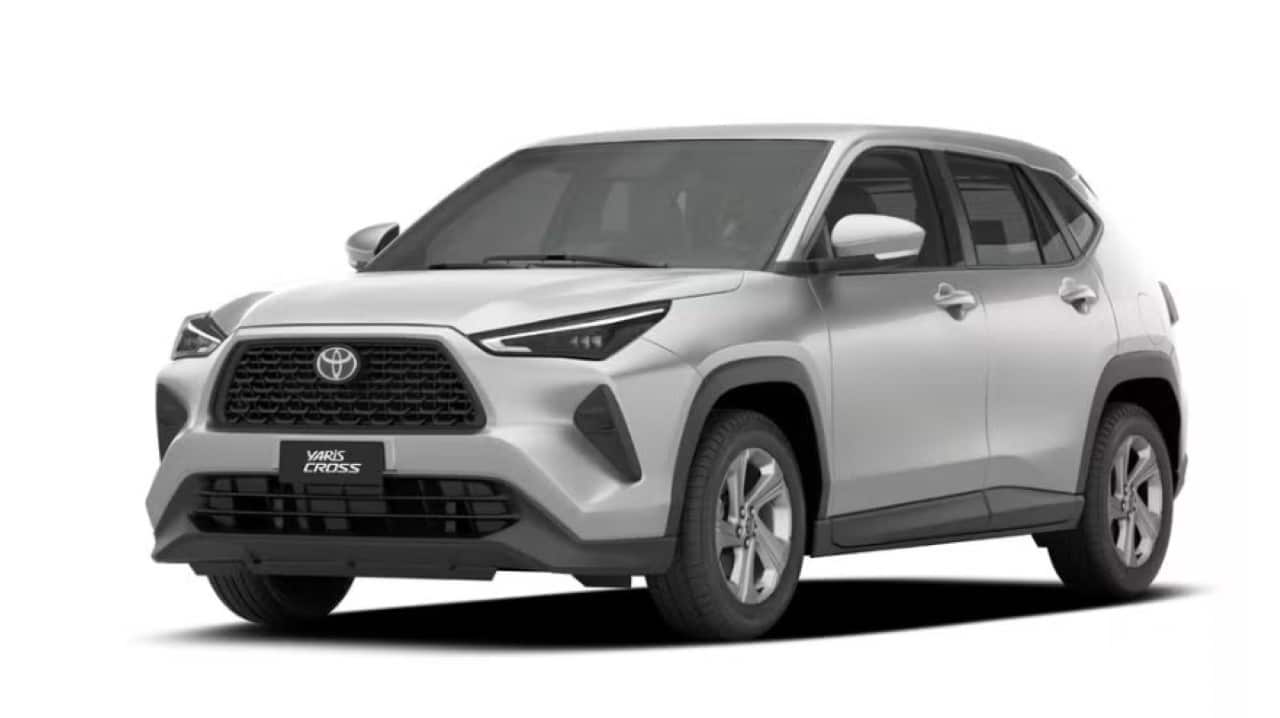
New Toyota Yaris Cross XR debuts on the market for R$ 149,990 to compete with Honda WR-V and Kicks


Toyota has officially announced the launch price of the new Yaris Cross XR, aggressively positioning the model in the competitive compact SUV segment. The vehicle arrives at dealerships from April with a suggested value of R$149,990, putting it in direct confrontation with established rivals such as the Honda WR-V and the Nissan Kicks, which operate in very similar price ranges.
This pricing strategy indicates the automaker’s intention to capture a significant share of one of the country’s hottest markets. The launch of the Yaris Cross XR represents a crucial move for Toyota, which seeks to expand its presence in the entry-level SUV category, offering a product that combines the brand’s reliability with an equipment package and modern design.
The arrival of the model intensifies the dispute between Japanese automakers, who now have three strong products to attract consumers looking for versatility, technology and efficiency. The purchasing decision in this segment will be increasingly influenced by details in performance, consumption, internal space and list of standard equipment.
Price analysis in the segment
The value of R$149,990 for the Toyota Yaris Cross XR places it in an intermediate and strategic position. In comparison, the Honda WR-V starts at R$147,100 in the EX version and reaches R$152,100 in the top-of-the-line EXL configuration, while the Nissan Kicks in the Advance Plus version is sold for R$149,890, a value practically identical to that of the new Toyota. Essa price parity demonstrates that competition will be decided on the technical details and benefit packages offered by each manufacturer.
This competitive approach forces the consumer to carefully analyze the cost-benefit of each vehicle. Toyota relies on its reputation for durability and low maintenance costs, in addition to a list of equipment that seeks to balance comfort and technology. The choice between the three models will depend on each buyer’s priorities, whether focused on performance, space, fuel consumption or onboard technological resources, making the purchasing decision more complex and detailed.
Motorization and performance in focus
The heart of the Toyota Yaris Cross XR is a 1.5 flex aspirated engine, capable of generating up to 122 horsepower and 15.3 kgfm of torque. Este mechanical set works in partnership with a CVT automatic transmission that simulates seven speeds, a configuration that prioritizes comfort and efficiency in fuel consumption, characteristics valued by the urban public.
On the other hand, the Honda WR-V is equipped with a 1.5 direct injection engine that delivers superior power, with 126 horsepower and 18.5 kgfm of torque, also coupled to a CVT transmission. Essa difference in torque can translate into more agile responses when accelerating and restarting, making the Honda model an interesting option for those looking for more dynamic driving.
The Nissan Kicks, in turn, uses a 1.6 flex engine that produces 113 horsepower and 15.3 kgfm of torque, associated with a CVT transmission with six-speed simulation. Although the Embora is the least powerful among the three, the Kicks is recognized for its smooth driving and good suspension setup, which favors comfort on uneven surfaces, a strong point for daily use in Brazilian cities.
Fuel efficiency and consumption
One of the main attractions of the Yaris Cross XR is its remarkable energy efficiency. According to official data, the model records a consumption of 12.6 km/l in the city and 14.3 km/l on the highway when fueled with gasoline. With ethanol, the numbers are 8.8 km/l in the urban cycle and 10.2 km/l on the highway, placing it as one of the most economical options in the segment.
The Honda WR-V has a gasoline consumption of 12 km/l in the city and 12.8 km/l on the highway. Utilizando ethanol, the SUV achieves 8.2 km/l and 8.9 km/l, respectively. Although its numbers are competitive, the Toyota model stands out, especially in road consumption.
The Nissan Kicks Advance Plus records, with gasoline, an average of 11.3 km/l in the city and 13.7 km/l on the highway. With ethanol, consumption is 7.8 km/l and 9.4 km/l. The data confirms that, from a fuel economy perspective, the Yaris Cross has a slight advantage over its main direct competitors.
This difference, although it may seem small, can represent significant savings in the long term for the driver who travels long distances daily. Efficiency therefore becomes a decisive factor in choice, directly influencing the cost of vehicle ownership over the years.
Dimensions and internal space
In terms of dimensions, the fight is fierce and each model has specific advantages. The Honda WR-V stands out as the most spacious, measuring 4.32 meters long, 1.79 meters wide and with a wheelbase of 2.65 meters, which guarantees excellent space for rear seat passengers. Além Furthermore, its 458-liter trunk is the largest in its category, making it a big difference for families or those who need to transport a lot of luggage. In comparison, the Toyota Yaris Cross XR has a slightly more compact size, measuring 4.31 meters long and with a wheelbase of 2.62 meters, offering a trunk capacity of 400 liters. The Nissan Kicks has measurements very similar to the Yaris Cross, measuring 4.30 meters long and with a wheelbase of 2.62 meters, but its luggage compartment has an intermediate volume of 432 liters. The choice will depend on the consumer’s needs, with the WR-V being the best option for those who prioritize internal space and cargo capacity, while the Yaris Cross and Kicks offer a good balance for daily use.
Equipment and interior finishing
When it comes to standard equipment, the three SUVs offer a competitive package to attract consumers. Todos come with LED headlights and taillights, 17-inch alloy wheels and air conditioning systems. Pequenas differences, however, may weigh on the buyer’s final decision.
Both the Yaris Cross XR and the Nissan Kicks Advance Plus have seats covered in synthetic leather, an item that adds greater sophistication to the interior. The Honda WR-V, in turn, only offers this option in the most expensive version, the EXL, which can be a disadvantage for those looking for a more refined finish without having to spend more.
Technology and connectivity on board
Connectivity is a strong point in all three vehicles, which feature modern multimedia centers compatible with Android Auto and Apple CarPlay. The Toyota Yaris Cross XR and Honda WR-V are equipped with 10-inch screens, while the Nissan Kicks has a 9-inch screen. The Yaris Cross XR’s instrument panel combines analogue and digital elements, offering a clear and modern interface for the driver.
Safety features and driver assistance
Safety is a pillar for the three models, which leave the factory with six airbags, stability and traction control, as well as ABS brakes. The Toyota Yaris Cross XR stands out for including a driver assistance package that includes a pre-collision system with emergency braking, reinforcing protection in risky situations in urban traffic.
Advanced driver assistance features are also present in competitors. The Honda WR-V, for example, offers adaptive cruise control and a lane keeping system. Já o Nissan Kicks Advance Plus has forward collision warning and intelligent braking assistant, making the competition for safety increasingly fierce and beneficial for the end consumer.



