
Ring of fire in the sky: see when and where to see the annular eclipse of February 2026

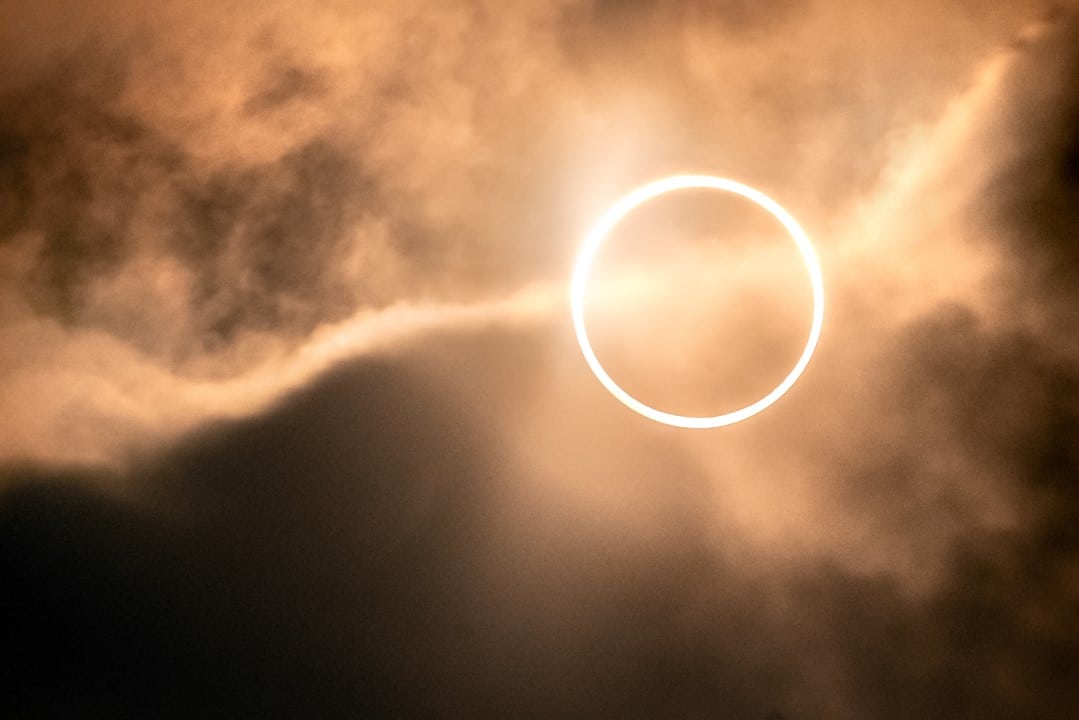
An annular solar eclipse will occur on February 17, 2026. The celestial phenomenon, popularly called the ring of fire, happens when Lua passes between Terra and Sol without completely covering the solar disk.
The specific alignment creates a luminous circle around the lunar silhouette. Esse visual effect lasts a few minutes at maximum phase and attracts the attention of observers in selected regions.
The event will not be visible on Brasil. Transmissões live online will allow people around the world to follow the show directly from remote locations.
Understanding the mechanism of the annular eclipse
The annular eclipse differs from the total one because Lua is at apogee, the furthest point in its orbit from Terra. Nesse positioning, the apparent diameter of the Lua becomes smaller than that of the Sol.
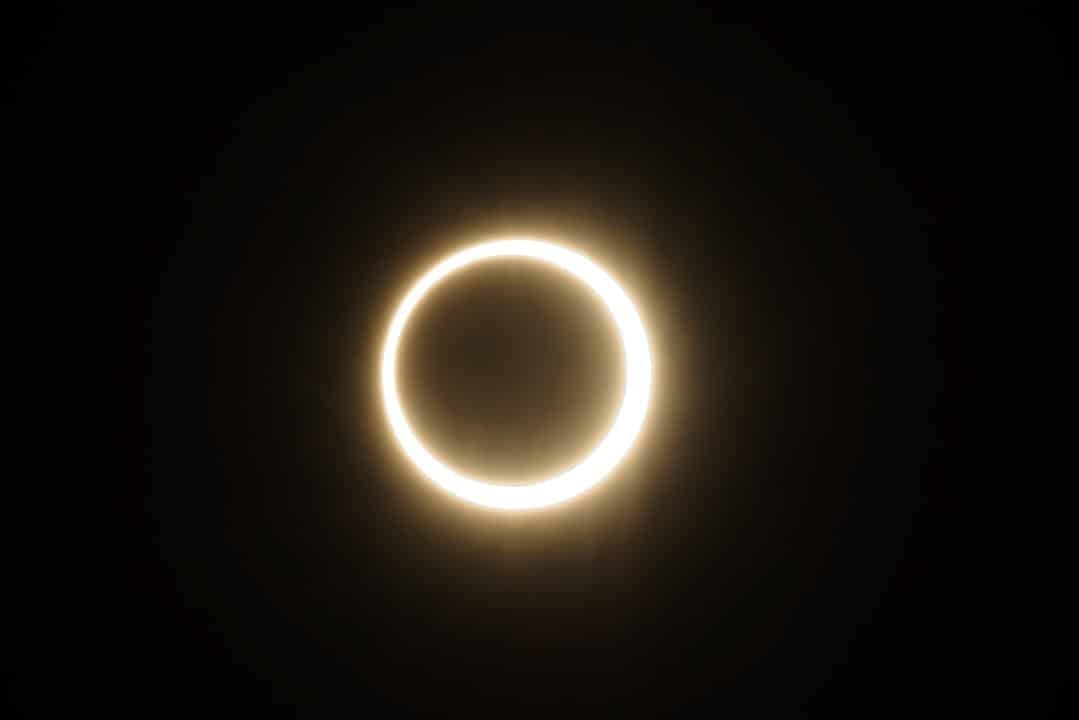
The lunar shadow only partially reaches the Earth’s surface. The result is the formation of a bright ring, made up of sunlight that surrounds the edges of Lua.
The magnitude of the 2026 event reaches 0.963. Isso indicates that about 96% of the solar disk will be hidden at the point of greatest coverage.
Experts calculate that the maximum duration of the annular phase reaches 2 minutes and 20 seconds. Esse time varies depending on the exact position of the observer within the annularity band.
Trajectory and main visibility of the phenomenon
The annularity range mainly crosses the Antártica. Regiões oceanic areas close to the ice continent also record the complete ring.
Scientific stations installed on the Antarctic continent prepare equipment to record the event. Pesquisadores of bases like Concordia and Mirnyy will have a privileged view.
The shadow path starts in the ocean Austral and goes into the Antarctic interior. The longest duration occurs at coordinates close to 64 degrees south.
- Central and coastal Antarctica
- Remote subantarctic islands
- Oceanic areas of Atlântico Sul and Índico
Observers in these zones need adequate protection. Using certified sunscreens prevents permanent damage to your vision.
Regions with observable partial eclipse
Outside the narrow band of annularity, the eclipse appears as partial in several areas. Países from the southern end of América from Sul record significant partial coverage.
Argentina and Chile, especially in the Patagonian provinces, see part of the Sol hidden. Cidades as well as Ushuaia and Punta Arenas enter the visibility zone.
On the African continent, southern nations experience the partial phenomenon. Coverage varies depending on specific latitude and longitude.
- Africa of Sul
- Botswana
- Lesotho
- Madagascar
- Mozambique
- Namibia
Oceanic islands such as Reunião and Maurício also receive a partial eclipse. The percentage of concealment decreases as you move away from the center path.
Local times and event timeline
The partial eclipse begins at around 9:56 am Coordinated Universal Time. The annular phase begins at approximately 11:30 am at specific points on Antártica.
The global maximum occurs around 12:12 UTC. Nessa hour, the ring of fire reaches its most symmetrical configuration.
The annulment ends about an hour later. The partial eclipse ends at 2:27 pm UTC in all affected regions.
On Antarctic bases, schedules adjust to local areas. Estações and Rothera follow times close to UTC minus 3 hours.
Observers at Punta Arenas, at Chile, see the partial between 10am and 1pm local time. Já in Cape Town, in África of Sul, the phenomenon occurs during the morning.
Security measures for observation
Direct observation of Sol requires specific protection at any phase of the eclipse. Óculos with ISO 12312-2 filter blocks harmful radiation.
Telescopes and binoculars require suitable solar filters on the objective. Projeção indirect via pinhole or telescope offers a safe alternative.
Photographic cameras require high-density neutral filters. Exposições without protection will permanently damage sensors and lenses.
- Wear certified glasses at all times
- Avoid looking directly without a filter
- Prefer professional live streaming
- Consult ophthalmologists for questions
Astronomical institutions recommend never removing protection. Mesmo in the annular phase, sunlight remains intense.
Broadcasts and remote monitoring
Organizations like NASA and Observatório Nacional prepare live broadcasts. Plataformas specialized services offer real-time images of Antarctic bases.
Sites like Time and Date provide interactive maps and countdowns. Aplicativos mobile devices notify times adjusted to the local zone.
Scientific projects take advantage of the event to collect atmospheric data. Telescópios solar cells record variations in the corona during partial occultation.
Comparison with recent and future eclipses
The 2026 eclipse is part of the Saros 131 series. The Essa sequence repeats geometric patterns approximately every 18 years.
Previous events in the same series occurred in years such as 2008 and 1990. Diferenças in lunar orbit change trajectories with each cycle.
At Brasil, the next visible ring occurs on February 6, 2027. The band passes close to the country’s southern coast.
- Rio Grande of Sul registers partial annulment
- Rio de Janeiro requires sea travel
- Other states see only partial
Total eclipses scheduled for 2026 and 2027 attract larger audiences. The one in August 2026 crosses Europa and Ártico.
Scientific importance of annular events
Annular eclipses allow the study of the outer solar corona. The remaining light reveals normally invisible structures.
Atmospheric surveys measure temperature variations during occultation. Dados help you understand interactions between Sol and Terra.
Antarctic stations use isolation for pure observations. Interferência minimum brightness favors high quality recordings.
Scientists analyze changes in the ionosphere during alignment. Flutuações affect radio communications in polar regions.
Preparation of specialized expeditions
Antarctic tourism companies plan itineraries for the event. Navios are positioned in waters close to the annularity band.
Charter flights depart from points like Punta Arenas. Aeronaves equipped intercept the path over the ocean.
Permanent bases augment temporary teams. Protocolos strict procedures guarantee safety in an extreme environment.
- Check Antarctic weather conditions
- Carry redundant equipment
- Follow instructions from experienced guides
- Monitor visibility forecasts
The combination of intense cold and isolation requires detailed planning. Participantes receive specific prior training.
Visual differences between eclipse types
Annular eclipses keep the sky illuminated during the maximum phase. The absence of total darkness distinguishes them from total events.
In the annulus, the bright ring prevents the visibility of daytime stars. Prominências solar panels become apparent with suitable equipment.
Partial eclipses only show a bite of the sun’s disk. The light intensity reduces slightly depending on the coverage.
Composite photographs capture the complete progression. Sequências reveal the apparent movement of Lua over Sol.
Oceanic regions and islands affected
Maritime areas of Atlântico Sul and Índico fall into the partial zone. Navios of research positions for dedicated observations.
Islands such as Geórgia do Sul record significant coverage. Territórios French people in the ocean Índico see partial phases.
Geographic dispersion limits the in-person audience. Transmissões become the main form of global access.
Contributions from international observatories
Observatories like Europeu Austral prepare instruments. Telescópios on Chile capture images despite partial visibility.
International collaborations share data in real time. Global Redes analyzes heliographic variations during the event.
Historical archives compare the current eclipse with previous cycles. Evolução of solar activity becomes evident over the decades.
Prospects for remote amateur observation
Apps and websites offer accurate simulations. Usuários view the eclipse from any virtual location.
Online communities organize collective streaming sessions. Fóruns discuss capture and security techniques.
The event reinforces interest in astronomy in regions without direct visibility. Escolas use the time for virtual practical classes.



