
Sharper gravitational wave signal validates area theorem proposed by Stephen Hawking in 1971

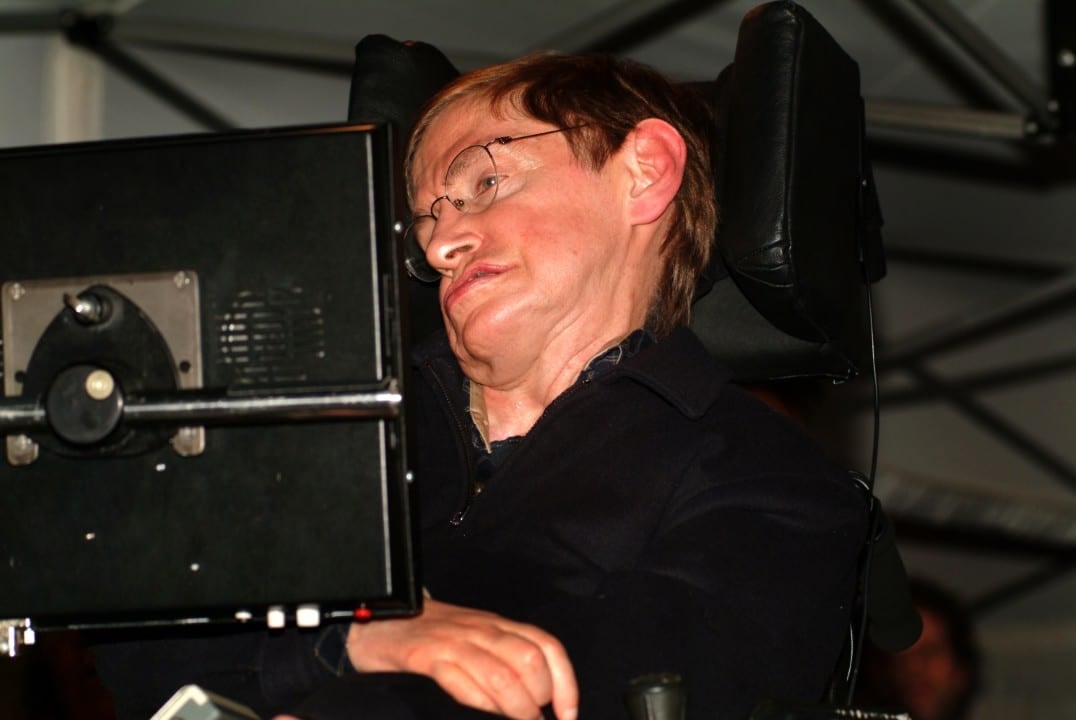
A black hole merger recorded by the LIGO observatory in January 2025 produced the clearest gravitational wave signal ever observed. The event, named GW250114, occurred approximately 1.3 billion light-years from Terra and allowed scientists to confirm with unprecedented precision the area theorem proposed by Stephen Hawking in 1971. Essa law establishes that the total surface of the black hole event horizon never decreases in classical physical processes.
LIGO’s two detectors at Estados Unidos captured each phase of the collision, from the spiral approach to the formation of a new, larger black hole. Essa detailed observation validated the increase in event horizon area after the merger, reinforcing fundamental principles of general relativity. The signal stood out for its intensity, appearing clearly in the data without the need for complex filters.
Since the first detection of gravitational waves in 2015, the field has advanced significantly. Mais of 300 similar events have been recorded to date, but GW250114 has become a reference for the quality of its measurements.
- The collision involved black holes with masses estimated to be tens of times that of Sol.
- The energy released in the form of gravitational waves was equivalent to several solar masses converted directly.
- The resulting new black hole had a surface area greater than the sum of the original ones.
GW250114 Event Details
Signal GW250114 arrived at detectors on January 14, 2025, and marked an important technical breakthrough. LIGO’s interferometers, located at Hanford and Livingston, recorded simultaneous variations in space-time with precision never before achieved. Essa clarity allowed us to reconstruct the entire dynamics of the merger in distinct stages.

The estimated distance of 1.3 billion light years indicates that the phenomenon occurred when the universe was about a third of its current age. Apesar from remoteness, the signal stood out for its volume, overcoming instrumental and environmental noises. Cientistas from the LIGO-Virgo-KAGRA collaboration immediately analyzed the data and confirmed the origin in a binary black hole merger.
The area theorem explained
Stephen Hawking formulated the area theorem in 1971, inspired by earlier work on black hole thermodynamics. The law states that in classical processes, the total area of the event horizon can only increase or remain constant. Qualquer merger necessarily results in a final black hole with a larger surface.
This property resembles the second law of thermodynamics, which prevents the decrease in entropy in isolated systems. Hawking associated the horizon area directly with the black hole’s entropy, establishing a deep connection between gravitation and quantum information. Previous Observações have already suggested the validity of the law, but GW250114 has provided the most rigorous test yet.
The calculation of the area before and after the merger showed an increase compatible with theoretical predictions. The precision of the measurements excluded violations with a high degree of confidence, consolidating the theorem as a pillar of black hole physics.
Technology behind detection
LIGO’s detectors use laser interferometry to measure minute distortions in space-time. Cada instrument arm is four kilometers long, and suspended mirrors capture variations smaller than the diameter of a proton. Melhorias implemented since 2015 have increased sensitivity by orders of magnitude.
Upgrades included more efficient optical coatings and advanced seismic isolation systems. Esses advances have reduced background noise and expanded the range of detectable frequencies. Collaboration with Virgo on Itália and KAGRA on Japão enabled accurate triangulation of sources in the sky.
- Isolation from external vibrations guarantees extreme stability.
- High-power lasers improve measurement resolution.
- Analysis algorithms process terabytes of data in real time.
- Global detector networks confirm signals and locate sources.
Implications for modern physics
The precise confirmation of the area theorem reinforces the consistency of general relativity in extreme regimes. Buracos binary blacks represent natural laboratories for testing fundamental laws where gravity completely dominates. Event GW250114 also validated aspects of the Kerr metric, which describes rotating black holes.
Researchers highlight that observations like this open the way for deeper studies into massive star formation. Frequent Fusões suggest dense populations of black holes in globular clusters or galactic nuclei. Accumulated Dados helps map the cosmic evolution of these objects since the early universe.
Recent advances in observations
Since 2015, the international collaboration has recorded hundreds of gravitational wave signals. Most come from black hole mergers, but events with neutron stars have also enriched the catalog. Cada observation cycle incorporates improvements that expand the volume of the monitored universe.
Signal GW250114 exemplifies the technical progress achieved in a decade. Sua intensity allowed detailed analysis of the ringdown phase, when the final black hole oscillates until it reaches equilibrium. Essas oscillations confirm predictions about quasi-normal modes of gravitational vibration.
Contributions of complementary detectors
Virgo at Itália and KAGRA at Japão have integrated full operations in recent years. Sua participation improves the angular location of sources and reduces false positives. Global Redes enable continuous coverage and greater confidence in detections.
Future updates provide additional sensitivity for more distant or less massive events. Projetos such as LIGO-India and the LISA space observatory will complement ground-based observations. Essas initiatives promise to revolutionize multi-messenger astronomy in the coming years.
Perspectives of gravitational astronomy
The decade of detections transformed understanding of the violent and invisible universe. Gravitational Ondas reveal phenomena that electromagnetic light cannot access, such as the interiors of extreme collisions. Cada new signal adds pieces to the puzzle of cosmic evolution.
The growing catalog enables robust statistics on fusion rates and mass distributions. Esses data constrain models of black hole formation via stellar collapse or hierarchical processes. Observações continue to challenge and refine established theories.
- Mapping black hole populations at different redshifts.
- Tests for deviations from general relativity in strong fields.
- Search for signs of physics beyond the standard model.
- Integration with optical telescopes for electromagnetic counterparts.
Gravitational wave astronomy has established itself as a mature and promising field. Eventos like GW250114 demonstrate the potential for continued discovery as technology evolves.




