
Solar eruption of force x8.1 surprises researchers and could generate visible auroras on the planet

Sol has presented a period of intense activity, culminating in one of the most powerful solar eruptions recorded in recent decades. Este astronomical event keeps the scientific community on alert, monitoring developments and potential consequences for Terra. The solar surface, known for its turbulence, demonstrates its ability to release energy in spectacular and sometimes challenging ways.
Recently, the star has emitted several solar eruptions of great intensity, including one of class X8.1, considered one of the brightest and most powerful since previous records, such as October 2024, and among the strongest since 1996. Essa activity is added to three other explosions of class X and dozens of smaller events, indicating a particularly active solar period.
Astronomers await the passage of most of the plasma expelled by Terra in the coming days, which could trigger celestial phenomena such as the aurora borealis. Equipes, such as Centro of Previsão of Clima Espacial of Administração Nacional Oceânica and
The solar flare of extreme magnitude
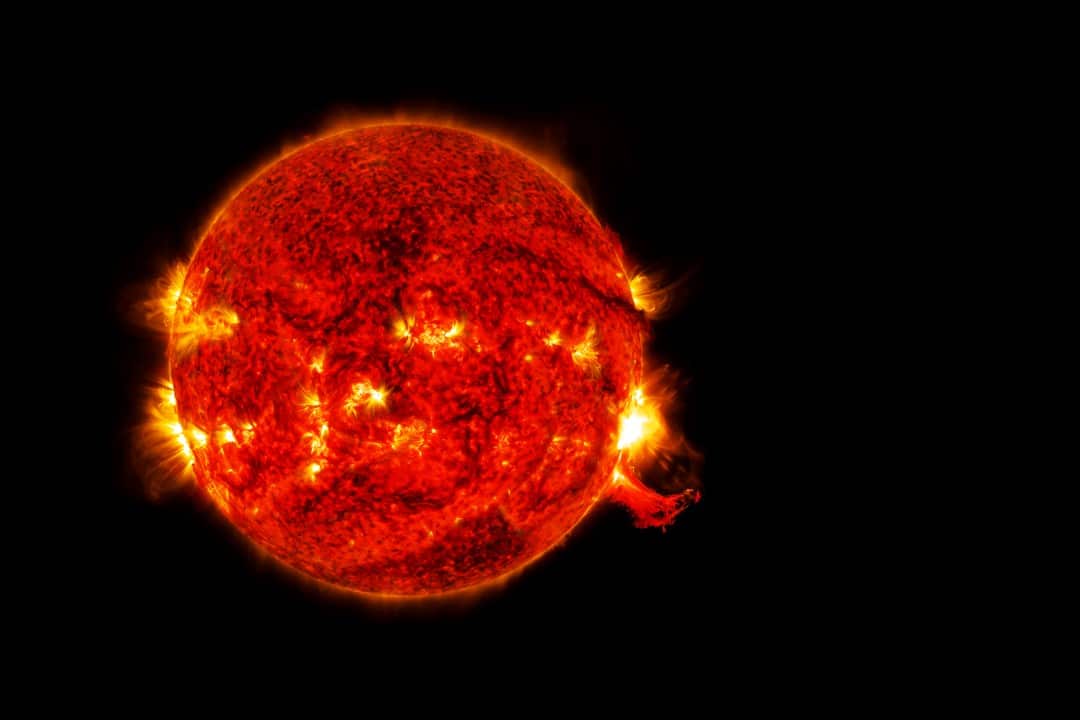
The X8.1-class eruption captured by instruments like NASA’s Laboratório of Dinâmica Solar represents the culmination of a series of energetic events. Essa category of solar flare is the most intense on the classification scale, indicating a massive release of energy that could have significant repercussions in space and potentially in the Earth’s magnetosphere. The magnitude of the eruption underscores the dynamic and unpredictable nature of our star, which constantly shapes the space environment around us.
Such events are driven by the complex interaction of magnetic fields on the solar surface. Quando these field lines tangle and break, they release a sudden and violent pulse of radiation, which can travel at millions of kilometers per hour through the solar system, hitting planets and other celestial bodies in its path. The intensity of the X8.1 class positions it as a crucial object of study to understand the internal mechanisms of Sol.
Understanding Class X eruptions
Solar flares are explosions of radiation that come from the surface of the Sol, and the X class is the most intense that can occur. Elas are categorized by letters (A, B, C, M and X), with each letter representing a tenfold increase in explosion power. Dentro of each category, a number (from 1 to 9) indicates the relative strength, although for class X, there is no upper limit, as demonstrated by events such as the recent X8.1. Essas explosions, although spectacular, do not directly release the particles that cause auroras or geomagnetic storms; instead, they are often accompanied by coronal mass ejections (CMEs), which are clouds of plasma that actually interact with Terra’s magnetic field, generating the observed effects.
Potential effects on Earth’s atmosphere
The arrival of solar plasma to the Earth’s magnetosphere can cause the appearance of aurora borealis and australis, visible at higher latitudes, and, in cases of greater intensity, even in regions closer to the equator. Essas vibrant lights in the sky are the result of the interaction between the charged particles of Sol and the gases in the upper atmosphere of Terra, which become energized and emit light as they collide. Este phenomenon, although beautiful, is an indicator of changes in the geomagnetic field.
In addition to the visual spectacle, interaction with solar plasma could have consequences for the technological infrastructure on Terra. Satélites in orbit, essential for communications, GPS navigation and meteorological observation, are particularly vulnerable to intense radiation and currents induced by geomagnetic storms. Electrical overload can lead to temporary or permanent failures, affecting everyday services that modern society depends on.
Additionally, high-frequency radio communication systems, used in aviation, maritime navigation and by military forces, can be interrupted or degraded during severe solar events. Energetic particles can anomalously ionize layers of the atmosphere, blocking or distorting signals. Therefore, continuous monitoring is essential so that operators can take preventive measures, such as adjusting frequencies or rerouting communications.
The solar activity cycle and the current moment
The activity of Sol follows a cycle of approximately 11 years, characterized by periods of maximum and minimum activity, known as solar maximum and minimum, respectively. Durante solar maximum, the star has a greater number of sunspots, which are regions of intense magnetic fields where eruptions and coronal mass ejections are more frequent and powerful. The Este cycle is driven by changes in the magnetic dynamo of the Sol.
Although some scientists believe that Sol may have already passed the peak of its current solar cycle, high-intensity events like the recent X8.1 eruption demonstrate that significant activity could persist for a considerable time. The decline phase towards the next solar minimum can still be marked by energetic explosions, although with lower overall frequency, requiring constant observation of their dynamics.
Understanding these cycles is vital to predicting and mitigating the risks associated with space weather. Modelos Scientists seek to improve the ability to predict the intensity and frequency of solar events, offering time for space agencies and infrastructure operators to take action. Esta continuous research is an investment in technological resilience in the face of cosmic forces.
Constant vigilance: the role of NASA and NOAA
Agencies like NASA and NOAA play crucial roles in monitoring Sol and predicting space weather. NASA’s Observatório of Dinâmica Solar (SDO), for example, provides detailed images of the solar surface and corona in multiple light bands, allowing scientists to observe flares in real time and study their mechanisms. Esses data is fundamental to understanding solar physics.
NOAA’s Centro of Previsão of Clima Espacial (SWPC), in turn, uses this data and others to issue warnings and forecasts about solar storms, warning of potential disturbances in the space environment of Terra. Esses alerts are vital for sectors such as aviation, space navigation, satellite operations and electrical power grids, enabling the implementation of security protocols.
Global protection and preparedness measures
Faced with the possibility of intense solar events, there is an ongoing effort to develop and implement global protection and preparedness measures. Isso includes improving the shielding of satellites and spacecraft to resist radiation, developing electrical power systems that are more resilient to induced geomagnetic currents, and creating contingency plans for industries that rely heavily on space and terrestrial technology. International collaboration is an essential pillar to face such vast challenges.
Historical events of great intensity
Throughout history, Sol has produced solar flares of notable magnitudes, which serve as reference points for understanding current risks. Embora’s detailed monitoring capability is recent, historical records and isotope analyzes in ice cores reveal events of extreme proportions, such as the Evento Carrington of 1859, which caused spectacular auroras visible in tropical regions and severe disruptions in telegraph systems. Estes past episodes highlight the importance of continued vigilance and research.
These examples demonstrate that, even without today’s technological complexity, the effects of large solar storms can be widely felt. Knowledge of these events serves as a basis for developing more accurate predictive models and designing mitigation strategies that can protect our society, which is increasingly dependent on technology sensitive to space weather. The memory of these events reinforces the need for preparation.



