
Toyota launches the Yaris Cross XR with a strategic price to intensify the competition against WR-V and Kicks


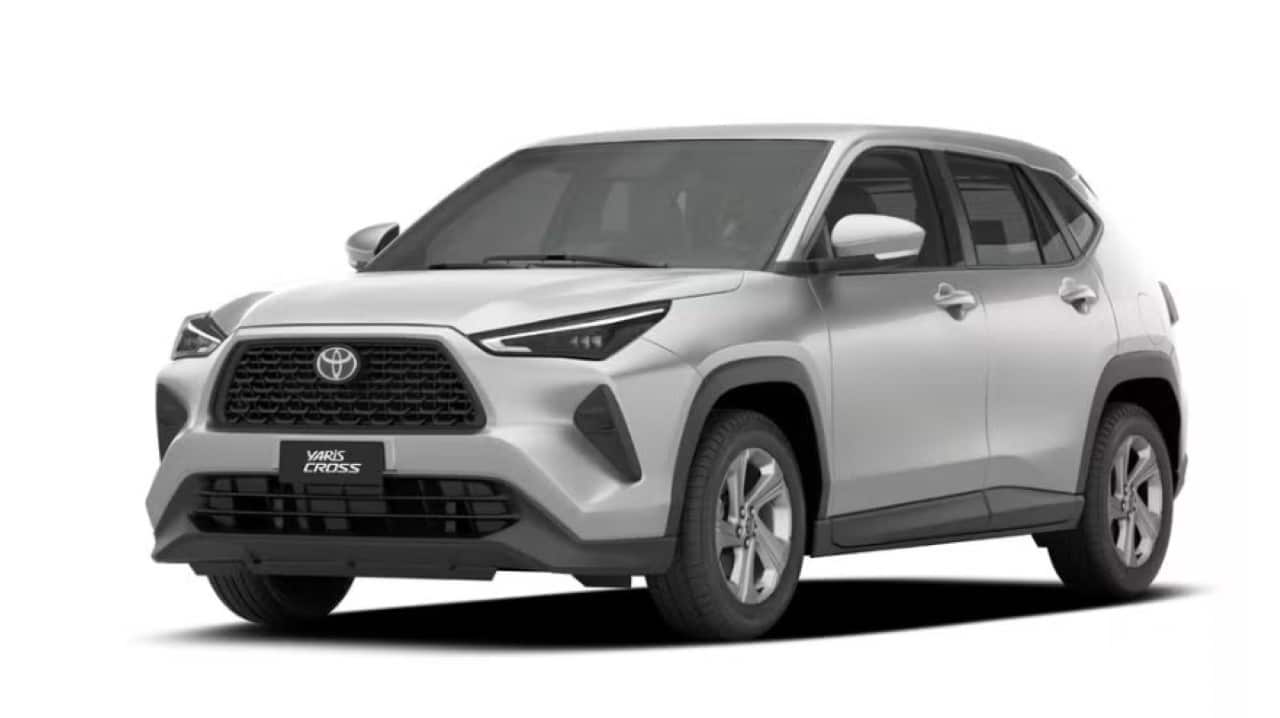
The Toyota officially entered a new and strong competitor into the national automotive market with the launch of the Yaris Cross XR. The model arrives to consolidate the Japanese automaker’s presence in the hot compact SUV segment, betting on a package that balances modern design, energy efficiency and a robust technology package to attract consumers.
With a calculated price positioning, the vehicle arrives at dealerships with a starting value of R$149,990. The Essa figure places the Yaris Cross XR directly in the sights of buyers looking for a versatile sports utility vehicle, suitable for both urban daily life and travel, reinforcing the image of reliability associated with the brand.
The launch intensifies competition in one of the most competitive categories in the country. The new Toyota SUV enters into a direct collision course with already established models, such as the Honda WR-V and the Nissan Kicks, which now face a rival with solid arguments to capture a significant share of the market.
Pricing strategy in the fierce SUV segment
The value of R$149,990 establishes the Toyota Yaris Cross XR in a central position in the compact sports utility vehicle category. The price was carefully defined to compete directly with the entry-level and mid-range versions of its main opponents, making the consumer’s purchasing decision more focused on the technical details and equipment offered.
In a comparative analysis, the Honda WR-V has a price range that starts at R$147,100 in its EX version and reaches R$152,100 in the EXL configuration. Isso positions the Yaris Cross XR exactly between the two options of the Honda, seeking to justify its value through a balanced package of differences.
On the other hand, the Nissan Kicks, in its Advance Plus version, is sold for R$ 149,890, a value practically identical to that of the new Toyota model. Essa price parity highlights the intensity of competition and forces automakers to highlight the strengths of their products to captivate buyers.
This aggressive approach by Toyota demonstrates a clear intention to not only compete, but to seek leadership in the segment. By aligning its price with one of the best-selling vehicles in its category, the Japanese manufacturer signals that the Yaris Cross XR was designed to be a protagonist in the compact SUV market.
Performance and engine of the main competitors
Under the hood, the Toyota Yaris Cross XR is equipped with a 1.5 flex aspirated engine, which delivers up to 122 horsepower and 15.3 kgfm of torque, associated with a CVT automatic transmission that simulates seven speeds. Este set was developed with a focus on fuel efficiency and providing a smooth and comfortable drive, ideal for urban traffic, without compromising the agility necessary for safe overtaking on roads. On the other hand, the Honda WR-V is distinguished by its more robust engine, with a 1.5 direct injection engine that generates 126 horsepower and a higher torque of 18.5 kgfm, also coupled to a CVT transmission, which gives it more vigorous performance and faster responses for those looking for sporty driving. Já the Nissan Kicks uses a 1.6 flex engine with 113 horsepower and 15.3 kgfm of torque, with a CVT transmission that simulates six gears, offering more contained performance focused on comfort and economy.
Analysis of fuel consumption and energy efficiency
One of the Toyota Yaris Cross XR’s main selling points is its low fuel consumption. Conforme official data, the model achieves averages of 12.6 km/l in the city and 14.3 km/l on the highway with gasoline. With ethanol, the figures are 8.8 km/l in the urban cycle and 10.2 km/l on the highway, positioning it as one of the most economical options in the segment.
The Honda WR-V, despite being more powerful, records slightly higher consumption. Suas averages with gasoline are 12 km/l in urban areas and 12.8 km/l on highways. Utilizando ethanol, the Honda SUV achieves 8.2 km/l and 8.9 km/l, respectively. The difference is more pronounced in road consumption.
The Nissan Kicks presents intermediate numbers, with averages of 11.3 km/l in the city and 13.7 km/l on the highway when fueled with gasoline. With ethanol, consumption is 7.8 km/l and 9.4 km/l. Esses data confirms that, for consumers who prioritize savings in daily use, the Yaris Cross XR appears to be an advantageous choice.
Internal space and luggage capacity
In terms of dimensions and space, the dispute between the three compact SUVs reveals different proposals for different consumer profiles. The Honda WR-V stands out as the most spacious of the trio, measuring 4.32 meters in length with a generous wheelbase of 2.65 meters. Essa configuration results in excellent legroom for rear seat passengers. Além In addition, its 458-liter trunk is the largest in its category, making it the ideal choice for families who need greater luggage capacity on long trips.
The Nissan Kicks, in turn, is 4.30 meters long and has a wheelbase of 2.62 meters, offering a 432-liter trunk, an intermediate volume that well meets everyday and leisure needs. Já o Toyota Yaris Cross XR, measuring 4.31 meters long and with a wheelbase of 2.62 meters, offers competitive internal space, but its 400-liter trunk is the smallest among the three, indicating a greater focus on versatility for urban use than on maximum load capacity.
Finishing and comfort items on board
All three models come well equipped from the factory to justify their prices in the category. Itens LED headlights and taillights and 17-inch alloy wheels are standard on the vehicles compared, ensuring a modern and sophisticated look for the trio.
Inside, the Yaris Cross XR and Honda WR-V stand out for offering a panel finished in soft-touch material, elevating the perception of quality. Além In addition, the Toyota model and the Nissan Kicks feature leather-covered seats, while the WR-V only offers this item in its top-of-the-line version.
Connectivity and dashboard
The multimedia center is a central point in the three SUVs, with all offering connectivity via Android Auto and Apple CarPlay. The Toyota Yaris Cross XR and Honda WR-V come out ahead with 10-inch screens, while the Nissan Kicks has a 9-inch screen. The Yaris Cross XR also adds a partially digital instrument panel, adding an extra touch of modernity to the cabin.
Safety package and driving assistance
In the field of safety, the three competitors are equipped with a robust package that includes six airbags, stability and traction control, as well as hill start assistant. Esses items are essential and demonstrate the automakers’ concern with protecting occupants.
When it comes to driver assistance technologies, each model has its differences. The Honda WR-V stands out for its adaptive cruise control (ACC), while the Nissan Kicks offers forward collision warning. The Yaris Cross XR, in turn, has systems that reinforce safety in adverse driving conditions, balancing the overall package.



