
Discovery of Earth-like planet 146 light-years away reignites search for extraterrestrial life

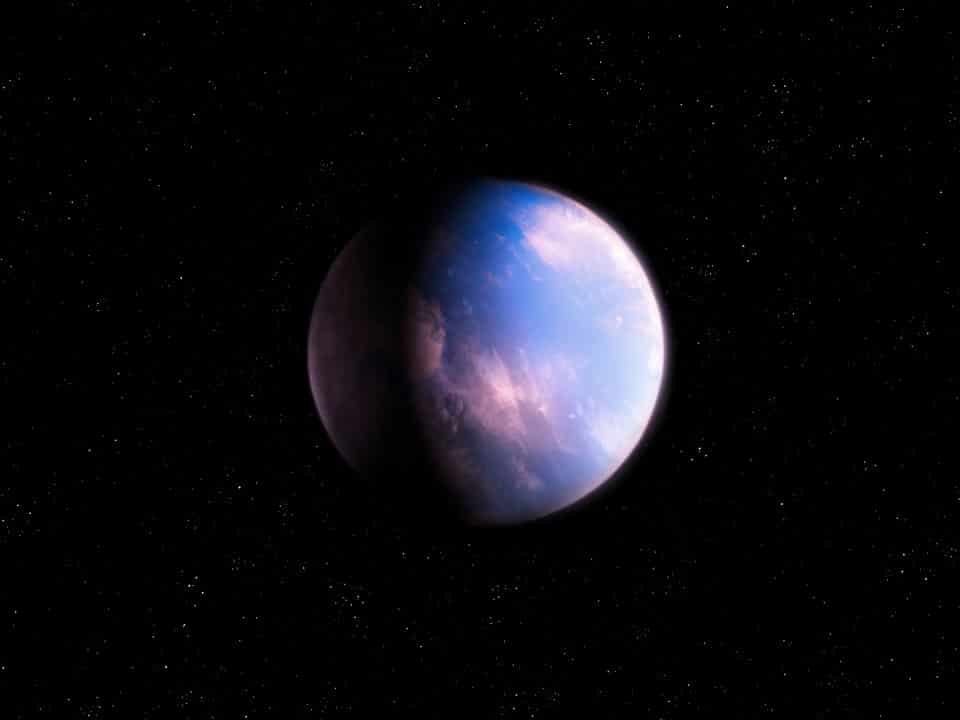
Astronomers identified the exoplanet HD 137010 b from reanalysis of data from the Kepler telescope. Esse celestial body, slightly larger than Terra, orbits a star similar to Sol in a period close to one Earth year.
The planet is located approximately 146 light years from Terra. Estimativas indicate around a 50% probability that it is in the habitable zone, a region where water can remain in a liquid state.
The discovery stands out for the rarity of rocky planets with long orbits around stars like Sol. Additional Observações will be needed to confirm its precise composition and characteristics.
Features of the HD 137010 b
The exoplanet HD 137010 b has a diameter about 6% larger than that of Terra. Sua orbit lasts 355 days, positioning it at the outer edge of its star’s habitable zone.
This location suggests potentially low surface temperatures. Modelos indicate that an atmosphere rich in carbon dioxide could raise the temperature enough to allow liquid water.
- Size: slightly larger than Terra
- Orbital period: 355 days
- Distance from star: outer edge of the habitable zone
- Estimated temperature: possibly cold without atmospheric greenhouse effect
A planet that may have characteristics similar to Terra was discovered by Nasa during analysis of data collected by Telescópio Espacial Kepler. Apelidado of HD 137010 b, the rocky planet orbits a star similar to Sol, about 146 light-years away.pic.twitter.com/tkpP30cA0d
— Agência Brasil (@agenciabrasil)January 29, 2026
Detection method used
The Kepler telescope recorded the planet’s signal in 2017 using the transit method. Esse technique detects the subtle decrease in the star’s light as the planet passes in front of it.
Civilian scientists and students initially identified the candidate from public archives. Equipes university professionals validated the data with rigorous analysis.
Reanalysis of old missions has revealed several candidates in recent years. More accurate Instrumentos continues to improve the ability to confirm these findings.
Importance of the habitable zone
The habitable zone represents the orbital range where stellar radiation allows temperatures suitable for liquid water. Esse element is considered essential for the development of life as known in Terra.
Stars similar to Sol offer wider habitable zones than red dwarfs. Planetas in this region around them are priority targets in the search for rocky worlds.
HD 137010 b’s position on the outer edge increases scientific interest. Condições there can vary between frozen and temperate depending on the atmosphere present.
Host Star Details
The star HD 137010 is classified as an orange dwarf, slightly smaller and cooler than Sol. Sua stability favors the retention of atmospheres on nearby planets.
Distance of 146 light years makes the system accessible for current telescopes. Observatórios and James Webb will be able to analyze the light filtered by the planet’s atmosphere.
Stars of this type emit less extreme ultraviolet radiation. Essa feature protects potential biospheres from excessive damage.
Possible atmospheric scenarios
Computational models indicate significant variations in surface temperature. Sem dense atmosphere, the planet could present conditions similar to those of an icy Marte.
A composition rich in greenhouse gases would change this situation. Nesse case, the surface would reach temperatures compatible with liquid oceans.
The presence of water vapor in the atmosphere would be a strong indication of habitability. Técnicas Spectroscopy transmits starlight through the atmosphere to identify gases.
Future research will prioritize looking for signs of carbon dioxide and methane. Esses compounds would indicate active geological or biological processes.
Context in the search for exoplanets
More than five thousand exoplanets have been confirmed to date. Desses, few combine terrestrial size with orbits in the habitable zones of solar stars.
Missions like Kepler and TESS expanded the candidate catalog. Reanálises continue to reveal worlds previously ignored in the archived data.
The HD 137010 b stands out for its rare combination of features. Sua’s long orbit and stable star make it a valuable target for detailed study.
Next steps in observations
Current space telescopes plan specific campaigns for the system. Medições accurate planetary mass will help determine its density and composition.
Confirmation as a rocky planet will strengthen its status as a habitable candidate. Dados additional transit variations will refine orbital calculations.
International collaborations coordinate monitoring efforts. Resultados expected in the coming years can clarify the real potential of the world.
Relevance to astrobiology
The discovery reinforces the diversity of possible planetary configurations. Mundos colds on the habitable edge expand traditional concepts of habitability.
Comparative studies with planets in Sistema Solar guide interpretations. Venus and Marte provide references for extreme atmospheres and water losses.
Technological advances accelerate the identification of biosignatures. Detection of oxygen or ozone would be strong evidence of biological processes.
The HD 137010 b integrates a growing list of priority targets. Sua analysis will contribute to understanding the frequency of potentially habitable planets on Via Láctea.



