Formula 1 launch calendar revealed with big news for new-age cars

Fórmula 1 is preparing for one of the biggest transformations in its history with the release of the long-awaited car launch calendar for the 2026 season. The teams have already defined the dates to present to the world the single-seaters that will compete under new and strict technical regulations. The season, which will kick off at Grande Prêmio and Austrália on March 8, will see the return of individual launch events, abandoning the previous year’s unified format and allowing each team to highlight their innovations and visual identity.
Expectations are immense, as the year 2026 introduces drastic changes to the power units and aerodynamics of vehicles. Engineers worked hard to adapt to the new guidelines, which focus on more efficient hybrid engines and reducing aerodynamic drag to make overtaking easier. The entry of new manufacturers, such as Audi and Ford, and the reconfiguration of established technical partnerships promise to redefine the balance of forces on the grid.
With pre-season testing scheduled for Barcelona, the pace of work in factories has reached its peak. Accelerated chassis development is crucial to ensure the cars are ready for the first track sessions at the end of January. Cada detail revealed in the launches will be meticulously analyzed, offering the first indications of which teams best interpreted the complex rules established by Federação Internacional of Automobilismo (FIA).
Putting these dates straight in our diary! 🗓️
It’s a packed pre-season schedule, with Shakedown Week starting on January 26 👊#F1 pic.twitter.com/QaOSL7IUb3
—Formula 1 (@F1)January 18, 2026
Launch strategies of the main teams
Aston Martin has scheduled the reveal of the AMR26 for February 9th, an event surrounded by great expectations as it is the team’s first project under the direct supervision of renowned designer Adrian Newey. Considerado one of the greatest aerodynamic experts in history, Newey led the creative process with the aim of optimizing the integration of the chassis with the new engines supplied by Honda. Esta partnership marks the end of the link with Mercedes and elevates Aston Martin to the status of a factory team, with clear ambitions to compete for world titles. The team has also invested massively in infrastructure, with the completion of a new wind tunnel and state-of-the-art simulators to accelerate development. The continuation of Fernando Alonso as main driver is seen as an essential pillar of experience to refine the car, which promises to present innovative visual and technical solutions. The launch was strategically positioned to ensure maximum visibility before the start of official activities on the circuits.
January begins official presentations
Launch activities begin in the first month of the year. Red Bull and its sister team, Racing Bulls, will hold a joint event at Detroit on January 15th. The ceremony will mark the official beginning of the technical partnership with Ford for the supply of engines, ending an extremely successful cycle with Honda technology. The RB22 model is eagerly awaited, as it represents the Austrian team’s attempt to maintain its technical hegemony in the face of completely new and challenging regulations.
Four days later, on January 19, Haas will present the VF-26. The American team brought its original date forward to avoid scheduling conflicts with other teams. Haas maintains its technical collaboration with Ferrari, using both the engine and transmission produced in Maranello. The main focus of the new project is to solve rear instability, a recurring problem that compromised the team’s performance in long races in previous seasons.
Audi will make its official debut as a factory team on January 20th, with a major event at Berlim to present the R26. Após the complete acquisition of the structure of the old Sauber, the German brand enters the category with an engine developed entirely in the Alemanha. The team also confirmed Brazilian driver Gabriel Bortoleto as one of its starters, symbolizing the return of an automotive giant to the pinnacle of world motorsport.
Details of cutting-edge teams and new technologies
Mercedes has scheduled the unveiling of the W17 for January 22nd, a car that represents the continuity of the development of its own engines. With the driver duo formed by George Russell and the young talent Andrea Kimi Antonelli, the German team seeks to regain technical dominance with a design that prioritizes agility in low-speed curves. The project was designed based on data collected during the regulatory transition, focusing on resolving airflow inconsistencies that affected the performance of its previous models.
The following day, January 23, Ferrari will present the SF-26 directly from its headquarters in Maranello, at Itália. The team has been working on the new project since the first half of the previous year, seeking perfect integration between the chassis and the new power unit. The main objective is to eliminate the reliability flaws that compromised past results and deliver a competitive and balanced car from the first race of the season.
Also on January 23rd, Alpine will show the public the A526. The model symbolizes a drastic change in the French team’s philosophy, which will no longer produce its own engines to use the Mercedes power units. Essa decision aims to guarantee greater stability and raw performance. Embora the classic blue visual identity is maintained, the interior of the vehicle has been completely redesigned to accommodate the new mechanical layout.
Competition between the top teams will be fierce from the start, with each looking to exploit loopholes in the regulations to gain an advantage. The ability to adapt and the speed in developing updates throughout the year will be decisive factors in determining who will come out ahead in this new era of Fórmula 1.
Grid expansion and British traditions
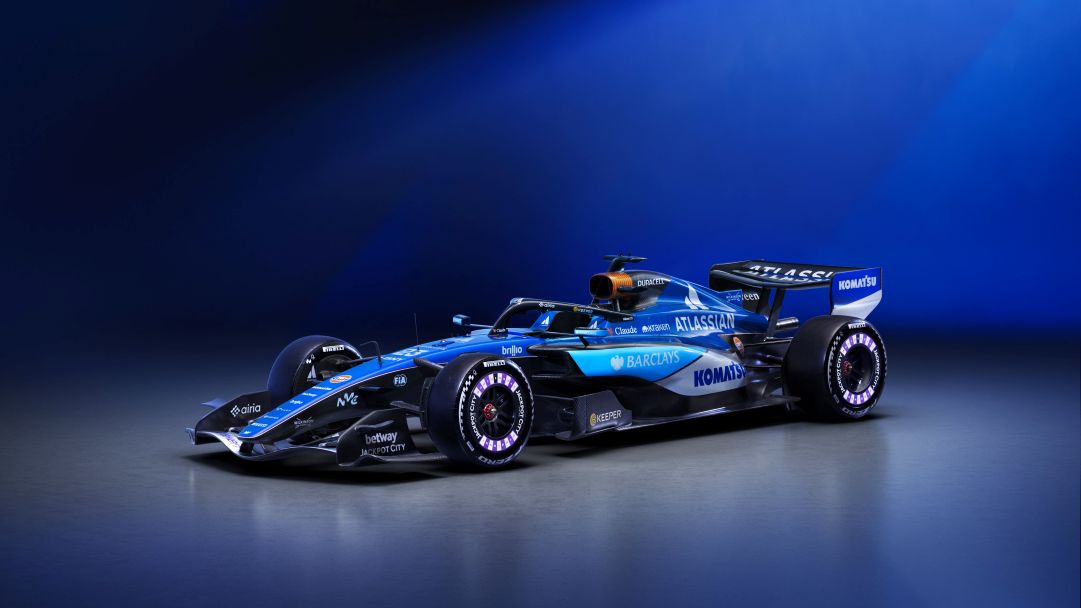
Williams revealed its FW48 on February 3rd, maintaining the tradition of using shades of blue in its paintwork, now with details in white and black. The historic British team continues its partnership with Mercedes to supply engines and has invested in significant improvements to the suspension system to cope with the new aerodynamic load demands. The project is considered fundamental for the recovery of the team, which seeks to return to the competition for positions at the top of the league table.
One of the biggest news of the season is the entry of Cadillac, which has scheduled the launch of its first car for February 8th, strategically coinciding with the Super Bowl weekend to maximize exposure. The American team will begin its journey using Ferrari engines, while developing its own power unit for the future. The brand’s presence strengthens the category’s expansion in the North American market and adds a new dynamic to the competition between manufacturers.
The challenge of sustainable fuels
A crucial factor in the performance of the new cars will be the introduction of fully sustainable fuels. Essa change forced all teams to completely review the injection and internal combustion system of their engines. A true technological race took place behind the scenes at the factories, where partnerships with the main oil companies were essential to extract maximum power within the new limits established by regulations, combining performance with environmental responsibility.
Final preparation for pre-season
With the presentation cycle over, the teams face the race against time for the first track tests at Europa. Engineers monitor real-time simulator data to validate the parts produced, many of them through additive manufacturing and new carbon fiber composites. The agility in manufacturing components will be crucial for teams that need to make quick adjustments after the first official laps in collective tests.
The Fórmula 1 organization hopes that the new regulations will promote more balanced races and facilitate overtaking, reducing the turbulence generated by the cars. The launches confirm that all teams have accepted the challenge of designing smaller and lighter vehicles. Agora, the focus is entirely on on-track performance, mechanical reliability and the complex logistics of transporting tons of equipment to Austrália, where the championship will begin.