
Hydrogen leak forces NASA to postpone Artemis II manned mission until March

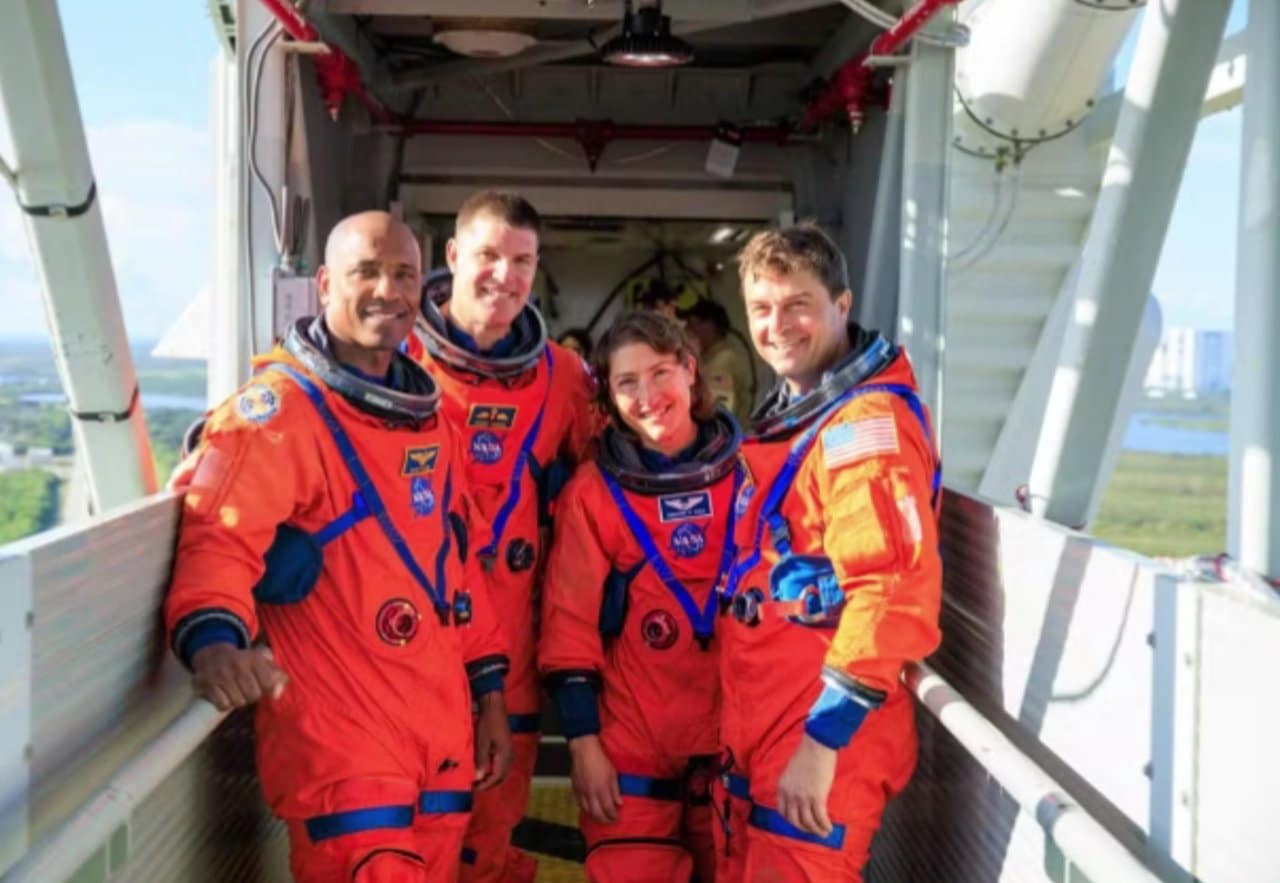
Agência Espacial Americana (NASA) announced this Tuesday, February 3, the postponement of the Artemis II mission, the first manned flight of the return program to Lua. Originalmente scheduled for this week, takeoff is now scheduled for March after a liquid hydrogen leak was detected during a crucial test.
The incident occurred in a specific connection of the Space Launch System (SLS) rocket, responsible for supplying fuel. Este type of leak, although challenging, is one of the scenarios for which pre-launch tests are designed, aiming to identify and correct failures before they endanger the crew or the mission.
With the reprogramming, Nasa decided to release the four astronauts from preventive quarantine, which had begun on January 21st. The agency intends to carry out a new complete test, which simulates all stages of the launch, before any new takeoff attempt within the March window.
Leak incident details
The liquid hydrogen leak was identified during a fueling test, a fundamental step to ensure the integrity of the rocket and its systems. Hydrogen, used as a propellant, is stored at extremely low temperatures and has very small molecules, which makes it prone to leaks due to tiny failures in seals or connections. The complexity of handling this fuel requires rigorous protocols and exhaustive testing.
In addition to the leak, the test revealed other issues to be resolved, including intermittent failures in ground communication audio and a longer than expected Orion capsule closure time. Jared Isaacman, administrator of Nasa, emphasized that such problems are expected, given the interval of more than three years since the last launch of the SLS rocket, and that the purpose of the tests is precisely the early detection of these anomalies.
The Artemis II mission and its objectives
Artemis II is the second mission of the ambitious Artemis program and represents a historic milestone: it will be the first manned flight. Estimated to last 10 days, the mission will take three astronauts from Estados Unidos and one from Canadá on a flyby around Lua. The Orion capsule, with its crew on board, will reach the greatest distance ever traveled by humans in space, exceeding the limits of Earth’s orbit. Este flight is crucial to validating all of Orion’s systems with humans on board and to paving the way for future lunar landings, being a key preparatory step for the first manned mission to the surface of Lua since 1972.
Technology behind lunar exploration
The heart of the Artemis II mission is the system comprised of the Space Launch System megarocket (SLS) and the Orion capsule. The SLS, with its impressive 98 meters in height (surpassing the Estátua of the Liberdade), is the most powerful rocket ever built by the Nasa. Ele generates a thrust of 4 million kilograms, equivalent to the force of 14 Boeing 747 planes, propelling Orion out of Earth’s orbit.
The Orion capsule, attached to the top of the SLS, was designed to withstand the extreme conditions of deep space. Seu crew module accommodates four people and incorporates advanced life support systems, control panels and windows that will provide unprecedented views of Terra and Lua, fundamental to the onboard experience and research.
A vital component of the Orion is the Módulo of Serviço Europeu (ESM), developed by the Agência Espacial Europeia in collaboration with the The ESM is responsible for critical functions such as propulsion, electrical energy generation via solar panels, thermal control, and the supply of water and breathable gases (oxygen and nitrogen) that guarantee the crew’s survival during the long journey. The capsule also has a launch escape system for emergencies.
The astronauts scheduled for the historic trip
The Artemis II crew is made up of four outstanding individuals, three from Nasa and one from Agência Espacial Canadense, representing a significant step forward in the diversity of space exploration. Christina Hammock Koch will be the first woman to travel on a mission around Lua, and Victor Glover, the first black man to accomplish this feat, reflecting the Artemis program’s goals of inclusion in the lunar journey.
The experts selected for this innovative mission are:
All Nasa astronauts selected for Artemis II are veterans of previous expeditions aboard Estação Espacial Internacional, giving them a solid foundation in space operations and teamwork. Hansen, the Canadian representative, will make his spaceflight debut with this historic mission.
Artemis II route: a flyover without landing
Unlike the Apollo missions, Artemis II will not include a lunar landing, focusing instead on a comprehensive manned test that will serve as the foundation for Artemis III, scheduled for a few years later. If all goes according to plan, the approximately 10-day trip will be the first time in more than half a century that humans have ventured beyond Earth’s orbit, marking a new era in space exploration.
The flight will begin with the launch of the SLS rocket from Centro Espacial Kennedy, at Flórida. After successful liftoff, the Orion capsule, together with its upper stage, will establish an orbit around Terra. Nesta initial phase, which will last about a day, the crew will carry out critical checks of the ship’s systems, ensuring everything works perfectly before heading into deep space.
One of the most innovative steps in this phase is the manual piloting test of the Orion. The astronauts will take control of the capsule to maneuver it close to an already separated part of the rocket. Esta simulation is essential to validate human control capabilities and train for future maneuvers, such as approaching other ships and structures, including the planned Gateway lunar space station.
As it approaches Lua, Orion will pass at an altitude between 6,400 and 9,600 kilometers above the lunar surface. Essa distance may vary slightly depending on the exact launch date. Apesar from being further away than the flyby performed by Artemis I (the unmanned mission), this trajectory will take astronauts tens of thousands of kilometers closer to Lua than any human has been in the last 50 years, opening new perspectives for human exploration.
Artemis Program Overview
The Artemis program is a visionary initiative by Nasa, the North American space agency, which seeks to resume lunar exploration in a sustainable way and with long-term objectives. Batizado named after the Greek goddess Ártemis, twin sister of
Future steps of the lunar initiative
The journey of the Artemis program is planned in a series of progressive missions, each building on the success of the previous one.
In the more distant future, Nasa plans to not only explore the lunar surface but also establish a permanent human presence. Isso includes the construction of a base on lunar soil and the development of the Gateway space station, which will orbit the satellite and act as an outpost for long-duration missions, facilitating both lunar research and future manned trips to Marte.



