
Rare astronomical phenomenon in 2027 will have a total solar eclipse with more than six minutes of darkness

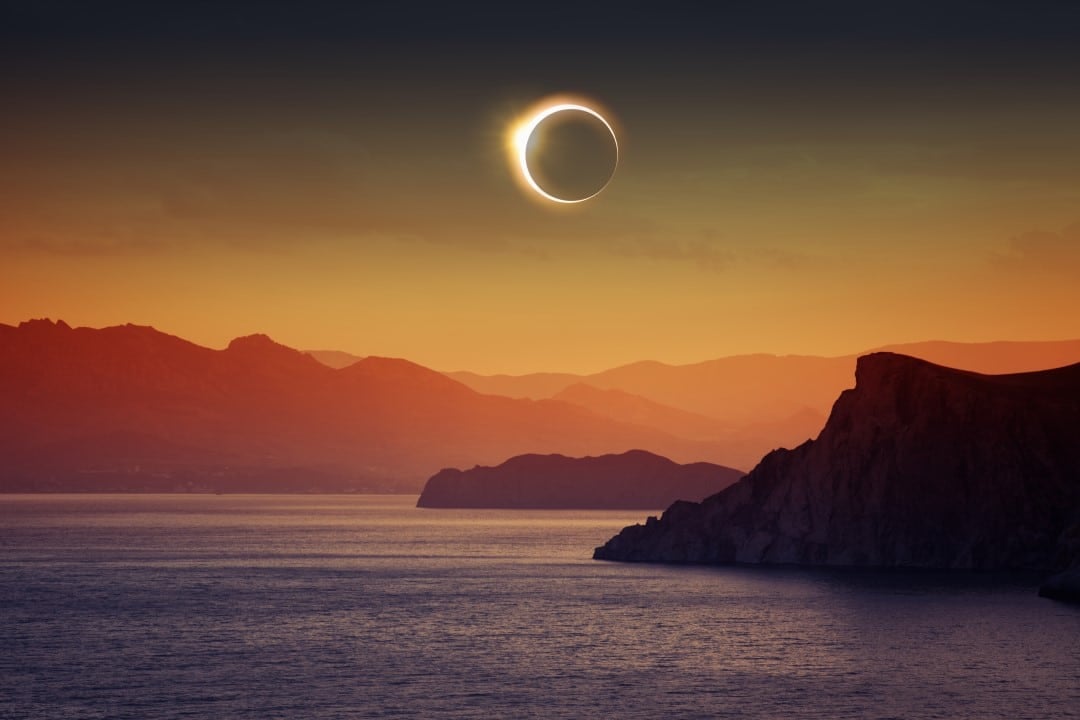
One of the most anticipated celestial events of the century is scheduled for August 2, 2027, when a total solar eclipse will provide a period of darkness that could exceed six minutes in specific locations. The long duration, considered rare, positions this phenomenon as a unique opportunity for scientists and astronomy enthusiasts. The shadow of Lua, known as the umbra, will travel across a narrow band that crosses the south of Europa, the north of África and Oriente Médio, attracting the attention of observers around the world.
Preparation for the event is already moving the scientific community and the specialized tourism sector. Agências Space agencies, such as NASA, have released detailed trajectory maps, allowing expeditions to be planned years in advance. The point of greatest totality, where darkness will reach its peak in 6 minutes and 23 seconds, is located near the historic city of Luxor, in Egito, transforming the region into one of the most sought after destinations for the date.
The exceptionality of the 2027 eclipse is due to a rare combination of orbital factors. Terra will be close to its furthest point from Sol (aphelion), making the solar disk appear slightly smaller in the sky. Simultaneamente, Lua will be close to its closest point to Terra (perigee), appearing larger. Essa coincidence allows Lua to cover Sol for a significantly longer time than usual, resulting in an extended spectacle.

Celestial mechanism behind long duration
The explanation for the remarkable duration of the 2027 eclipse lies in a precise confluence of orbital mechanics. The orbit of Terra around Sol is not perfectly circular, but rather elliptical. In August, our planet is close to aphelion, which makes the apparent diameter of Sol, seen from Terra, smaller. The Este factor, in itself, makes it easier for the Lua to cover it more loosely.
Additionally, the orbit of Lua around Terra is also elliptical. Durante the 2027 event, the natural satellite will be in a phase of its trajectory that brings it closer to perigee. This will maximize its apparent size in the sky. The combination of an apparently smaller Sol and an apparently larger Lua is the perfect recipe for a long-lasting total eclipse, an alignment that doesn’t repeat itself often.
The trajectory of the umbra through Terra
The eclipse’s total shadow path will begin at Oceano Atlântico, making its first appearance on land at the southern tip of Espanha, near Estreito of Gibraltar. Cidades as well as Tarifa and regions of Andaluzia will experience totality for more than four minutes, a significant event for the continental Europa. The shadow will then cross Mar Mediterrâneo towards África.
Upon entering the African continent, the umbra will pass through Marrocos, Argélia and Tunísia, gaining speed and duration. Na Líbia, the darkness will be deep, but it is at Egito that the eclipse will reach its climax. The band of totality will pass directly over Luxor, where clear weather conditions are historically favorable at this time of year, offering the longest period of darkness.
After crossing Egito, the shadow will follow Mar Vermelho, touching the coast of Arábia Saudita and crossing the country. The phenomenon will continue its journey over Iêmen and finally dissipate over Oceano Índico, close to the coast of Somália. In total, the umbra’s trajectory will cover thousands of kilometers, directly impacting more than a dozen countries.
Luxor, the epicenter of observation
The city of Luxor, in Egito, is being touted as the main destination for observing the eclipse. The location not only offers a maximum duration of 6 minutes and 23 seconds, but also combines the celestial spectacle with an incomparable historical setting. The possibility of witnessing the solar corona shining over ancient temples such as Karnak and the Vale of the Reis creates a unique atmosphere, attracting a diverse audience that goes beyond the astronomical community.
The region’s tourist infrastructure is already preparing for a significant increase in demand. Operadoras international and local tourism companies are developing specific packages for the event, which include cruises through the Rio Nilo with strategic stops for observation, as well as lectures with astronomers and access to specialized equipment. The city is expected to receive tens of thousands of visitors, significantly boosting the local economy. The combination of cultural heritage and rare natural phenomenon positions Luxor as a pilgrimage site for eclipse chasers and travelers looking for an unforgettable experience.
Implications for astronomical tourism
The 2027 eclipse represents a milestone for astronomical tourism, a niche market that has grown globally. Países located in the totality range are aware of the economic potential and have already started to develop strategies to attract visitors. Na Espanha, Andaluzia authorities plan to create “viewing zones” with infrastructure to ensure the safety and comfort of the public, promoting the event as a summer tourist attraction.
In Marrocos and Tunísia, the event is seen as an opportunity to highlight less traditional tourist destinations, combining eclipse observation with cultural experiences, such as tours of historic cities and desert expeditions. The advance sale of travel packages, more than three years in advance, demonstrates the high demand and global interest. Este advance planning is essential to ensure that transport, accommodation and security logistics can meet the large flow of people expected for the period.
Crucial security recommendations
Observing a solar eclipse requires strict care to avoid permanent damage to your vision. It is essential that, during partial phases of the phenomenon, when part of the solar disk is still visible, observers use appropriate solar filters. Óculos of eclipse with ISO 12312-2 certification are essential, as they block ultraviolet, infrared and intense visible light that can burn the retina.
Improvised methods, such as ordinary sunglasses, veiled photographic film or tinted glass, do not offer adequate protection and should be strictly avoided. Using telescopes, binoculars or cameras to observe Sol also requires the installation of specific solar filters on the front of the equipment, and not on the eyepiece.
The only time it is safe to look directly at the phenomenon is during the brief minutes of totality, when Lua completely covers Sol. At Neste moment, the solar corona, the outer atmosphere of Sol, becomes visible to the naked eye. Assim the first spot of sunlight reappears, it is crucial to return to using eye protection immediately.
Unique scientific opportunities
The long duration of totality in 2027 offers a valuable time window for scientific research. Durante the eclipse, the bright photosphere of Sol is blocked, allowing scientists to clearly study the chromosphere and, especially, the solar corona. Esta outer layer of the solar atmosphere is millions of times less dense than the visible surface and has temperatures that reach millions of degrees Celsius, a mystery that still intrigues physicists.
Research teams from several institutions plan to install advanced instruments along the path of the umbra to collect data on the structure, dynamics and composition of the corona. The extended observation period will allow us to capture high-resolution images of coronal mass ejections and other solar activity. The data collected will help improve forecasting models for space weather, which affects satellites, power grids and communications systems on Terra.
Support for those who are off track
For the vast majority of the world’s population, including observers at Brasil, the eclipse will not be directly visible. The event will take place at night on the American continent. However, technology will allow everyone to follow the show in real time. Grandes space agencies and observatories around the world will organize live broadcasts over the internet.
These transmissions will feature high-definition images captured by telescopes positioned at different locations throughout the band of totality, ensuring continuous coverage and multiple viewpoints. Além of images, broadcasts often include commentary from experts, who explain each phase of the phenomenon and share scientific insights, making the event accessible and educational for a global audience.



