
The February sky will have an annular solar eclipse in Aquarius and the four main phases of the Moon


The month of February 2026 presents itself as a period of intense celestial activity, attracting the attention of astronomers and astrology enthusiasts across the Brasil. The period’s lunar calendar will be marked by four distinct main phases, each occurring in a specific zodiac sign, and will culminate in a rare annular solar eclipse. The Este event, which will take place in conjunction with the Lua Nova in Aquário, promises to be one of the astronomical highlights of the year, although its visibility will be restricted to other parts of the globe. The sequence of events begins on the first day of the month, with an Lua Cheia in Leão, and unfolds over the weeks, influencing everything from the observation of the night sky to the symbolic interpretations associated with each lunar transit.
The changes in Lua’s appearance are a direct reflection of its continued orbital motion around Terra, which lasts approximately 29.5 days. The Esse cycle, known as synodic, determines the portion of the satellite we see illuminated by the Sol. For Para observers on Brasil, all lunar event times were calculated based on the Brasília time zone (BRT), making it easier to accurately track transitions. Embora the solar eclipse is the most anticipated event, the phases Cheia, Minguante and
The long-awaited annular solar eclipse in Aquário
The high point of the February lunar calendar will occur on the 17th, at 9:01 am, when Lua Nova in the sign of Aquário will give rise to an annular solar eclipse. The Este phenomenon occurs when the Lua is positioned exactly between the Terra and the Sol, but is at a more distant point in its orbit, known as apogee. Due to this greater distance, the lunar disk is unable to completely cover Sol, resulting in the formation of an impressive “ring of fire” around the edge of Lua. Este visual spectacle, however, will not be visible in its fullness in Brasil. The annular band, where the ring will be perfectly visible, will pass mainly over Antártida and the southern tip of África. In Brazilian territory, the event will not have significant visibility, with, at most, a subtle gloom in some areas in the south of the country. Apesar with limited local visibility, the event will be widely broadcast online by international observatories, allowing people around the world to follow the cosmic alignment in real time. Solar Eclipses are relatively rare events that can only occur during the Lua Nova phase, requiring a near-perfect alignment of the three celestial bodies in the same orbital plane.
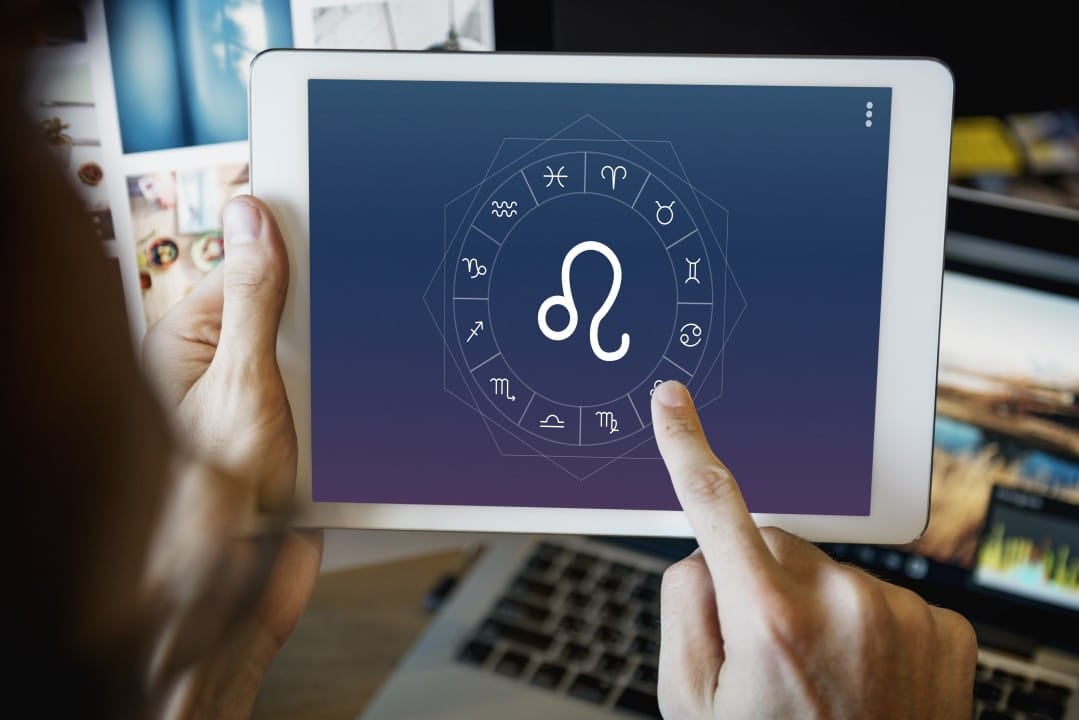
Lua Cheia in Leão begins the month cycle
The February lunar cycle will begin in a grand way on the 1st, at 7:09 pm, with the arrival of Lua Cheia in the sign of Leão. Neste moment, the Lua will be in direct opposition to the Sol from the point of view of the Terra, which allows its face facing us to be completely illuminated. Essa phase is known for its luminous intensity, making the night noticeably brighter, especially in places with little light pollution. Tradicionalmente, the Lua Cheia of February is called the “Moon of Neve” in some Hemisfério Norte cultures, a reference to the heavy snowfalls common at this time of year in that region.
From an astrological perspective, the Lua Cheia in Leão carries an energy of self-expression, creativity and celebration. Leão is a sign governed by Sol, associated with personal brilliance, leadership and heart. The culmination of the lunar cycle in this sign is seen as a favorable time to recognize achievements, express talents and connect with joy and generosity. It is a period that invites the expression of feelings and the search for recognition, encouraging confidence and personal magnetism. Para for observers, it will be the ideal opportunity to contemplate the lunar disk in its maximum splendor, revealing details of its craters and seas with the naked eye or with the help of binoculars.
The phases Minguante and Crescente
After reaching its peak, Lua begins its phase of decreasing light. On February 9th, at 9:43 am, Lua Minguante will occur in the sign of Escorpião. Esta phase is characterized by the illumination of half of the lunar disk, which will gradually reduce until complete disappearance in Lua Nova. No Hemisfério Sul, the visible illuminated part is on the left.
Astrologically, Lua Minguante in Escorpião is a period associated with introspection, detachment and deep transformation. Escorpião is a water sign linked to healing and regeneration processes, making this a favorable time to end cycles, resolve emotional issues and get rid of what no longer serves, preparing the ground for the new cycle that will begin with Lua Nova.
After the eclipse and Lua Nova, light begins to return to the sky. On February 24th, at 9:27 am, Lua Crescente will settle in the sign of Gêmeos. Nesta phase, half of the lunar disk becomes visible again, with the right part illuminated in Hemisfério Sul. Lua Crescente in Gêmeos, an air sign ruled by Mercúrio, brings an energy of communication, curiosity and planning. It is considered a phase of action and development, ideal for putting into practice the intentions defined in Lua Nova, starting projects, making contacts and seeking new learning.
Lua’s journey through the signs of the zodiac
Throughout the month, Lua will continue its rapid journey through the twelve signs of the zodiac, staying in each for approximately two to three days. Este constant transit is one of the main elements of daily astrology, as the position of Lua is believed to influence the collective mood and predominant energies of each period.
The month begins with Lua at Leão, but on February 3rd, it enters Virgem, bringing a greater focus on organization and practicality. Then, on the 5th, the passage through Libra favors the search for balance and harmony in relationships.
The entry into Escorpião on February 7th intensifies emotions, preceding the Minguante phase. Posteriormente, Lua advances to Sagitário on the 10th, stimulating optimism and the search for adventure, and then to Capricórnio on the 12th, bringing an energy of responsibility and focus on goals.
The astrological climax occurs when Lua enters Aquário on the 15th, setting the stage for Lua Nova and the solar eclipse. Este continuous transit offers a dynamic map for those who follow lunar astrology, allowing for a more conscious alignment with the celestial energies of each moment.
Tips for Celestial Observing at Brasil
Although the main event, the solar eclipse, will not be visible on Brasil, the other phases of Lua will offer a beautiful spectacle for observers across the country. Para for a better experience, it is recommended to look for locations away from large urban centers, where light pollution is less, allowing a clearer view of the night sky. Cidades located at higher altitudes also tend to offer superior observation conditions due to the thinner atmosphere.
The use of simple equipment, such as binoculars, can significantly enrich the experience, revealing details of the lunar surface, such as its main craters and seas. Para For those who want to delve deeper, amateur telescopes are an excellent option. Além In addition, several astronomy apps for smartphones can provide real-time information about the position of Lua, the exact times of its rising and setting, and star maps to help identify nearby constellations and planets.
Traditions and cultural meanings
The lunar cycle transcends astronomy, being deeply rooted in diverse cultures and traditions around the world. In Western astrology, each lunar phase and transit carries specific symbolism that influences behavior and emotions. The Lua Cheia in
In Brasil, many indigenous and riverside traditions use the lunar calendar as a guide for essential activities such as agriculture and fishing. Knowledge about the phases of Lua determines the best times for planting, harvesting and fishing, in an ancestral wisdom that connects the cycles of nature with the cycles of heaven. Essas practices demonstrate how lunar observation has always been fundamental for the survival and social organization of different peoples.



