
Adrian Newey’s F1 challenge: Aston Martin begins new car project with four months of disadvantage

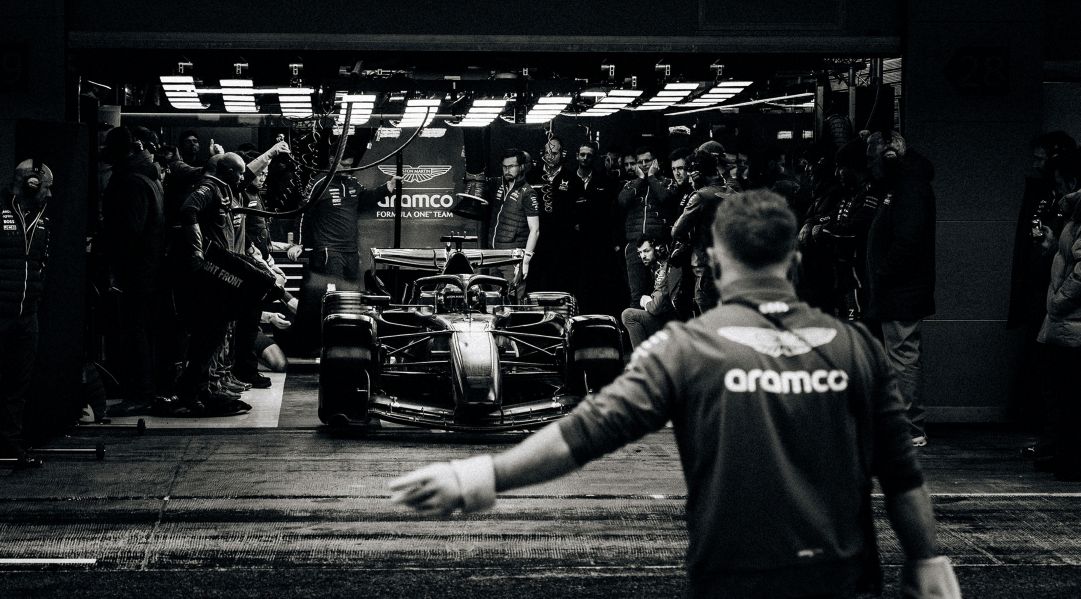
The Aston Martin faces a race against time in the development of its single-seater for the 2026 Fórmula 1 season. The team confirmed, through its renowned designer
The delay was caused by the need to complete the calibration of the team’s new wind tunnel at Silverstone. Enquanto to Federação Internacional from
“The direction we’ve taken could be interpreted as aggressive. It’s got quite a few features that haven’t been done before.
Adrian discusses AMR26’s design direction and whether he sees it as aggressive.
🔗:https://t.co/OEyyp6yCV1 pic.twitter.com/xEmXohbCnf
—Aston Martin Aramco F1 Team (@AstonMartinF1)February 4, 2026
This chronological disadvantage forced the engineering team to adopt an extremely condensed work schedule. Newey, who assumed his duties at the team in March 2025, found a scenario where compensation for lost time became the main guideline for the subsequent ten months, intensifying pressure on all departments involved in the AMR26 project.
Technical obstacles in using the wind tunnel in Silverstone
The main barrier faced by the engineering team was the impossibility of getting a scale model of the 2026 car into the wind tunnel by the second quarter of the year. Essa limitation prevented the collection of practical aerodynamic data, while most rival teams had already accumulated valuable information since the beginning of the period allowed by the FIA.
This four-month difference put Aston Martin in a position of constant recovery, resulting in a design and production cycle that was much faster than ideal. The parts manufacturing schedule was directly affected, leading to final assembly of the car in the last moments before the first track tests, which explains the initial difficulties in carrying out the shakedown in Barcelona.
The AMR26 design philosophy under pressure
Despite the tight schedule, Adrian Newey implemented a design philosophy focused on maximum compactness of all single-seater components. Essa approach seeks to optimize air flow and exploit loopholes in the new regulation, but increases the complexity of the integration between mechanical systems and the body.
Achieving the desired aerodynamic shapes required unprecedented collaboration between the mechanical design and aerodynamics departments. The positioning of radiators, suspension and other internal elements had to be rethought to make the solutions proposed by Newey viable.
The designer does not classify the AMR26 as an “aggressive” car, but rather as the result of the search for the technical direction that the team believes to be the most competitive. Ele recognizes that some of the solutions applied are first-in-class, representing a calculated risk that could translate into a significant advantage or unexpected performance and reliability challenges.
The look of the car, especially the design of the air intakes and engine fairing, has already aroused the curiosity of rival teams during its first appearances on the track. Aston Martin’s bet lies in the ability of its unique interpretation of the regulation to overcome the limitations imposed by the late start of practical development.
Collaboration between departments to optimize the project
The challenge of creating an extremely compact car required a deep level of collaboration between the different sectors of the Silverstone factory. The vision of Newey required mechanical engineers to find innovative ways to accommodate internal components without compromising aerodynamic efficiency, a highly complex technical puzzle.
According to the designer, the team’s response was positive, with all employees embracing the challenge of realizing an ambitious concept in record time. The pressure served to strengthen communication and synergy between the teams, a factor that could be decisive for the success of the project throughout the season.
The late arrival of Newey and the scenario found
When formally starting its activities at Aston Martin in March 2025, Adrian Newey was already faced with a disadvantageous schedule. The team was aware of the structural challenges and the time required to bring the new wind tunnel into full operation, but the situation required a quick and efficient adaptation of all strategic planning for the 2026 car.
Preparation for the final pre-season tests at Bahrein
With the car finally on the track, Aston Martin focuses its efforts on collective tests on the Sakhir circuit, at Bahrein, scheduled between February 11th and 13th. Este period will be crucial for validating aerodynamic and mechanical innovations, as well as verifying whether the efficiency of the design has managed to compensate for time lost in initial development.
The mileage accumulated on the Bahrein is essential to guarantee the reliability of the new engine and hybrid systems, which are completely new under the 2026 regulations.
Technical perspective on the new category rules
The technical revolution of 2026 represents a fresh start for all teams on the grid, offering an opportunity to realign forces in the championship. Para to Aston Martin, which has made massive investments in its infrastructure, this is a decisive moment to consolidate itself as a top team. The delay in the wind tunnel was a significant setback, but Adrian Newey’s vast experience in interpreting and exploring new rules is considered the team’s main asset in overcoming this obstacle. The factory’s absolute focus is now on collecting and analyzing data for each lap completed in testing, seeking to fine-tune the car’s balance and optimize all systems for the first race of the year. The technical team closely monitors aerodynamic pressure, cooling and component wear to avoid failures that could compromise an already challenging start to the season. Após ten months of intense work, Aston Martin enters the final preparation phase with the clear objective of proving that innovation and efficiency can overcome the limitations of an adverse schedule.



