Bixby evolves with Perplexity AI for intuitive commands and real-time searches in the new One UI 8.5
Samsung has officially announced one of the biggest restructurings of its virtual assistant, Bixby, which will operate with an artificial intelligence engine enhanced by Perplexity technology. The update, integrated into the One UI 8.5, allows the tool to interpret and execute complex natural language commands, transforming the way users interact with their Galaxy devices.
The new version will initially be distributed in beta phase to owners of the Galaxy S25 line in selected markets from January 2026. The stable version is scheduled to be released in February, arriving natively on future Galaxy S26 series devices and, later, for other compatible models via software update.

With this change, the assistant becomes capable of making in-depth adjustments to the operating system and hardware based on simple, everyday descriptions. The initiative aims to eliminate the need for the user to know the technical terms of the settings, making device control more accessible and direct for all audience profiles.
Advanced interpretation features
The main technical innovation lies in the Bixby’s ability to understand the intent behind the user’s words, rather than relying on rigid, pre-programmed commands. The system can now process contextual requests and activate the corresponding features autonomously, simplifying the user experience.
For example, a user might simply say that “the screen should not go blank while reading a long article.” The assistant will interpret this need and activate the intelligent display mode, which keeps the display active while detecting the user’s face, without having to manually navigate through the configuration menus.
Real-time searches with Perplexity
Collaboration with Perplexity AI expands the capabilities of Bixby beyond device control, allowing complex web queries to be performed directly from its interface. The results are displayed in an integrated way, without interrupting the task the user is currently performing.
This functionality operates through floating widgets that present the requested information, such as a restaurant recommendation or the definition of a technical term. Processing occurs in the background so as not to compromise the performance of the main application in use.
The platform clearly differentiates internal and external tasks. Comandos related to the device’s configurations and functionalities are managed by the native Bixby system, while questions that require up-to-date knowledge of the web are delegated to the Perplexity engine, ensuring more accurate and relevant answers.
Diagnosis and troubleshooting
The virtual assistant also takes a proactive role in resolving common problems. When informed about unwanted behavior, Bixby can analyze the sensors and system settings to diagnose the cause and suggest an immediate solution.
A practical example occurs when the user reports that the smartphone screen is turning on by itself inside the pocket. The Bixby checks the proximity and light sensors, identifies the absence of blocking against accidental touches and recommends the activation of this specific protection.
Likewise, complaints about accelerated battery drain lead to a review of apps running in the background. The assistant identifies the processes that consume the most energy and offers the option of restricting them to optimize the device’s autonomy.


Other scenarios include automatically checking audio settings when the user mentions the volume is low or adjusting app permissions to enhance privacy, all from a simple conversation with the assistant.
Distribution and compatibility schedule
The initial testing phase of the new Bixby is restricted to users enrolled in the One UI 8.5 beta program on devices in the Galaxy S25 line. The update will be rolled out progressively to this group over the next few weeks to gather feedback and perform fine-tuning before the global release.
The stable and definitive version will officially arrive in February 2026, with all models in the Galaxy S26 series leaving the factory with the functionality pre-installed. Aparelhos of previous generations, especially the most recent flagships, will receive the update via OTA (Over-the-Air) following the regular Samsung update schedule, with a gradual expansion to the intermediate lines.
Strategic positioning in the Galaxy ecosystem
Samsung has established a clear division of responsibilities between its artificial intelligence tools to avoid overlapping roles. Enquanto to
This specialization allows each tool to reach its maximum potential in its area of expertise. The Bixby becomes a true device control agent, while the Gemini functions as a creative and productivity assistant, offering a more complete and organized AI experience for the end user.
Advances in the technical architecture of the assistant
The transition to an intent processing model represents a significant technological leap over previous versions of Bixby. The algorithms have been updated to interpret language nuances, slang and different cultural contexts, making communication more natural. The infrastructure adopts a hybrid approach, combining local processing for fast, privacy-sensitive tasks with cloud access for queries that demand greater computational power. Isso ensures that sensory data, such as that captured by microphones and sensors, is processed on the device itself, reinforcing security and response speed even in unstable network conditions. The system also uses an intelligent cache to store answers to frequently asked questions, allowing access to some information even offline.
Partnership details and privacy
Collaboration with Perplexity is strictly focused on advanced search capabilities and information querying on the web. Samsung maintains full control over critical device operations, ensuring that operating system and hardware management remains under its sovereignty.
Strict privacy protocols have been implemented to ensure that user data is not shared or used to train external AI models without explicit consent. The processing of sensitive information preferably occurs on the device itself, minimizing data exposure.
Examples of everyday use
The new Bixby is designed to solve common scenarios with greater efficiency. A user can, for example, ask to “block all notifications during my next meeting” and the assistant will consult the calendar, identify the event and activate the “No Perturbe” mode automatically, allowing exceptions for important contacts. Outros practical examples demonstrate the versatility of the tool, such as “disabling automatic brightness only at night”, resulting in the immediate programming of a specific time for the function. Pedidos such as “activate data saving when I leave home” or “show me the way to the restaurant my friend recommended yesterday” are executed by combining system control with external searches in a fluid way.
Veja Tambem em News (EN)

Research reveals that parents are unaware of how their children use artificial intelligence
Samsung releases new system update with new features for Galaxy Watch 4 users
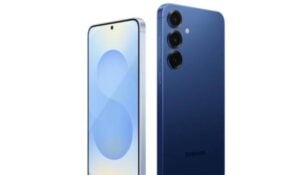
Digital retail reduces the value of the Galaxy S25 5G smartphone with bank bonuses and device exchange
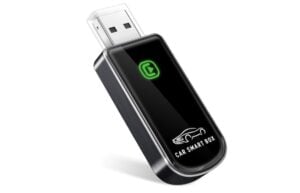
Amazon’s wireless CarPlay adapter has a 50% discount and high approval ratings from drivers

Zach Cregger’s new Resident Evil ignores games and focuses on an unprecedented story with new characters

Rumor suggests that Nintendo is preparing a special edition of the Switch 2 with a remake of Ocarina of Time
Apple accelerates production of the iPhone 17e and develops new Air model with dual camera system

Epic Games platform releases twelve high-budget games at no permanent cost for PC users

PlayStation 5 Pro price drop accelerates digital retail sales and eliminates global stocks

New Galaxy Watch 9 firmware appears on server and confirms progress in software development

Apple’s commemorative project tests cell phone with 1.1 millimeter edge and curved screen for 2027