Corinthians leads gain in followers in January followed by Flamengo and Santos in the digital ranking


The digital scenario of Brazilian football began the year 2026 with intense movement and significant records on the main social interaction platforms. According to the most recent survey by Ibope Repucom, released this Tuesday, national clubs registered a robust increase in their connected fan bases. Corinthians and Flamengo emerged as the engines of this growth, being responsible for a majority share of new global additions in the period. The phenomenon reflects not only the engagement of fans, but also the effectiveness of the digital marketing strategies adopted by clubs during the pre-season and initial competitions.
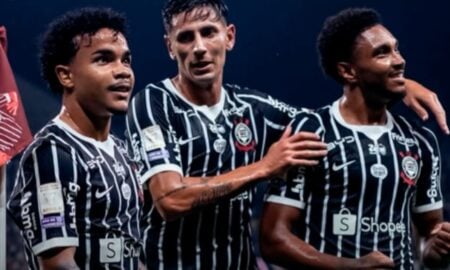
The study details that Corinthians took the lead alone for the second consecutive month, driven by an aggressive performance in visual channels. The São Paulo team registered more than 420 thousand new subscribers, consolidating its strategic position at the top of the monthly engagement ranking. Além from Juntas, the two biggest fans in the country added almost 800 thousand new followers, highlighting the polarization of digital interest in Brazilian territory.
The technical analysis of team performance shows an important diversification among the social networks most used by users:
- Instagram remains the main gateway for new fans, concentrating the largest volume of visual interactions.
- TikTok has established itself as a strategic tool for young audiences, with Corinthians and Flamengo sharing leadership.
- Facebook, despite being considered by many to be a stable network, has demonstrated surprising strength in specific niches, as in the case of Santos.
- YouTube remains fundamental for the monetization of proprietary content, where Flamengo maintains audience dominance and new subscribers.
Performance of Corinthians and Flamengo on social platforms
Corinthians demonstrated a unique ability to convert fans into followers during the first month of the calendar year. The club registered 273 thousand new members in the Instagram alone, which represents one of the biggest recent numbers for the period. On TikTok, the team also stood out by reaching 100 thousand new followers, sharing the top of the platform with its rival from Rio in a fierce competition for the attention of short video content producers.
Flamengo, in turn, showed the strength of its global brand by registering 360 thousand new total registrations in its digital ecosystem. The Rio club led growth on YouTube with 70 thousand new subscribers, reinforcing the relevance of FlaTV as a direct communication vehicle. In the old Twitter, the club was also at the top with 12 thousand new followers, maintaining an active base of real-time discussions about the team’s daily life and results on the field.

Santos reaches significant brands and consolidates digital base
Santos was one of the big positive surprises in the February survey, showing an increase of 288 thousand new subscribers. One of the determining factors for this result was the constant performance on Facebook, which for the third month in a row attracted around 200 thousand new followers. The Esse phenomenon demonstrates that the Santos brand has deep and resilient penetration across age groups and user profiles that use the Mark Zuckerberg network as a primary source of sports information.
At Instagram, the Vila Belmiro team added 77 thousand new subscribers, which allowed the club to reach the historic mark of 8 million followers on the platform. Esse growth is seen as essential for the club’s commercial valorization, attracting new sponsors interested in the institution’s digital reach. Peixe’s communication strategy has focused on valuing idols and being close to fans, which has generated satisfactory organic results even in the face of competition from clubs in the capital of São Paulo.
Paulo and Grêmio complete the most prominent group
São Paulo and Grêmio secured their positions in the top-5 of digital growth in January, demonstrating stability in their fan bases. Tricolor Paulista recorded an increase of 49 thousand new followers, maintaining efficient communication aimed at engagement on game days. The team from Rio Grande do Sul, with 48 thousand new subscribers, reinforces its position as the biggest digital force in the southern region, surpassing regional rivals and remaining competitive on the national social media scene.
These two institutions have invested heavily in modernizing their communications departments to compete with the volume generated by the ranking leaders. Grêmio, specifically, has used its platforms to strengthen ties with fan partners, transforming followers into active members of the membership. São Paulo focuses on producing exclusive behind-the-scenes content, which has guaranteed high user retention and constant growth month after month in the Brazilian digital scene.
Evolution of the general ranking and total numbers of clubs
The digital ranking updated in February 2026 reveals Flamengo in absolute leadership with 66.6 million total followers across all its platforms. Corinthians occupies second place with 42.5 million, maintaining a comfortable margin over Santos, which appears in third place with 26.2 million. The competition for fourth place is fierce between Palmeiras and São Paulo, with Alviverde totaling 23.9 million against 22.3 million for
Following the list, Vasco of Gama appears with 13.9 million, closely followed by Grêmio with 11.9 million and Atlético-MG with 11.8 million. Cruzeiro completes the group of clubs with more than 10 million followers, reaching the mark of 10.9 million connected fans. Esses numbers are fundamental for market analysis, as they serve as a basis for negotiations on broadcasting rights and master sponsorship contracts that take into account the teams’ digital visibility.
Distribution of forces between regional and national clubs
The Ibope Repucom survey also highlights the strength of clubs outside the Rio-São Paulo axis, with Fluminense approaching 10 million followers. Internacional appears with 7.8 million, while Botafogo has 6.6 million and Chapecoense maintains a solid base of 6.1 million followers. No Nordeste, Bahia lead with 5.4 million, followed by Sport with 5.2 million, while Fortaleza and Vitória technically tie at 4.2 million total subscribers.
The regional analysis shows that clubs like Ceará and Athletico-PR have identical bases of 3.8 million followers, demonstrating a strong local identity that translates into a digital presence. Bragantino, driven by corporate investment, already has 2.3 million followers, getting closer to traditional clubs on the national scene. Esse digital balance is important for the democratization of Brazilian football on streaming and social media platforms, allowing smaller clubs to reach global audiences through viral content and good network management.
Engagement methods and new trends for the market
Maintaining growth on social media requires Brazilian clubs to adopt data analysis technologies to understand fan behavior in real time. The use of artificial intelligence to personalize content and create immersive experiences has been the difference for teams that want to break the bubble of their local fans. Engagement is no longer limited to just posting game results, but involves creating an entertainment ecosystem that keeps the user connected throughout the week.
The teams that lead the ranking invest in partnerships with digital influencers and content creators to expand the brand’s reach to audiences that do not necessarily follow the matches in full. Essa strategy has proven to be effective in increasing the follower base in an organic and qualified way, generating value for commercial partners. The trend for the remainder of 2026 is for clubs to increasingly integrate their official stores and ticket systems with social media, facilitating the fan’s consumption journey within a single controlled digital environment.