
Earth records impact of X8.1 megaeruption from the Sun with predictions of geomagnetic storms G2


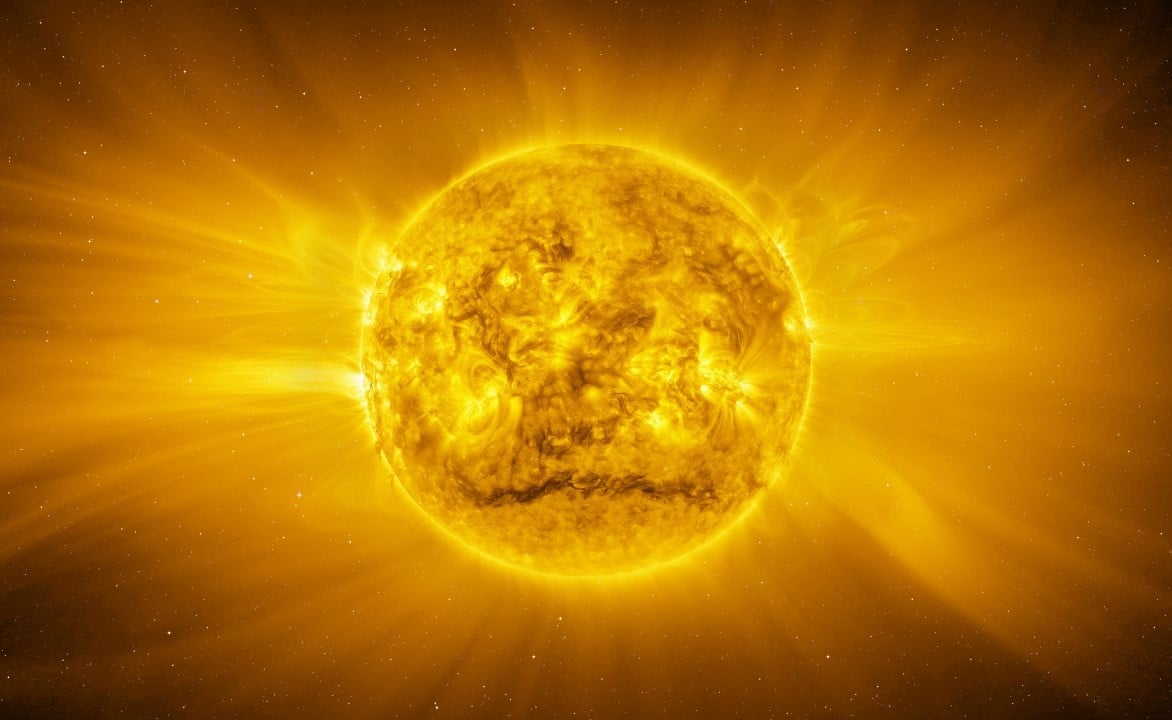
Terra was hit by a coronal mass ejection from an X8.1 class solar eruption recorded in early February 2026. The impact occurred this Wednesday, February 4, at around 12:30 pm Brasília time, activating magnetometers at several monitoring stations around the world. Especialistas indicate that the event could generate geomagnetic storms of level G1 to G2 in the coming hours, with the possibility of formation of aurora borealis in regions at higher latitudes.
The main eruption happened on Sunday, February 1, when Sol recorded a sequence of 26 solar flares. Entre among them, class X8.1 stood out, considered the third most intense of the current Ciclo Solar 25. The associated plasma ejection reached Terra one day earlier than initially predicted by Administração Nacional Oceânica and Atmosférica of Estados Unidos (NOAA).
Although the impact was classified as a “graze”, the force of the explosion was enough to disturb the Earth’s magnetic field. Observatórios recorded moderate vibrations, but there is no evidence of serious interruptions in communication systems or electrical networks so far.
- The main event was an X8.1 eruption on February 1;
- CME impact confirmed on February 4th at 12:30 pm (Brasília);
- G1 to G2 storms forecast over the next 24-48 hours;
- Possibility of visible auroras in polar regions and high latitudes.
Intense activity in sunspot AR4366
The active region AR4366 has been the main focus of solar instability in recent days. Essa colossal spot has a complex delta-type magnetic field, a configuration that favors high-energy eruptions. Nos in the first days of February, it produced multiple explosions, including X8.1 which generated the coronal mass ejection now interacting with Terra.
The rotation of Sol positioned the spot directly towards the planet, increasing the risk of direct impacts in possible new ejections. Observações indicate that the region continues to grow, with the addition of new intermediate spots that increase magnetic instability.
Classification of solar flares
Solar flares are categorized according to the intensity of the X-rays emitted. The scale uses letters A, B, C, M and X, where each successive category represents ten times more energy than the previous one. Eventos of class X are the most powerful and can generate significant consequences when targeted at Terra.
Within class X, a number accompanies the letter to indicate relative strength. For example, an X8.1 eruption is eight times more intense than an X1. The February 1 eruption was one of the strongest of Ciclo Solar 25, which began in December 2019.
- Class A and B: weak eruptions, without significant impact;
- Class C: moderate, generally without terrestrial effects;
- Class M: strong, capable of causing limited radio blackouts;
- Class X: extreme, with potential for geomagnetic storms.
Expected effects of geomagnetic storms
Geomagnetic storms are classified on a scale from G1 to G5, where G1 represents mild events and G5 indicates extremes capable of damaging infrastructure. Para the next few hours, experts predict levels between G1 and G2 due to the current impact. In G1, there are slight fluctuations in the electrical grid and minimal interference with satellites.
At the G2 level, the effects become more noticeable, with the possibility of voltage alarms in high latitude systems and the need for corrections on satellites. The propagation of high-frequency radio waves may be disrupted, while aurora borealis become visible at lower latitudes than usual.
Although a G5 event is not expected, continued activity in AR4366 keeps experts on their toes. Novas ejections could increase the intensity of the disturbances in the coming days.
New X4.2 eruption recorded this morning
This Wednesday, February 4, the same AR4366 region produced another significant eruption at 8:13 am Brasília time. Classificada as X4.2, the explosion caused temporary disruptions to radio communications in parts of África Ocidental and southern Europa. The associated radiation flooded Earth’s upper atmosphere, generating short-lived radio blackouts.
This event reinforces the high activity phase of Sol. The combination of multiple eruptions in sequence increases the amount of material ejected towards Terra, enhancing magnetic interactions.
Cycle Solar 25 reaches maximum activity phase
Ciclo Solar 25, which began in December 2019, is currently in its period of maximum activity. Solar cycles last approximately 11 years and are characterized by variations in the number of sunspots. At their peak, the spots concentrate magnetic energy that can be released in eruptions.
Until February 2026, the cycle has already recorded several class X eruptions.
The maximum activity expected for this cycle has generated frequent events. Complex solar Manchas, such as AR4366, exemplify the typical instability of this phase.
Possible consequences for technological systems
Solar flares and geomagnetic storms mainly affect technologies that depend on space or the ionosphere. Satélites may experience increased atmospheric drag, requiring orbit adjustments. Redes electrical outlets at high latitudes record induced current fluctuations.
High-frequency radio communications face disruptions, especially in polar regions. GPS Sistemas may experience reduced accuracy during intense events. Operadores of infrastructure continuously monitors alerts issued by NOAA to mitigate risks.
Although current impacts are moderate, continued solar activity requires vigilance. Novas eruptions from AR4366 could generate direct ejections with broader consequences.
Northern lights formation magnified
One of the visible effects of geomagnetic storms is the formation of auroras. Partículas charged interact with the Earth’s atmosphere, producing colored lights mainly in polar regions. In G2 events, auroras may extend to lower latitudes, becoming visible in areas usually outside the auric zone.
Observers in northern hemisphere countries such as Canadá, Escandinávia and parts of Estados Unidos are more likely to record the phenomenon in the coming nights. Condições of clear skies favor viewing.
The current impact of the CME may generate moderate auroras. Caso new ejections arrive, the intensity and geographic extent increase significantly.
Continuous monitoring of solar activity
Space agencies maintain constant observation of the Sol through satellites such as NASA’s Solar Dynamics Observatory. Dados in real time allow predicting trajectories of coronal mass ejections and issuing early warnings. Plataformas like Spaceweather.com and the NOAA forecast center release regular updates.
The 27-day solar rotation causes spots to temporarily disappear from Earth’s view, returning later. AR4366, now directly aligned with Terra, remains under special attention in the coming days.
Experts highlight that events like the current one are normal during solar maximum. Improved understanding allows for better preparation for potential technological impacts.
Current ranking of the biggest eruptions of the cycle
Ciclo Solar 25 has already produced several notable X-class flares. The lead belongs to the X9.1 flare recorded in October 2024 in the AR3842 region. In second place is X8.7 from May 2024, originating from AR3664.
The X8.1 eruption of February 1, 2026 ranks third. Subsequent Eventos, such as X4.2 this Wednesday, reinforce the high activity of the period. The ranking can change quickly as new explosions occur.
- 1st: X9.1 – October 2024;
- 2nd: X8.7 – May 2024;
- 3rd: X8.1 – February 2026.
Outlook for the coming days
The AR4366 region continues to evolve and presents an unstable magnetic configuration. Probabilidade high number of new X-class eruptions persist in the coming days. Qualquer ejection directed at Terra may generate additional geomagnetic storms.
Observatories maintain real-time monitoring. Atualizações about CME trajectories are issued as new data becomes available. The current phase of the solar cycle suggests maintaining high activity for additional months.



