
Exynos 2600 reverses history and beats Snapdragon in GPU performance for S26

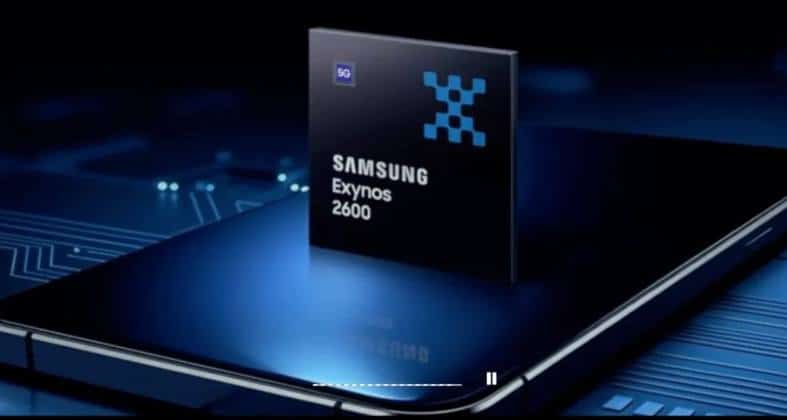
Samsung presented the Exynos 2600, the first smartphone processor manufactured in a 2 nanometer node with Gate-All-Around (GAA) technology. Esse chip recorded superior performance in graphics ray tracing tests, outperforming the Qualcomm Snapdragon 8 Elite Gen 5 in specific GPU evaluations. The news indicates a possible change in the historical pattern of the Galaxy S line, where variants with Exynos used to lag behind those equipped with Snapdragon.
The Exynos 2600 integrates the Xclipse 960 GPU, developed in partnership with AMD and based on a customized RDNA 4 architecture. Essa configuration enables significant advances in advanced graphics rendering. Independent Benchmarks places the Samsung chip at the top of rankings dedicated to ray tracing on mobile devices.
The Exynos 2600 is expected to equip part of the Galaxy S26 series models, especially in markets such as Coreia of Sul, Ásia and Europa. Regional adoption maintains Samsung’s strategy of varying processors according to local availability and demands.
Historical evolution of Exynos processors
The Galaxy S line has used variants with Exynos and Snapdragon for several generations, depending on the sales region. Modelos with Qualcomm chip generally had advantages in energy efficiency, thermal control and sustained performance in heavy games.
These differences directly impacted the experience in intensive graphics tasks. Usuários reported compromises on Exynos variants, especially in prolonged gaming sessions or applications with high GPU demands.
The arrival of the Exynos 2600 changes this scenario with structural improvements. The 2nm GAA process reformulates the transistor architecture, increasing density and reducing energy consumption compared to previous nodes.
Xclipse 960 GPU Technical Details
The Xclipse 960 GPU represents the main advancement of the Exynos 2600. Ela incorporates elements of AMD’s RDNA 4 architecture, optimized for mobile devices by the Samsung.
Tests like the Basemark Ray Tracing position the Exynos 2600 in first place among current mobile chips. Ray tracing performance surpasses that recorded by the Snapdragon 8 Elite Gen 5, contradicting expectations based on past generations.
- Up to 50% improvement in ray tracing compared to the previous Exynos;
- Double graphical computing performance compared to the previous generation;
- Introduction of Exynos Neural Super Sampling (ENSS) technology for intelligent upscaling.
These gains derive from the combination of advanced graphics architecture and Samsung-specific optimizations.

Thermal improvements and energy efficiency
The Exynos 2600 adopts innovative heat dissipation solution known as Heat Path Block (HPB). Essa technology uses a copper heatsink in direct contact with the processor, improving thermal transfer.
Results indicate a reduction of up to 30% in average operating temperature. Thermal resistance drops by about 16% compared to previous chips in the Exynos line.
These optimizations enable sustained performance for longer. In benchmarks such as Geekbench 6 OpenCL, the score variation is only 3.4%, demonstrating superior stability.
The 2nm GAA process contributes to greater energy efficiency. The transistor structure minimizes leakage and improves power control at varying loads.
Direct comparison in graphics benchmarks
Vulkan evaluations show practically tied scores between Exynos 2600 and Snapdragon 8
In OpenCL tests of the Geekbench 6, the Exynos 2600 demonstrates remarkable consistency. Low fluctuation indicates the ability to maintain high performance without significant thermal throttling.
Other rankings place the Xclipse 960 GPU ahead in specific ray tracing tasks. Essa advantage appears especially in scenarios that simulate games with advanced lighting.
- Technical tie in pure Vulkan performance;
- Superiority in sustained stability;
- Clear leadership in mobile ray tracing.
These results suggest a greater balance between the two flagship chips.
CPU configuration and lack of integrated modem
The Exynos 2600 features a 10-core configuration based on the Arm v9.3 architecture. Ele uses C1-Ultra and C1-Pro cores, eliminating traditional low-efficiency cores.
The distribution includes a high-performance prime core, three mid-range cores and six optimized cores. Essa choice prioritizes performance in multitasking and demanding applications.
Unlike previous generations, the chip does not have an integrated modem. The Samsung opted for an external Shannon 5410 modem, allowing greater flexibility in connectivity.
This approach separates critical functions and facilitates independent updates. The external modem supports advanced 5G standards and other communication technologies.
Implications for the Galaxy S26 series
The Galaxy S26 series is expected to receive the Exynos 2600 in regional variants. Modelos destined for Coreia from Sul and other selected markets will feature the new chip.
This division maintains Samsung’s diversification strategy. Variantes with Snapdragon 8 Elite Gen 5 will serve regions such as Estados Unidos and parts of América Latina.
Actual testing on end devices will determine consumers’ final perception. Benchmarks isolated from the chip indicate potential for greater balance between versions.
The combination of advanced GPU and improved thermal control positions the Exynos 2600 as a competitive option. The Galaxy S26 series represents an opportunity to reverse historical preferences for Snapdragon variants.
Advances in AI Processing
The Exynos 2600 brings a renewed NPU with gains of up to 113% in artificial intelligence tasks. Essa improvement benefits features such as image processing and local wizards.
Integration with ENSS enables AI-assisted graphical upscaling. Jogos and multimedia applications gain visual quality without excessive impact on performance.
These features align the chip with current demands of flagship devices. Processamento local AI reduces dependence on constant connection to the cloud.
The architecture enables efficient execution of large models directly on the device. Recursos how real-time photo and video editing benefit directly.
Technical perspective of the 2nm process
Manufacturing at 2nm GAA marks a milestone for Samsung Foundry. The process increases transistor density and improves efficiency compared to previous 3nm.
Gate-All-Around transistors reduce leakage and enable precise power control. Essas features contribute to greater autonomy in smartphones.
Samsung positions the node as a reference for future contracts. Outras companies show interest in the thermal technology associated with the Exynos 2600.
The process makes it possible to integrate more components in a reduced area. Isso makes room for larger batteries or more compact designs in mobile devices.
The Exynos 2600 consolidates advances accumulated by the Samsung in its own chips. The combination of AMD graphics architecture, 2nm process and proprietary thermal solutions results in competitive performance.
Benchmarks confirm leadership in ray tracing and comparable or superior stability in prolonged graphics tasks. The Galaxy S26 series should reflect these gains in real-world use.
The regional division of processors continues, but with a smaller gap between Exynos and Snapdragon. Consumidores in markets with Exynos can expect a more balanced experience.



