
F1: Adrian Newey reveals four-month delay in development of Aston Martin’s new car

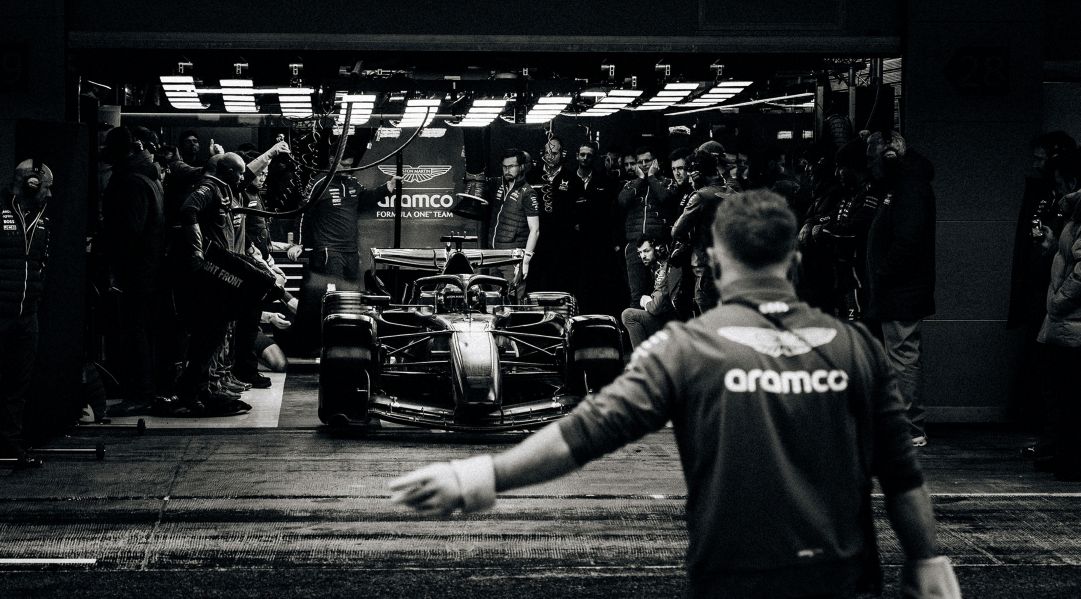
Adrian Newey, current team leader and renowned designer of the Aston Martin, has publicly confirmed that the English team faces a severely compressed schedule for the 2026 season of the Fórmula 1. The announcement comes at a crucial time, as the category prepares for one of the biggest technical and engine changes in its recent history, demanding maximum aerodynamic efficiency.
The situation was detailed in an official interview, in which Newey explained that Aston Martin needed to wait for the completion and full calibration of its new wind tunnel before starting practical tests. Enquanto the aerodynamic testing ban imposed by Federação Internacional of Automobilismo (FIA) ended in January last year, the Silverstone team was only able to operate its equipment at full technical capacity from April onwards. Esse interval without real wind tunnel data forced the team to work on a much more compact and intense timescale than originally planned.
The Centro of Tecnologia of Aston Martin, which is still undergoing structural evolution processes, was one of the factors that influenced the late start of design and research operations for the AMR26 model. Newey, who formally began his activities at the team only in March 2025, highlighted that the team has already started the development cycle at a chronological disadvantage. The ten months following his arrival were described as extremely busy trying to make up for lost time and deliver a competitive car within the new Fórmula 1 guidelines.
“The direction we’ve taken could be interpreted as aggressive. It’s got quite a few features that haven’t been done before.
—Aston Martin Aramco F1 Team (@AstonMartinF1)February 4, 2026
Adrian discusses AMR26’s design direction and whether he sees it as aggressive.
🔗:https://t.co/OEyyp6yCV1 pic.twitter.com/xEmXohbCnf
Technical obstacles in using the wind tunnel in Silverstone
The absence of a scale model of the 2026 car in the wind tunnel until mid-April represented the biggest obstacle for the engineering team led by Adrian Newey. Most direct competitors already had prototypes in the testing phase shortly after the end of FIA regulatory restrictions, allowing for greater data accumulation. Essa four-month difference put Aston Martin in a position of constant recovery, resulting in an extremely compressed design cycle by category standards.
The delay directly impacted the production and assembly schedule of the final parts, leaving the team in a race against the clock for the first track commitments. The car was only ready in the final moments before the trip to Espanha, which explains the difficulties faced by the team in carrying out the initial shakedown at Barcelona. Mesmo With the state-of-the-art structure being built in Silverstone, the transition between digital planning and physical validation in the new wind tunnel required patience and fine-tuning from the technical board.
Aerodynamic characteristics of the new AMR26 model
- The design presents an aerodynamic philosophy focused on the extreme compactness of all internal and external components.
- The mechanical design team worked closely with the aerodynamicists to enable shapes that had never been attempted by the brand.
- Innovative solutions have been implemented to ensure airflow is optimized despite the time constraints imposed by the initial delay.
- The car caught the attention of rivals during its appearance in Barcelona due to the different design of the air intakes and engine fairing.
Collaboration between departments to optimize the project
Adrian Newey highlighted that the search for an extremely compact car required an unprecedented level of collaboration between the mechanical designers and the Aston Martin aerodynamics team. Para To achieve the shapes desired by the designer, it was necessary to rethink the positioning of several internal systems of the single-seater, which increased the complexity of daily work. Apesar of the additional difficulties generated by this design philosophy, Newey stated that all factory employees embraced the challenge with professionalism.
Newey’s vision for the 2026 car is not classified by himself as “aggressive”, although he recognizes that external observers and rival teams may use that term to describe the project. Ele prefers to define work as the relentless search for the technical direction that the team considers correct, based on unique interpretations of the new regulation. Algumas of the features present in the AMR26 have not been previously used in the category, which may represent a technical risk or a significant competitive advantage.
Preparation for the final pre-season tests at Bahrein
Aston Martin now directs all its efforts to the next stage of collective training, which will take place on the Sakhir circuit, at Bahrein, between the 11th and 13th of February. Este period will be essential to validate the innovations introduced by Newey and verify that the time lost at the beginning of last year has been adequately compensated with design efficiency. The team needs solid mileage to ensure the reliability of the new engine and hybrid systems complies with FIA requirements.
Before the start of track activities at Bahrein, the Silverstone team will hold the official launch of the car’s livery and final details on Monday, February 9th. The Esse event is eagerly awaited by the market and fans, as it will reveal the definitive solutions that Newey implemented to overcome the four-month delay. The team’s ability to respond under pressure will be put to the test once the clocks start in the Bahraini desert next week.
Technical perspective on the new category rules
The introduction of the new technical regulations in 2026 represents a fresh start for all teams on the grid, partially leveling the technological dispute between the major manufacturers. Newey explained that this scenario makes the challenge even greater for Aston Martin, which seeks to consolidate itself as a dominant force after massive investments in infrastructure. The delay in the wind tunnel was a considerable setback, but the designer’s experience in interpreting regulatory changes is seen as the team’s main asset in overcoming the chronological obstacles.
The factory’s full focus remains on collecting data during each lap completed in official testing, aiming to adjust the car’s balance for the first stage of the world championship. The technical team constantly monitors aerodynamic pressure levels and component cooling, seeking to avoid failures that could compromise the start of the season. As the cycle of ten hectic months comes to an end, Aston Martin enters the final preparation phase with the goal of proving that innovation can overcome time constraints.





