
Harvard scientist raises hypothesis of microbial life after anomalous methane emission from comet

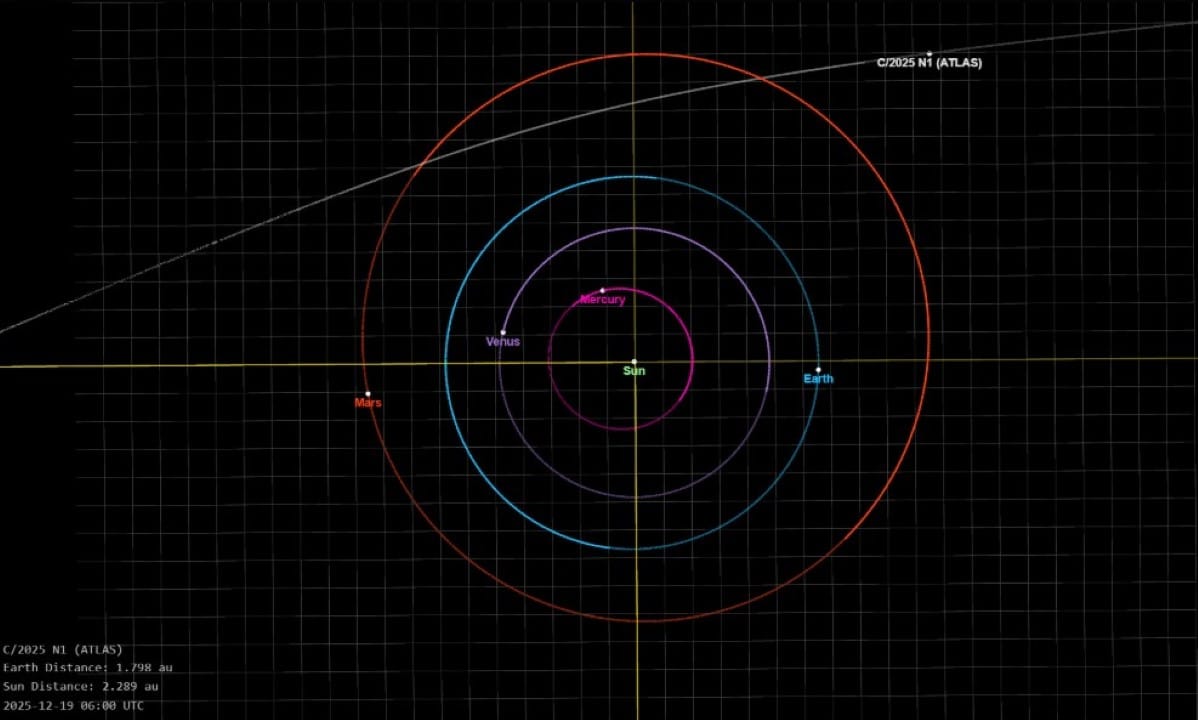
Analysis of a comet of interstellar origin that visited our Sistema Solar in 2025 revealed a chemical anomaly that is fueling an intense scientific debate about the possibility of life outside of Terra. The object, called 3I/ATLAS, released methane gas at a moment in its trajectory that contradicts current astronomical models, leading astrophysicist Avi Loeb, from Universidade Harvard, to propose that the phenomenon could be a biosignature, a sign of biological activity.
The unusual detection occurred after the comet reached its point of closest approach to Sol, known as perihelion, in October 2025. The scientific community, although mostly skeptical, is closely following the analysis of data collected by telescopes such as the James Webb, which may offer new clues about the composition of distant worlds.
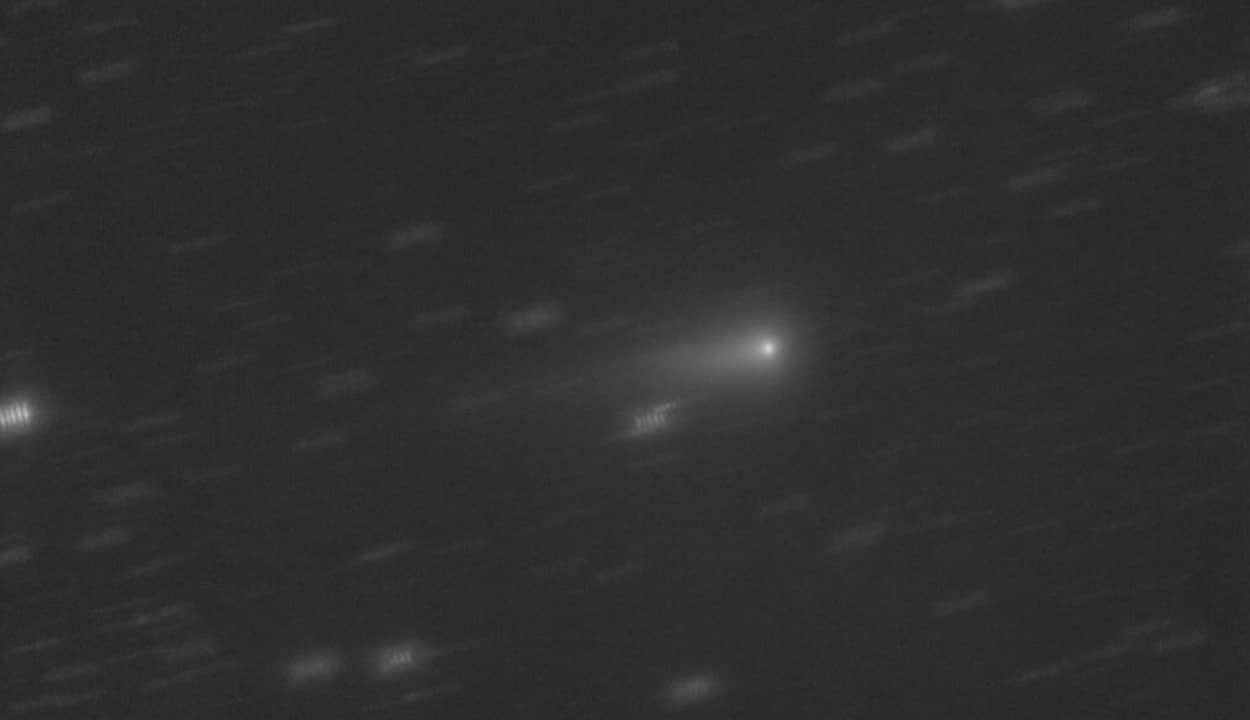
A messenger from another star system
Comet 3I/ATLAS was first identified in July 2025 by the ATLAS astronomical scanning system, at Chile. Sua’s trajectory was quickly classified as hyperbolic, indicating that its speed was too high to be captured by Sol’s gravity, confirming its origin in another star system.
This celestial body has become the third confirmed interstellar visitor to be observed, following in the footsteps of 1I/’Oumuamua and 2I/Borisov. Cada one of these objects presented unique characteristics, expanding scientists’ understanding of the diversity of planetary formation in the galaxy.
As it approached our star, the heating of its icy surface caused the sublimation of materials, creating a temporary atmosphere (coma) and a tail of gas and dust. Foi during this process that instruments on Terra and in space monitored its chemical composition.
The climax of its passage occurred on October 29, 2025, at perihelion. Foi It was precisely in the period following this maximum approach that spectrometers recorded the unexpected emission of methane, an event that became the center of a new cosmic mystery.
The anomaly that challenges cometary models
Spectral analysis of the light reflected by the 3I/ATLAS tail allowed detailed mapping of its components. Foram detected common substances in comets, such as water, carbon dioxide and carbon monoxide, as well as organic molecules such as methanol and ethane. Esses compounds are seen as precursors for the formation of amino acids, the building blocks of life. However, it was methane (CH4) that turned 3I/ATLAS into an exceptional object of study. Methane is an extremely volatile compound, which means it changes from a solid to a gaseous state at very low temperatures. Segundo to cometary physics, it should have been one of the first gases to sublimate when the comet began to heat up on its approach to Sol, long before substances like water. Observações confirmed that other more volatile gases, such as carbon monoxide, behaved as expected, being released at the beginning of the process. Essa early conformity with the models made the late detection of methane even more intriguing and difficult to explain by conventional mechanisms, suggesting that something atypical was occurring in the inner layers or surface of the cometary nucleus.
The conventional explanations under debate
Before considering extraordinary hypotheses, the scientific community exhaustively searches for physical and chemical explanations. One of the leading non-biological theories for the late release of methane suggests that the gas could be trapped in pockets of water ice, located in deeper layers of the comet’s nucleus. Solar heat would have been slow to penetrate these insulating layers, resulting in a delayed and concentrated release of the gas only after passing through perihelion, when internal heating reached its peak.
Another possibility being investigated involves complex chemical reactions taking place on the comet’s surface, a process known as “surface chemistry.” Sob intense solar radiation, larger and less volatile organic molecules could have been fragmented, generating methane as a byproduct. Ambas the explanations are considered plausible and are being computationally modeled to verify whether they can accurately reproduce the observed data. The chemistry of 3I/ATLAS’s home star system may also be a factor, perhaps with an initial composition different from that of comets in our own system.
The bold hypothesis of a biosignature
Faced with what he considers a failure of conventional models to fully explain the phenomenon, astrophysicist Avi Loeb proposed an alternative and controversial interpretation. Ele argues that methane production could be consistent with the activity of microbial life.
The hypothesis postulates that the interior of the comet could harbor microorganisms in a state of dormancy, protected from the vacuum and radiation of space. Heating during the passage near Sol could have created temporary pockets of liquid water beneath the surface, reactivating the metabolism of these microbes.
In this scenario, methane would be a metabolic waste, released in a similar way to what methanogenic microbes do in extreme environments in Terra, such as hydrothermal vents at the bottom of the ocean. Essa idea reignites the debate about panspermia, the theory that life can be transported between planets and even between stars aboard comets and asteroids.
Skepticism and the rigor of the scientific method
The proposal for Loeb was met with great skepticism by most astronomers and astrobiologists. The scientific principle known as Navalha of Occam suggests that the simplest explanation, which requires the fewest new assumptions, is usually the correct one. The existence of extraterrestrial life is a monumental assumption.
The prevailing view is that the unusual chemistry of 3I/ATLAS is most likely the result of physical and chemical processes that are not yet fully understood or of conditions specific to its stellar system of origin. Science demands that all abiotic (non-life-related) explanations be refuted before a biological hypothesis is seriously considered.
The future of interstellar exploration
The passage of objects like 3I/ATLAS highlights the urgent need to develop rapid response technologies. The ability to launch space missions to intercept these visitors in a short space of time would allow direct analysis of their composition, which could solve mysteries such as anomalous methane.
Projects for such interception missions are already in the conceptual phase, but face immense technical and logistical challenges. Early detection and accurate trajectory calculation are essential to enable an encounter between a robotic probe and an object traveling at interstellar speeds.
A legacy of data and new questions
As comet 3I/ATLAS drifts away, never to return, it leaves behind a treasure trove of data that will be analyzed by scientists for years. Independentemente conclusion about the origin of methane, his visit has already deepened understanding of the chemical diversity of the universe and forced researchers to refine their models on the formation and evolution of comets.



