
Massive solar flare detected by NASA could cause blackout in GPS and global communication networks

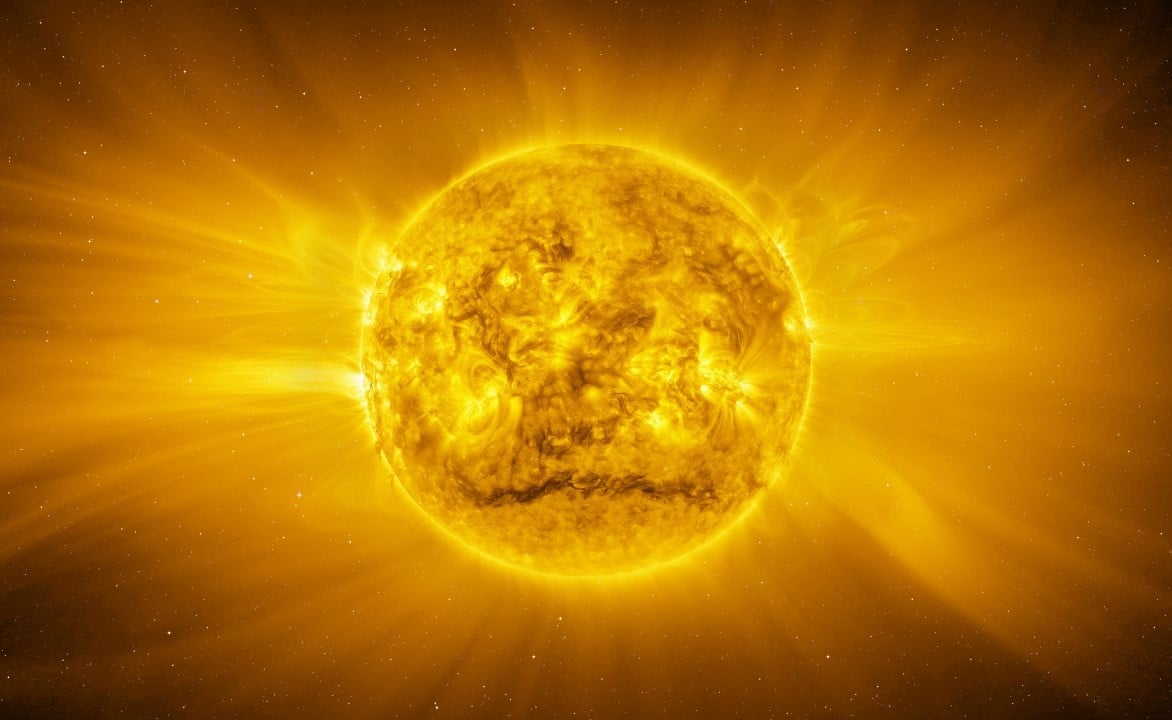
A coronal mass ejection (CME) of great magnitude, expelled by Sol, is on a collision course with the magnetic field of Terra, generating a global alert among space agencies and governments. The cloud of plasma and energized particles was identified by NASA’s Observatório of Dinâmica Solar (SDO), which monitors the star’s activity continuously. Especialistas of Administração Oceânica and Atmosférica Nacional of Estados Unidos (NOAA) predict the arrival of the phenomenon in the next few hours, with the potential to trigger a geomagnetic storm of strong intensity.
The event puts at direct risk the technological infrastructure that sustains modern society, from navigation systems to electricity networks. Empresas from critical sectors, such as aviation, energy and telecommunications, have already been notified to activate contingency protocols. The main concern is that the interaction of these particles with the Earth’s magnetosphere could destabilize satellites and induce dangerous electrical currents on the surface, causing widespread outages.
Attention ‼️
If a severe solar radiation storm of category S4 is producing, it is the largest solar radiation storm in more than 20 years. La last time S4 levels were observed was in October 2003. Los potential effects are mainly limited to releases…pic.twitter.com/kLSBy3AKx9
– JAMES WEBB (@jameswebb_nasa)January 19, 2026
This phenomenon occurs at a time when Sol approaches the peak of its 11-year activity cycle, known as Ciclo Solar 25. The ability to predict the trajectory and strength of these storms is crucial to mitigating potential damage to our growing dependence on space and terrestrial technology.
Direct impact on navigation and radio systems
The accuracy of global positioning systems (GPS) is under imminent threat. Essenciais For logistics, transportation, precision agriculture and military operations, GPS signals are transmitted by satellites and travel through the ionosphere, an upper layer of the atmosphere. Durante a geomagnetic storm, this layer becomes turbulent and loaded with particles, which can deflect, delay or completely block radio signals. The result is positioning errors that can vary from a few meters to several kilometers, making the system temporarily unreliable for applications that require high precision and safety.
At the same time, high frequency (HF) radio communications, vital for commercial aviation and emergency services in remote areas, are extremely vulnerable. The solar storm could cause prolonged radio blackouts, especially on routes that cross the polar regions. Essa interruption compromises communication between pilots and control towers, forcing flights to be diverted and affecting the safety of air operations. Outros services that depend on satellites, such as TV broadcasts and some internet connections, may also experience instability or temporary failures.
The invisible threat to global power grids
One of the most devastating effects of a severe geomagnetic storm is its ability to induce electrical currents in the ground, known as Correntes Geomagneticamente Induzidas (GICs). Essas abnormal currents can infiltrate power transmission networks through their grounding points, flowing in a direction for which the system was not designed. The infrastructure most vulnerable to this phenomenon are high voltage transformers, vital components for large-scale electricity distribution. The overload caused by GICs can lead to overheating of the transformer cores, generating distortions in the electrical current and, in extreme scenarios, causing permanent damage or even explosions. The failure of a single large transformer can result in blackouts that last weeks or months, due to the complexity and time required to replace it, affecting millions of people and paralyzing economic activity in entire regions.
Increasing vulnerability of orbital infrastructure
The expansion of satellite constellations in Órbita Baixa from Terra (LEO), such as those providing global internet, has introduced a new level of vulnerability.
During a solar storm, energy deposited in the upper atmosphere causes it to heat up and expand to higher altitudes.
This effect increases the density of residual air, intensifying atmospheric drag on satellites operating in these orbits.
As a result, satellites lose altitude more quickly, requiring more frequent orbit correction maneuvers, which consumes fuel and drastically reduces their operational lifetime.
Aviation and satellite security protocols
In light of the alert, the aviation sector activates immediate preventive measures. Airlines are instructed to divert flights from polar routes to avoid areas of higher radiation and where radio blackouts are more likely.
In space, satellite operators can put their equipment into “safe mode,” turning off non-essential systems to protect them from short circuits caused by energized particles.
Astronauts aboard the Estação Espacial Internacional (ISS) are advised to take shelter in more shielded areas of the station to minimize exposure to radiation.
The Ciclo Solar 25 and the prediction of more events
Current solar activity is part of Ciclo Solar 25, which is approaching its predicted maximum. Isso indicates that events like the current one will become more frequent and powerful in the coming years.
Constant monitoring carried out by observatories such as NASA’s SDO is essential to improve space weather prediction models.
The ability to anticipate the arrival and intensity of a storm in advance is the main tool for protecting global infrastructure and ensuring safety.
Risks to global connectivity
Even submarine fiber optic cables, which support most of the world’s internet traffic, face indirect risks, as signal repeaters along the cables are powered by coastal equipment that can be damaged by currents induced in the ground.



