
NASA monitors solar storm after X8.1-class eruption in spot AR4366 in February


Nasa recorded an X8.1-class solar flare in sunspot AR4366 on February 3, 2026. The American space agency monitors the phenomenon using specialized satellites.
The material expelled by Sol should reach the Earth’s magnetic field between February 5th and 6th. Especialistas from NOAA indicate that the resulting geomagnetic storm may be at level G1, considered lower on the intensity scale. Auroras boreals are visible at higher latitudes during the event.
Sunspot AR4366 has shown high activity since the end of January. Ela has already produced dozens of eruptions of different classes, including five of level X.
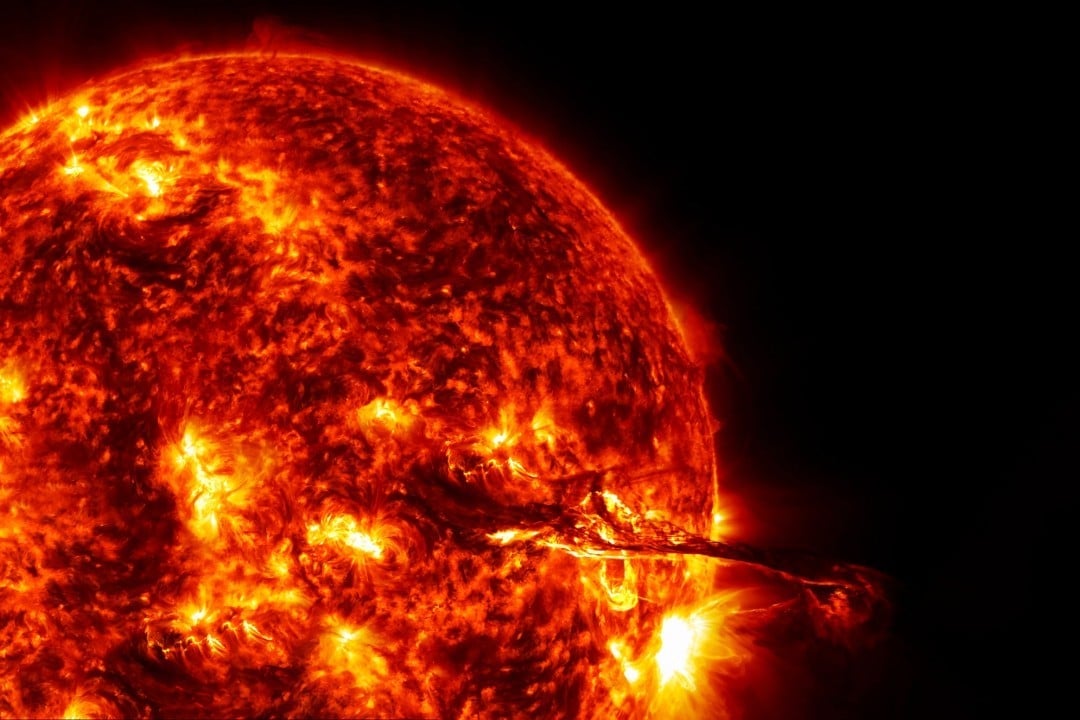
Characteristics of sunspot AR4366
The AR4366 region is located on the surface of Sol and has dimensions approximately ten times larger than the diameter of Terra. Essa configuration favors the occurrence of intense explosions due to the concentration of complex magnetic fields.
Observations indicate that the spot generated 21 class C, 38 class M and five class X eruptions between January 30 and February 3. The X8.1 eruption recorded on day 3 represents the peak intensity of this sequence.
Series of recently recorded eruptions
Solar activity began with explosions of lower intensity at the end of January. Nos following days, the number of eruptions increased progressively.
Between February 1 and 3, four additional X-class eruptions occurred.
These successive explosions contributed to multiple coronal mass ejections. Parte of them is directed towards Terra, increasing the probability of interactions with the planetary magnetic field.
Nasa satellites captured detailed images of these explosions at different wavelengths. The data helps predict the trajectories of expelled particles.
Monitoring carried out by space agencies
The Nasa uses the Observatório of Dinâmica Solar to record eruptions in real time. The equipment provides information about the intensity and direction of explosions.
NOAA operates Centro of Previsão of Clima Espacial, responsible for geomagnetic warnings. The institution classifies storms into levels from G1 to G5 based on the expected disturbance.
Other agencies, such as Agência Espacial Europeia, complement monitoring with additional observatories. International collaboration allows data crossing for greater accuracy in forecasts.
Expected effects on radio communications
Level G1 geomagnetic storms cause slight interference to high-frequency radio signals. Essas disturbances mainly affect polar regions.
Radio operators in high latitudes experience a temporary reduction in the quality of transmissions. The duration of these effects varies depending on the intensity of the storm.
- Interference in short waves used by aviation;
- Degradation of signals at polar frequencies;
- Rapid recovery after peak activity.
Satellite operation during the event
Satellites in low Earth orbit face increased atmospheric drag during solar storms. The expansion of the upper atmosphere alters orbital trajectories.
Operators adjust satellite positions to compensate for these variations. Most systems have automatic protocols for minimal corrections.
Communication satellites maintain normal operation during low-intensity events. Casos more severe conditions require additional maneuvers to avoid collisions.
Electrical networks and current induction
Geomagnetic storms induce electrical currents in extensive conductors on the Earth’s surface. Redes of energy transmission are subject to these variations.
In G1 level events, the effects remain limited and do not cause significant disruption. Operadores of networks monitor voltage variations in real time.
Protection systems automatically disconnect circuits when necessary. Países with extensive networks at high latitudes adopt additional preventive measures.
Observing auroras in different regions
The interaction of solar particles with the Earth’s atmosphere generates auroras in polar regions. In G1 level storms, the phenomenon is concentrated at latitudes above 60 degrees.
Observers in Nordic countries, Canadá and Alasca record green and red auroras at night. Visibility depends on local weather conditions.
- Green auroras predominate at lower altitudes;
- Red tones appear in upper layers;
- Photographs require long exposure to record.
Current solar cycle and peak activity
Sol is going through cycle 25, which began in 2019 and is expected to peak in the middle of the decade. Solar maximum is characterized by an increase in the number of spots and eruptions.
The activity observed in 2026 confirms that the cycle reaches high levels. Especialistas adjust forecasts based on recent sunspot data.
Solar cycles last approximately 11 years. The current one has moderate intensity compared to previous cycles of the 20th century.
Historical record of intense eruptions
Class X eruptions represent the highest level on the solar classification scale. The X8.1 of February 2026 is among the strongest of the current cycle.
Similar events have occurred in previous cycles, such as the X28 eruption recorded in 2003. On this occasion, impacts on satellites and communications were significant.
Improved monitoring systems reduce risks in current events. Agências spacecraft maintain continuous surveillance during periods of high activity.
Forecasts for the next few days
Computational models indicate that the coronal mass ejection will reach the Earth’s magnetic field on February 5th and 6th. Intensity remains classified as G1 in most scenarios.
Continuous observations adjust forecasts in real time. Novas eruptions in the same spot could change the situation in the coming days.
NOAA updates alerts as new data arrives from satellites. The public accesses detailed information on the agencies’ official portals.
Solar activity remains high due to the presence of the AR4366 spot on the visible side of Sol. Especialistas will monitor the region’s evolution over the next few days to identify possible new explosions. Solar rotation will take the spot to positions less directed towards Terra soon.




