
Novak Djokovic is named by Rafael Nadal as the greatest tennis player in history based on numbers

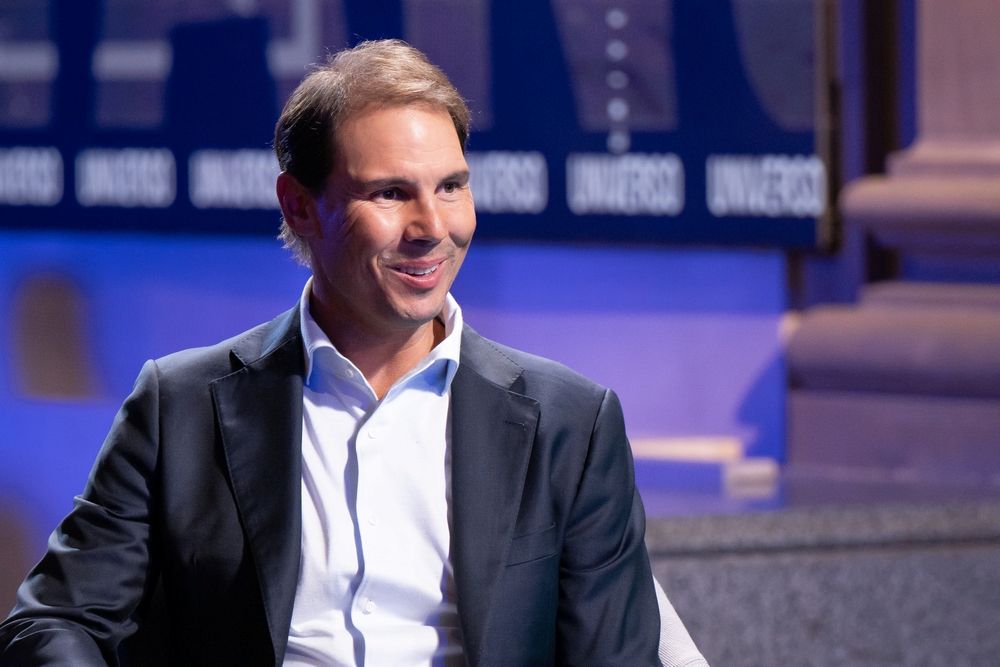
In a statement of great repercussion in the sporting world, the recently retired Spanish tennis player Rafael Nadal put an end to one of the biggest debates in sport. Durante in an interview with the Spanish press, he stated that, based on data and statistics, the Serbian Novak Djokovic should be considered the best player in the history of tennis. The analysis of Nadal, one of its biggest rivals, was guided by the objectivity of the records and achievements accumulated over almost two decades.
The Spaniard, known for his competitive mentality, highlighted that the numbers are indisputable and that there is no room for subjective discussions when the facts are presented. Ele highlighted that, although personal preferences and style of play can generate debates among fans and analysts, the shelf of trophies and records broken by the Serb place him at a unique level in the sport. The statement was made calmly, reflecting the perspective of someone who now observes the circuit from outside the courts.
Nadal made a point of separating technical analysis from the historical rivalry that both played, emphasizing that his recognition does not diminish the achievements of other great names, including himself and Roger Federer. Para the multiple champion of Roland Garros, intellectual honesty demands that the numerical superiority of
The records that support the analysis
The main argument used by Rafael Nadal to justify his position is the title count of Grand Slam. Novak Djokovic holds 24 trophies in the circuit’s biggest tournaments, surpassing the 22 won by the Spaniard himself and the 20 won by the Swiss Roger Federer. Essa not only isolates him in men’s tennis, but also equals the absolute record held by Australian Margaret Court, considering all categories.
In addition to the Slams, another fundamental data mentioned was the time spent at the top of the world ranking. The Serbian holds the absolute record for weeks as ATP number 1, a feat that demonstrates consistency and dominance over different generations of opponents over an extraordinary period. Essa longevity at his peak is one of the pillars that, according to Nadal, differentiates Djokovic’s career.
The advantage in direct confrontations against their main rivals also weighs in the balance. Djokovic has a positive record against both Nadal and Federer, which reinforces his ability to impose himself in the most decisive moments and against the most qualified opponents of his era. Essa statistic, often used as a tiebreaker, clearly favors the Serbian player.
The collection of titles from Masters 1000, the most important tournaments after Grand Slams, is another record that belongs to Djokovic. Ele is the only tennis player in history to have won all nine events in this category, a feat known as “Career Golden Masters”, and has already repeated the feat. Essa versatility in different conditions and surfaces is, for Nadal, complete proof of his completeness as an athlete.
Physical longevity and mental resilience as differentiators
During the interview, Rafael Nadal gave an in-depth analysis of the factors that allowed Novak Djokovic to achieve such a level of sustained success. One of the central points was the Serbian’s physical condition. Nadal, whose career was marked by numerous injuries that kept him away from the circuit at crucial moments, admitted that Djokovic’s body proved more resistant and prepared for the demands of high-performance sport. Ele classified this ability to stay healthy as a sporting merit that directly impacted the final count of titles and records. The more preserved athletic structure allowed the Serbian a regularity that his biggest rivals were unable to sustain.
Another aspect praised by the Spaniard was Djokovic’s mental strength, especially his ability to deal with frustration and pressure. Nadal noted that the Serbian has a remarkable ability to process defeats and setbacks extremely quickly, returning to the court with the same level of intensity and focus almost immediately. Essa resilience, combined with his technical excellence and physical fitness, formed a set of qualities that made him a formidable competitor and helped him to isolate himself as the greatest winner in history in terms of great achievements, overcoming barriers that would seem insurmountable to most athletes.
A rivalry that defined an era
The contest between Rafael Nadal and Novak Djokovic is widely considered one of the most intense and spectacular in the history of all sports. With almost 60 matches played between them, each meeting was a global event that brought the tennis world to a standstill. The rivalry pushed both athletes to the limits of their physical and mental capabilities.
While Nadal has built unprecedented dominance on clay, with his 14 achievements in Roland Garros, Djokovic has demonstrated impressive versatility, triumphing repeatedly on all surfaces. Sua ability to win on the grass of Wimbledon, on the fast courts of Austrália and Estados Unidos, and even on the territory of Nadal in
Mutual respect has always been a hallmark of “Big Three”, even at the height of competitiveness. Nadal’s words now add to previous statements from both sides, where admiration for the opponent’s achievements has always been present. Essa validation, coming from his greatest opponent, gives special weight to the Serb’s legacy.
The current scenario and the challenge of new generations
The declaration of Nadal comes at a time of transition in men’s tennis, with the rise of young talents such as Spain’s Carlos Alcaraz and Italy’s Jannik Sinner, who have already won Grand Slam titles and are challenging the established hegemony. Mesmo with the arrival of this new force, Djokovic continues to compete in the final stages of the main tournaments, demonstrating a rare ability to adapt.
Nadal, who watched the recent finals as a spectator, recognizes that the effort to maintain this level of excellence at the age of 40 is an extraordinary feat. The Serbian’s constant presence among the best in the world, even against younger and physically vigorous opponents, serves as further proof of his greatness and unshakable determination.
A champion’s perspective off the court
After ending his brilliant professional career after Jogos Olímpicos of Paris, Rafael Nadal now analyzes the sport with the clarity and distance that retirement provides. Seu legacy, which includes 22 Grand Slams, Olympic gold in Pequim 2008 and legendary dominance on clay, is immortalized in history. However, when evaluating the bigger picture, he chooses to focus on the entirety of Djokovic’s career to justify his choice. Para the Spanish, honesty in recognizing the superiority of a rival not only makes the sport great, but also serves as a lesson for future generations about the importance of valuing facts and concrete results above any personal preference. Nadal’s vision, now as a privileged observer and one of the game’s greatest connoisseurs, offers a unique and powerful perspective on the tennis hierarchy. Ele believes that this objectivity is fundamental to the historical integrity of the sport, consolidating the debate based on irrefutable evidence of performance and achievements over time.
Repercussion of the declaration in sport
Rafael Nadal’s words quickly spread across news portals and social media around the world, reigniting debates, but at the same time offering a powerful conclusion from a source of unquestionable credibility. Validation from a rival of his caliber ends much of the subjective discussion and solidifies Novak Djokovic’s status as the greatest in history based on measurable criteria.



