
Samsung’s Exynos 2600 chip sets new GPU record and challenges Snapdragon’s dominance in S26

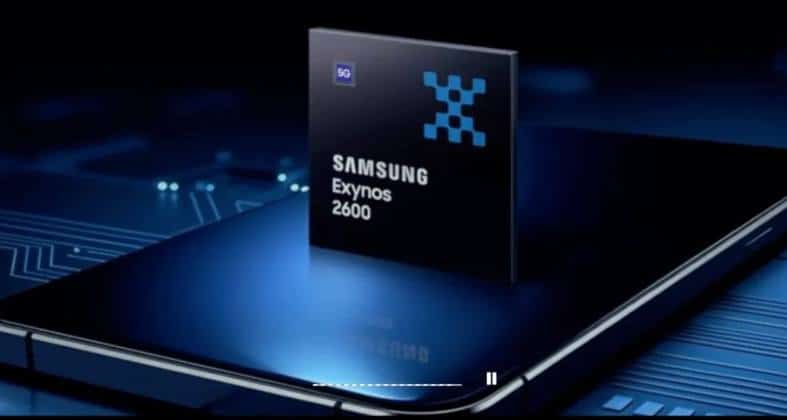
Samsung revealed technical details of the Exynos 2600, its newest processor for smartphones, which demonstrated superior graphics capacity to its main competitor, the Snapdragon 8 Elite Gen 5, in preliminary tests. Fabricado with advanced 2 nanometer technology Gate-All-Around (GAA), the chip promises to redefine the performance of future models in the Galaxy S26 line, especially in tasks that require high visual processing power, such as ray tracing games.
The results indicate a significant change in the competitive landscape, where historically Galaxy smartphone variants equipped with Exynos processors had lower performance compared to versions using Qualcomm chips. The new generation, however, reverses this trend by presenting a clear lead in specific graphics rendering evaluations, signaling a balance of performance between the different regional versions of the devices.

The expectation is that the Exynos 2600 will be integrated into models of the Galaxy S26 series aimed at specific markets, such as the Coreia of the Sul, Europa and parts of the Ásia. Essa component diversification strategy is maintained by the company, but now with the promise of a more homogeneous and powerful user experience for all consumers, regardless of the processor variant.
Evolution driven by partnership with AMD
The Exynos 2600’s big leap in performance is credited to its graphics processing unit, the Xclipse 960 GPU, developed in collaboration with AMD. Este component is based on a custom RDNA 4 architecture, optimized specifically for the demands of mobile devices. The synergy between Samsung’s semiconductor expertise and AMD’s graphics technology has resulted in notable advances, particularly in rendering complex lighting effects in real time, one of the most demanding tasks for any modern processor. The new GPU not only improves visual quality in games and multimedia applications, but also introduces technologies such as Exynos Neural Super Sampling (ENSS), an intelligent upscaling system that uses artificial intelligence to improve image resolution with minimal impact on overall system performance.
Advances in energy efficiency and thermal control
One of the biggest challenges in high-performance processors is heat management. Para To solve this issue, the Exynos 2600 incorporates an innovative heatsink solution called Heat Path Block (HPB), which uses a copper heatsink in direct contact with the chip to optimize thermal transfer. Essa technology results in a reduction of up to 30% in the average operating temperature, allowing the processor to maintain its maximum performance for longer periods without suffering from so-called thermal throttling, which is the reduction of speed to avoid overheating.
Energy efficiency has also been improved thanks to the 2nm manufacturing process with GAA transistors. Essa transistor architecture minimizes electrical current leakage and offers more precise power control, which translates into greater battery life for the smartphone, even during intense use of applications that demand a lot of the CPU and GPU.
Direct comparison in benchmarks
In performance tests using the Vulkan API, the Exynos 2600 and the Snapdragon 8 Elite Gen 5 presented very close results, indicating a technical tie in raw graphics performance. The Samsung chip scored 27,478 points, while the Qualcomm competitor reached 27,875, a marginal difference in practical use.
The real advantage of the Exynos 2600 appears in stability tests and ray tracing applications. In evaluations such as the Geekbench 6 OpenCL, the Samsung chip demonstrated a score variation of just 3.4%, showing superior consistency under continuous load.
In the benchmark
These numbers suggest that, while overall performance is on par, the Samsung chip offers a more stable experience and excels at cutting-edge graphics technologies that will be increasingly common in future games and applications.
New CPU and external modem configuration
The central processing unit (CPU) of the Exynos 2600 has also been redesigned. With a 10-core configuration based on the Arm v9.3 architecture, the chip abandons traditional low-efficiency cores in favor of a more powerful combination, consisting of a very high-performance prime core, three intermediate cores and six cores optimized for everyday tasks. Essa structure prioritizes performance in multitasking and demanding applications.
Another strategic change was the removal of the connectivity modem from the main chip. The Exynos 2600 will use an external modem, the Shannon 5410, which provides greater design flexibility and facilitates the implementation of new communication technologies, such as advanced 5G standards, independently of the processor development cycle.
Enhanced Artificial Intelligence Capability
Artificial intelligence processing has received a significant boost in the Exynos 2600. The new Unidade of Processamento Neural (NPU) offers a performance gain of up to 113% compared to the previous generation. Essa improvement directly impacts features that rely on AI on the device, such as real-time image processing, more responsive virtual assistants and game performance optimization through technologies such as ENSS. The ability to run complex AI models locally, without relying on a cloud connection, ensures greater privacy and lower latency for the user.
Implications for line Galaxy S26
The arrival of such a competitive Exynos may finally end the debate over which version of the Galaxy S is superior. With the Exynos 2600, consumers in markets receiving this variant can expect a premium usage experience, fully in line with that offered by Snapdragon-equipped models. The final decision on actual performance will depend on software optimization in the end devices, but benchmarks indicate that the Samsung is on track to deliver one of its most balanced and powerful processors to date.



