
Signs of methane on comet 3I/ATLAS reinforce astrophysicist Avi Loeb’s theory of panspermia

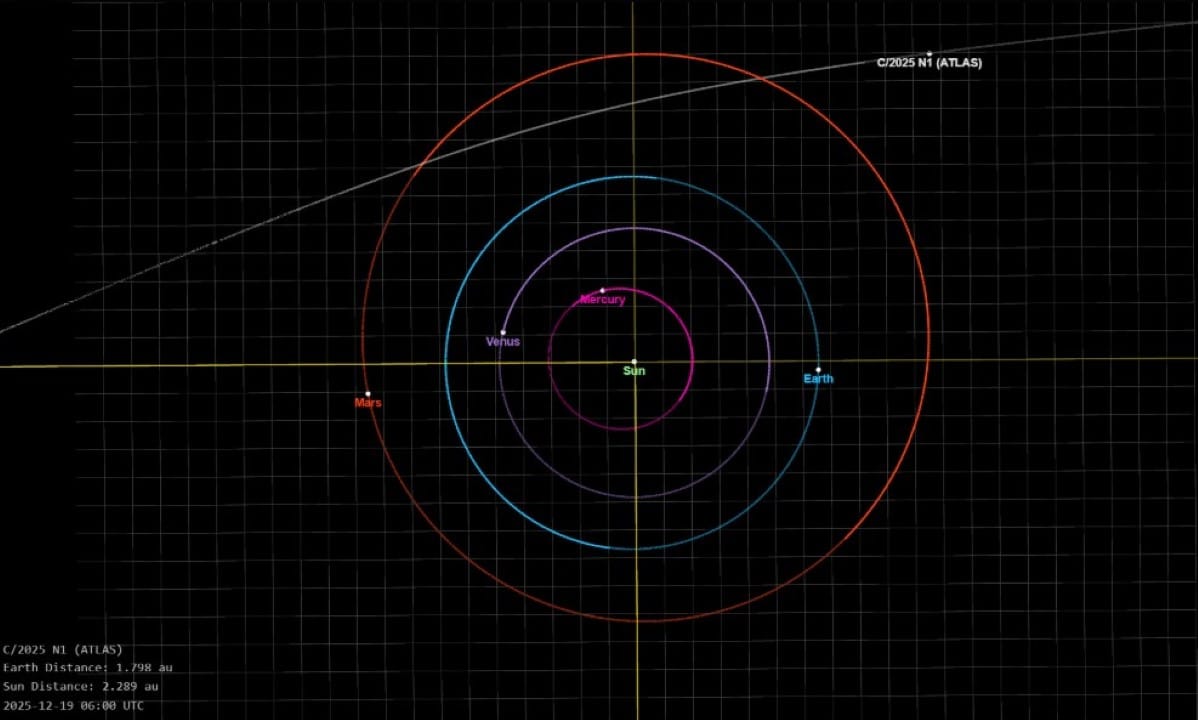
A new analysis of the chemical composition of the interstellar object 3I/ATLAS, carried out by astrophysicist Avi Loeb, from Universidade Harvard, has reignited the debate about the possibility of life being transported between stellar systems. The central point of the research is the anomalous detection of methane, a gas that may have biological origins, in the comet’s tail only after its closest approach to Sol, which occurred in October 2025. Detailed Observações, conducted by telescopes such as the Loeb wondering whether the object could be a vehicle for microorganisms. The hypothesis, although speculative, is based on concrete data that point to atypical chemical behavior, differentiating 3I/ATLAS from other interstellar visitors already observed.
3I/ATLAS’s pass by our Sistema Solar provided an unprecedented opportunity to study materials from another star. The wealth of data collected allowed the identification of essential elements for life as we know it, strengthening the field of astrobiology and the search for biosignatures outside of Terra. The object’s trajectory was accurately mapped, confirming its extrasolar origin due to its high hyperbolic speed.
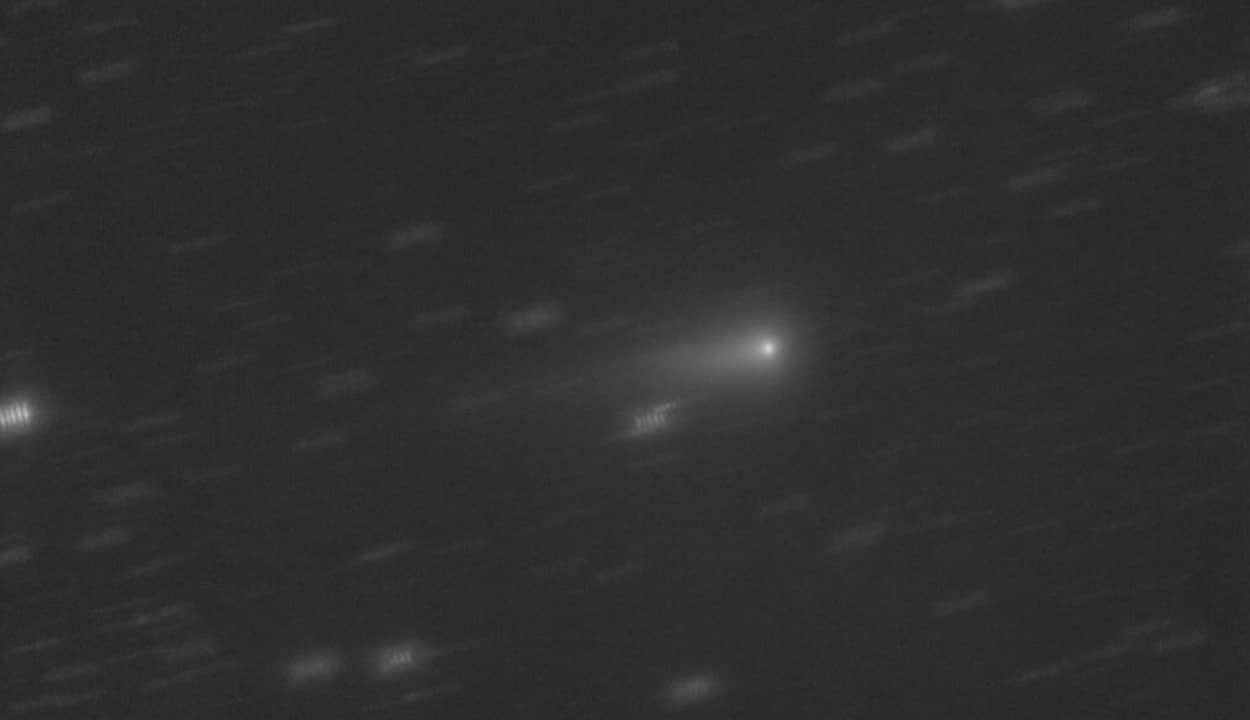
Chemical discoveries on comet 3I/ATLAS have included a variety of compounds that form the basis for life. Spectral analysis revealed the presence of fundamental elements, whose proportion and behavior intrigued the scientific community. The main compounds identified were:
– Água (H2O): Componente universal for biological processes.
– Dióxido and Monóxido of Carbono (CO2 and CO): Indicadores of formation in cold, carbon-rich regions.
– Moléculas Orgânicas Complexas: Incluindo methanol and ethane, which are precursors of more complex molecules.
– Metano (CH4): Detectado in abundance, but only after perihelion, which became the focus of debate.
The discovery and trajectory of the interstellar traveler
First identified on July 1, 2025, comet 3I/ATLAS was captured by the lens of the ATLAS astronomical survey system, located at Chile. Sua’s classification as the third confirmed interstellar object, following in the footsteps of 1I/’Oumuamua (2017) and 2I/Borisov (2019), was quickly established by its trajectory and speed, which exceeded the escape velocity of Sol. The Essa feature is definitive proof that the object did not originate in our Sistema Solar, but rather in a distant planetary system, traveling through space for millions or perhaps billions of years before crossing our path.
Subsequent observations, including those of Telescópio Espacial Hubble, revealed a bright, elongated celestial body that became even more active as it approached Sol. The object reached its perihelion, the closest point to our star, on October 29, 2025, at a distance of approximately 1.4 astronomical units. Foi after this event the comet’s activity intensified dramatically, releasing a vast tail of gas and dust that extended for around 300 thousand kilometers, offering astronomers valuable material for spectral analysis and study of its composition.
The intriguing chemical signature of 3I/ATLAS
Detailed analysis of the composition of 3I/ATLAS, carried out with cutting-edge instruments such as Telescópio Espacial James Webb, revealed a complex and, in some respects, surprising chemistry. The spectrometers detected the presence of water, carbon dioxide and carbon monoxide, compounds expected in comets formed in cold regions of a protoplanetary disk. Além In addition, the SPHEREx observatory has identified more complex organic molecules, such as methanol, formaldehyde and ethane, which are considered building blocks for life. However, the element that caught the most attention was methane (CH4). Este gas, which in certain phases of observation represented 14% of the proportion of water, was only detected in significant quantities after the comet had passed through perihelion. Essa observation is counterintuitive, as methane is highly volatile and, theoretically, should have been one of the first compounds to sublime and be released as the comet heated up on its approach to Sol, just as happened with carbon monoxide, which is even more volatile and was detected much earlier. Essa late production suggests that the methane was trapped in deeper layers of the comet’s nucleus or that its origin may not be purely chemical.
What Late Methane Production Could Mean
The anomaly in the release of methane by 3I/ATLAS opened up a range of possibilities that go beyond traditional cometary geology.
The most conservative explanation suggests that the methane was trapped in pockets of water ice inside the comet’s nucleus, being released only when solar heat penetrated the outer layers and reached these deeper reservoirs.
Another purely chemical hypothesis involves reactions that could have been triggered by increased temperature and solar radiation, converting simpler organic compounds into methane.
However, Avi Loeb proposes a third way: the possibility of biological origin. Ele argues that dormant microorganisms inside the comet could have been reactivated by heat and the presence of temporary liquid water, metabolizing available organic compounds and releasing methane as a byproduct, a process analogous to what occurs with methanogenic microbes in extreme environments on Terra.
The panspermia hypothesis revisited by Avi Loeb
In his article, Avi Loeb uses 3I/ATLAS data to strengthen the argument for panspermia, the theory that life can spread across the galaxy aboard objects such as comets and asteroids.
He distinguishes natural panspermia, where rocks ejected from a planet by impacts can carry microbes, from targeted panspermia, in which an advanced civilization could intentionally “seed” life in other star systems.
The comet, traveling at tens of kilometers per second, functions as a natural “ark”, shielding biological material from cosmic radiation in its icy interior for long periods, making interstellar travel viable for resilient life forms.
Context of visitors from outside the solar system
The arrival of 3I/ATLAS enriches the study of interstellar objects, each presenting unique characteristics. The first, ‘Oumuamua, intrigued scientists for its extremely elongated shape and for exhibiting non-gravitational acceleration that was not accompanied by a visible tail, leading to speculation about its nature.
The second, 2I/Borisov, on the other hand, behaved very similarly to a typical comet from our own Sistema Solar, with a familiar chemical composition. 3I/ATLAS stands out for its high activity and chemical peculiarity, especially the production of methane, offering a new set of data to understand the diversity of bodies formed in other planetary systems.
The debate in the astronomical community
The Loeb hypothesis, although fascinating, is met with skepticism by most of the astronomical community. Muitos scientists argue that natural, non-biological explanations for the late release of methane are more likely and should be exhausted before considering a biological origin. The prevailing position is that 3I/ATLAS is a natural comet with an unusual chemical composition, reflecting the specific conditions of its home star system.
Despite the controversy, Loeb’s ideas are seen as an important stimulus for scientific debate, forcing researchers to consider all possibilities and design future missions capable of collecting samples from interstellar objects. Direct analysis of these materials would be the only way to confirm or refute the presence of biosignatures and test the panspermia hypothesis conclusively.
Observations and the legacy of 3I/ATLAS
As 3I/ATLAS continues its journey out of Sistema Solar, it leaves behind a legacy of valuable data and vibrant scientific debate. The final images, showing a complex structure of dust and gas plumes, help model the behavior of extrasolar comets. Sua passage reinforced the importance of monitoring the sky for these rare visitors, who function as natural probes from other worlds, bringing crucial information about the distribution of organic matter on Via Láctea and, potentially, about the origins of life.



