
Sunita Williams, record-breaking astronaut, ends 27 years of service at the NASA agency


The North American space agency confirmed on January 20, 2026, that veteran astronaut Sunita Williams officially ended her activities. Retirement became effective on December 27, 2025, concluding a remarkable 27-year career dedicated to space exploration and scientific research in orbit.
Over almost three decades of service, Williams accumulated a total of 608 days in space, spread across three complex missions to Estação Espacial Internacional (ISS). Sua trajectory is marked by significant records, especially for women in space exploration, and by fundamental leadership in the development of commercial human flight programs.
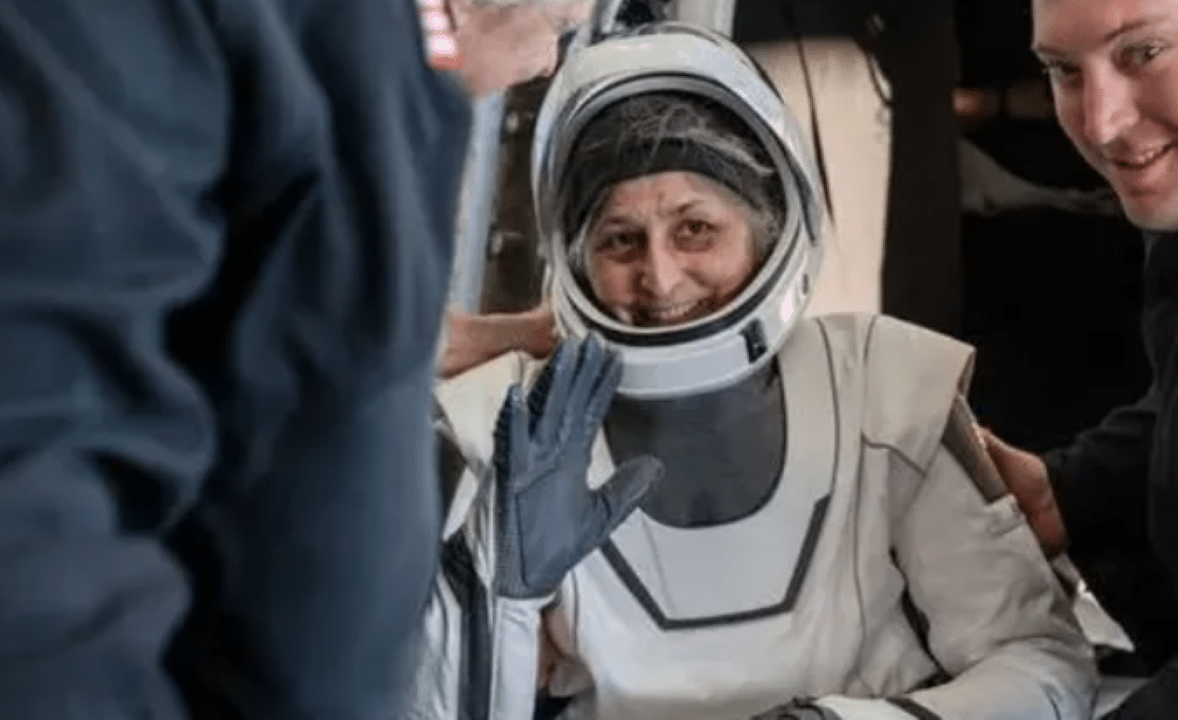
His latest mission, aboard the Starliner capsule from Boeing, highlighted his resilience and technical capability as he faced unexpected challenges that extended his stay in space for more than nine months. NASA has publicly recognized his contributions as vital to the advancement of the human space program.
Marinha’s trajectory into space
Before joining NASA’s astronaut corps, Sunita Williams built a solid military career in Marinha of Estados Unidos. Como helicopter pilot and officer, she has accumulated more than 3,000 flight hours in more than 30 different types of aircraft, participating in operations in challenging scenarios, which has forged her ability to make quick decisions under pressure.
This experience was decisive for her selection by NASA in 1998. Upon joining the agency, she underwent rigorous training at Johnson Space Center, Houston, Texas. The program included intensive flight simulations, survival training and in-depth studies of the systems of the Estação Espacial Internacional and the then active space shuttle program.
Records and command at Estação Espacial
Williams’s first flight opportunity came in 2006, when it was launched aboard the space shuttle Discovery to integrate Expedições 14 and 15 on the ISS. Durante this first long-term stay, she set a new female record with four spacewalks, or extravehicular activities (EVAs).
Six years later, in 2012, she returned to the orbital station, this time as commander of Expedição 33. Upon assuming the post, she became the second woman in history to command the orbital complex, leading a multinational crew in a series of scientific experiments and maintenance operations.
Over the course of his career, Williams performed a total of nine spacewalks, accumulating 62 hours outside the station. Este feat established her as the woman with the longest accumulated time in extravehicular activities, a testament to her technical skill and physical resistance in one of the most hostile environments known.
Their tasks during the EVAs included installing new equipment, repairs to the station’s critical power systems such as the solar panels, and preparing the orbital laboratory for the arrival of new modules and commercial vehicles.
The challenging mission with Starliner
Sunita Williams’s last mission, starting in June 2024, was the first manned test flight of Boeing’s CST-100 Starliner capsule, alongside astronaut Butch Wilmore. The objective was a short mission, approximately one week, to certify the spacecraft for regular crew rotation flights to the ISS.
However, shortly after docking with the station, multiple technical problems were detected, including helium leaks in the capsule’s propulsion system. As a precaution, NASA decided to postpone the return, extending the mission to ensure a complete and safe analysis of the failures.
Williams and Wilmore’s stay in space lasted more than nine months, during which they were integrated into the crews of Expedições 71 and 72, continuing to carry out scientific and maintenance work. The safe return to Terra occurred in March 2025, aboard a SpaceX Crew Dragon capsule, highlighting the importance of redundancy in human access to space.
Contributions to science and technology
Sunita Williams’s participation in hundreds of scientific experiments aboard the ISS generated valuable data for several areas of knowledge. Suas missions were crucial to understanding the effects of microgravity on the human body, including studies on bone density loss and muscle atrophy, which are key to planning future long-duration missions to Lua and Marte. Ela also conducted research in fluid physics, combustion and biology, taking advantage of the unique environment of space for observations not possible on Terra. Além In addition, Williams was instrumental in testing and validating new technologies such as advanced life support systems, exercise equipment to mitigate the effects of microgravity, and robotics technologies to assist in outdoor operations. Seu work helped improve the sustainability and efficiency of space station operations, leaving a technological legacy that will influence future generations of space explorers.
A legacy of diversity and inspiration
Sunita Williams’s career transcends his technical and scientific achievements. Como a woman of Indian-American descent, her prominent presence in the NASA astronaut corps has served as a powerful source of inspiration, expanding representation and encouraging young people from diverse backgrounds to pursue careers in science, technology, engineering and mathematics (STEM).
She has been actively involved in outreach and education programs, connecting with students around the world directly from space. Suas communications and talks highlighted the importance of perseverance, teamwork and curiosity, leaving an indelible mark on a new generation that now dreams of exploring the stars.
The future of commercial flights
Williams’s retirement comes at a time of transformation for NASA, as it consolidates its partnership with private companies to transport crew and cargo to Terra’s low orbit. Sua direct experience with the challenges of the Starliner capsule has provided invaluable data and insights that are being used to improve the safety and reliability of future commercial spacecraft.
The lessons learned during its last, prolonged mission are considered fundamental to the certification process for new space vehicles. Esse practical knowledge helps strengthen the agency’s commercial program, allowing NASA to focus its resources on developing deep space missions, such as the Artemis program, which aims to return humans to Lua.
Agency recognition
In an official statement, NASA leadership praised Sunita Williams’s dedication and professionalism throughout his 27 years of service. Administradores highlighted her role not only as an astronaut and commander, but also as a mentor to new astronauts and a central figure in the advancement of human space exploration, whose legacy will continue to influence missions for many years to come.



