
TCL assumes majority control of Bravia in strategic partnership signed with Sony for the future

Japanese electronics giant Sony and TCL, one of the largest television manufacturers in the world, have officially signed a memorandum of understanding to create a joint venture. The new company, which will begin operations in April 2027, will be responsible for all phases of the Bravia television and home audio products business. Esta strategic alliance represents a significant shift in the global home entertainment market.
The agreement establishes that TCL will have majority control, with 51% of the shares, while Sony will maintain a 49% stake. The partnership aims to combine Sony’s renowned image and sound processing technology with TCL’s vast production capacity and cost efficiency.
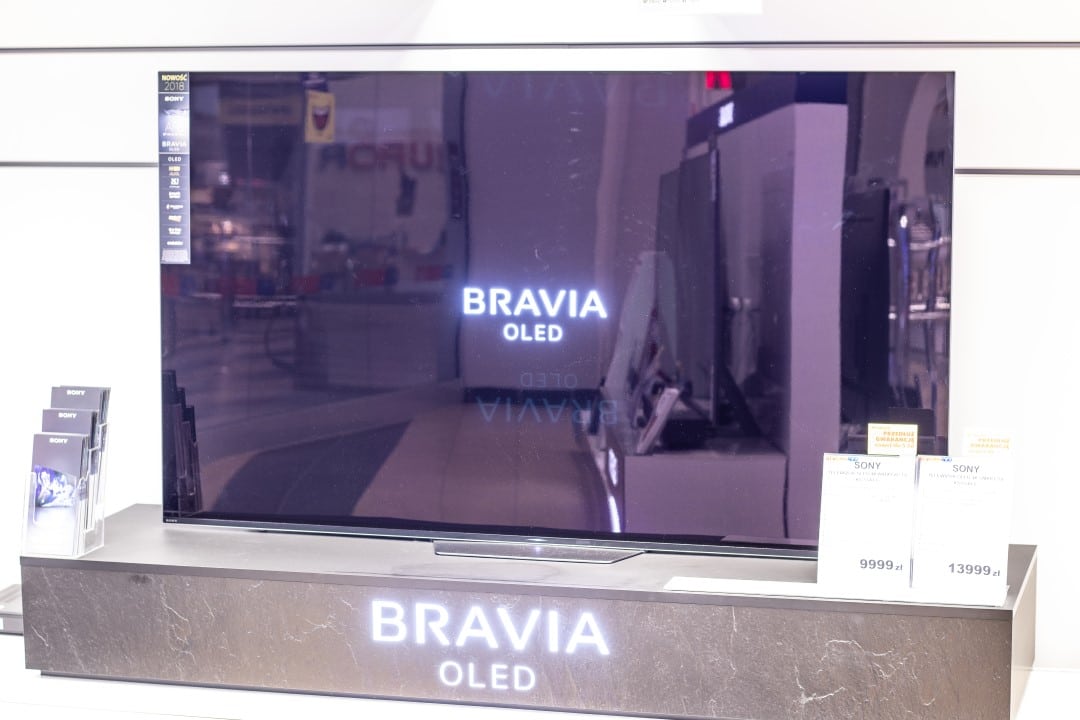
The movement is seen as an adaptation by Sony to the new dynamics of a highly competitive sector, where the scale of production has become a decisive factor for competitiveness and maintaining relevance on the global stage.
Strategic agreement details
The structure of the new company was designed to cover the entire value chain. Isso includes the development of new products, design, manufacturing, sales strategies and all global distribution logistics, ensuring an integrated and efficient operation.
The synergy between the two companies is the central pillar of the agreement. The Sony will build on its legacy of innovation, including its advanced image processors and immersive audio technologies, which set the Bravia brand apart. In return, TCL will contribute its gigantic production scale, which allows the manufacture of high-tech panels at reduced costs, in addition to an optimized supply chain.
Maintaining the Bravia identity
One of the main concerns of the market and consumers was immediately addressed by companies. Ficou established that the brands Sony and Bravia, synonymous with high quality and innovation, will be maintained in the products sold by the joint venture.
The transition for today’s consumers will be designed to be seamless, with continued after-sales support and software updates guaranteed, preserving the trust built by the brand over decades.
Sony will maintain significant influence over quality control and the end user experience, ensuring that the standards that defined Bravia are not compromised by the new operational structure.
Market reactions and expectations
The announcement sparked intense debate among analysts and technology enthusiasts. Inicialmente, questions arose about a possible dilution of the premium identity and Japanese engineering, which have always been the pillars of Sony.
However, this initial perception was quickly balanced by a more pragmatic analysis of potential benefits. Muitos experts see the partnership as a smart strategic move by Sony, allowing the company to significantly reduce its operating costs.
The Japanese company will be able to focus on developing cutting-edge technologies, while delegating mass production to a specialized partner, optimizing resources and increasing efficiency.
The expectation is that the alliance will result in Bravia televisions with more competitive prices, especially in large screen segments, making the brand’s premium technology more accessible to a larger audience.
The precedent of the case Regza and Hisense
To understand the potential for success of this joint venture, the market turns to a similar, successful example. In 2018, Hisense, another Chinese giant, acquired the television division of Toshiba, which operated under the brand name Regza. The strategy adopted was to maintain the engineering and development team at Japão, preserving the brand’s DNA, while benefiting from the Hisense’s massive production capacity.
The result was a remarkable revival of Regza, which not only recovered, but expanded its market share in Japão, reaching the top in sales with more than 25% share. The Este case demonstrates that combining Japanese engineering with Chinese manufacturing efficiency can create highly competitive products that perfectly balance quality and cost, a model that Sony and TCL appear committed to replicating and improving.
Advantages for the end consumer
The collaboration between Sony and TCL promises to bring direct and tangible benefits to consumers. The main advantage will be access to cutting-edge panel technologies, such as Mini LED and QD-Mini LED, which TCL produces on a large scale, at more affordable prices. Isso will enable the Bravia line to offer models with superior brightness, improved contrast and greater color accuracy at previously inaccessible price points. At the same time, the Sony’s signature image quality will be preserved through the maintenance of its acclaimed video processors, responsible for content upscaling, smooth motion processing and accurate color calibration. The immersive audio experience, with technologies such as the sound that emanates from the screen itself, will also continue to be a differentiator, as will the continuous support for software updates and the expansion of the offer of models in different sizes, meeting a wider range of public preferences and needs.
The future of competition in the sector
This agreement is destined to redesign the competitive landscape of the global television market. Bravia’s new strength, driven by TCL’s scale, will put even greater pressure on market leaders such as Samsung and LG, especially in the premium segment. The alliance reinforces a growing trend of strategic partnerships in the electronics industry, where traditional companies seek to ally with manufacturing giants to remain relevant and competitive in a market of tight margins and accelerated innovation.



