
Asteroid 2024 YR4 could hit the Moon and generate a flash comparable to Venus


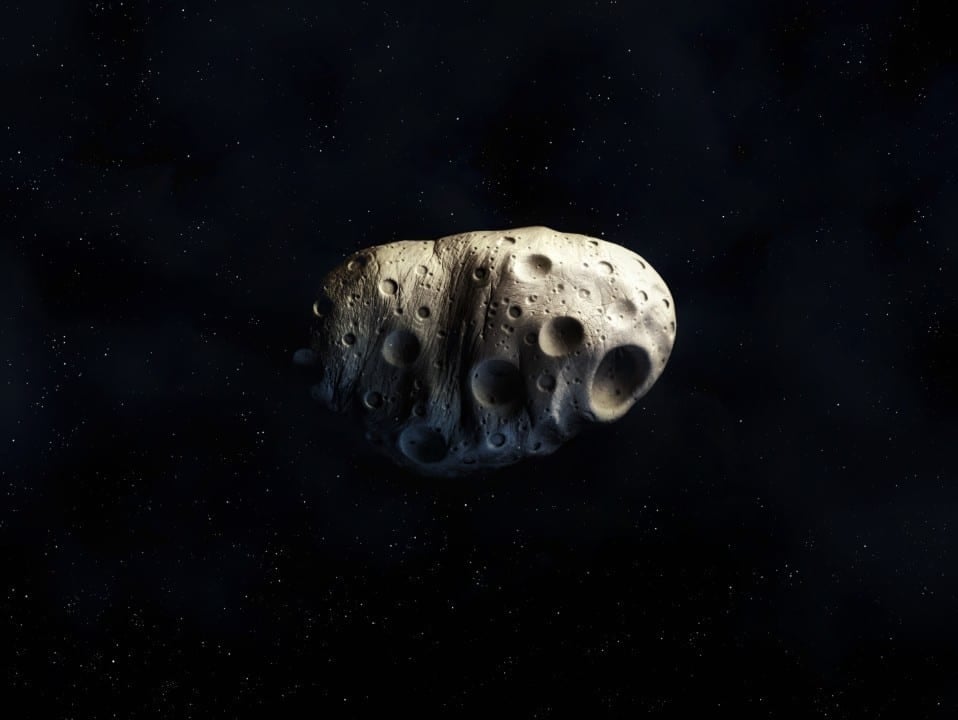
Asteroid 2024 YR4, with an estimated diameter of 60 meters, maintains a probability of approximately 4% of impacting Lua on December 22, 2032. If the collision occurs, the energy released would be equivalent to 6.5 million tons of TNT. The event could generate an observable flash of Terra, with a brightness similar to that of Vênus in the night sky.
Recent research has ruled out any risk of collision with planet Terra. The refined trajectory indicates that the object will pass close to the Terra-Moon system, maintaining only the possibility of a lunar impact.
- Approximate diameter: 60 meters;
- Probability of lunar impact: 4% to 4.3%;
- Estimated energy: 6.5 million tons of TNT;
- Expected date: December 22, 2032.
Trajectory and initial discovery
Asteroid 2024 YR4 was detected in December 2024 by astronomical monitoring systems. Initial Cálculos indicated a temporary chance of collision with Terra, which reached 3.1% in preliminary analyzes from 2025. Additional Observações, including data from Telescópio Espacial James Webb, adjusted the orbit and completely eliminated the terrestrial risk. The proximity to Lua, however, preserved a residual probability of impact.
Computer simulation models
Scientists ran 10,000 simulations slightly varying the asteroid’s trajectory. The models considered gravitational influences from the Sol, the planets and the Lua. The results delimited an impact corridor of around three thousand kilometers on the lunar surface. Essa track is north of the Tycho crater and would be visible from different regions of Terra.
Characteristics of the expected flash
The impact would generate a flash with a magnitude between -2.5 and -3, comparable to the brightness of Vênus. The duration of the main flash would vary from three to five minutes, with an intense peak visible for seconds. Observadores amateurs could detect the event with the naked eye under suitable lunar lighting conditions. Flashes secondary causes, caused by debris, could persist for hours.
Impact zone and terrestrial visibility
The most likely collision region corresponds to the lower half of the lunar disk as seen from Hemisfério Norte. Do Hemisfério Sul, the affected area would appear in the upper half. The lunar phase in December 2032 would favor observation in several locations. Telescópios would increase the chances of recording the phenomenon in detail.
Seismic effects and crater formation
The collision would cause a lunar earthquake with an estimated magnitude of 5 points. Instrumentos already installed on the Lua would detect vibrations accurately. The impact would create a new crater of significant dimensions. Material ejected would reveal information about the internal composition of the natural satellite.
Debris and risks to Earth orbits
Some of the lunar fragments could reach speeds sufficient to escape Lua’s gravity. Até 10% of this material would enter orbits close to Terra. Satélites in low orbit would face a temporary increase in hazardous particles. Agências spaces would monitor the flow to protect equipment in operation.
Possible intense meteor showers
Fragments that intersected the Earth’s atmosphere would generate high-rate meteor showers. Picos could record thousands of events per hour in favored regions. Fireballs brightest would occur hundreds of times during moments of greatest intensity. The phenomenon would last for weeks, depending on the dispersion of the debris.
Unique scientific opportunity
The event would represent a predictable impact rare in the modern era. Pesquisadores would test real-time collision dynamics models. Dados collected would improve knowledge about crater formation in Sistema Solar. Resultados would contribute to future planetary defense strategies.
Monitoring planned for the coming years
Observations of the asteroid will resume from 2028, when it becomes visible again. Campanhas coordinates will involve ground and space telescopes. Atualizações orbitals will progressively reduce uncertainties until 2032. The international astronomical community monitors the object continuously.




