
Barcelona’s medical department vetoes Raphinha for the duel against Mallorca due to muscle overload

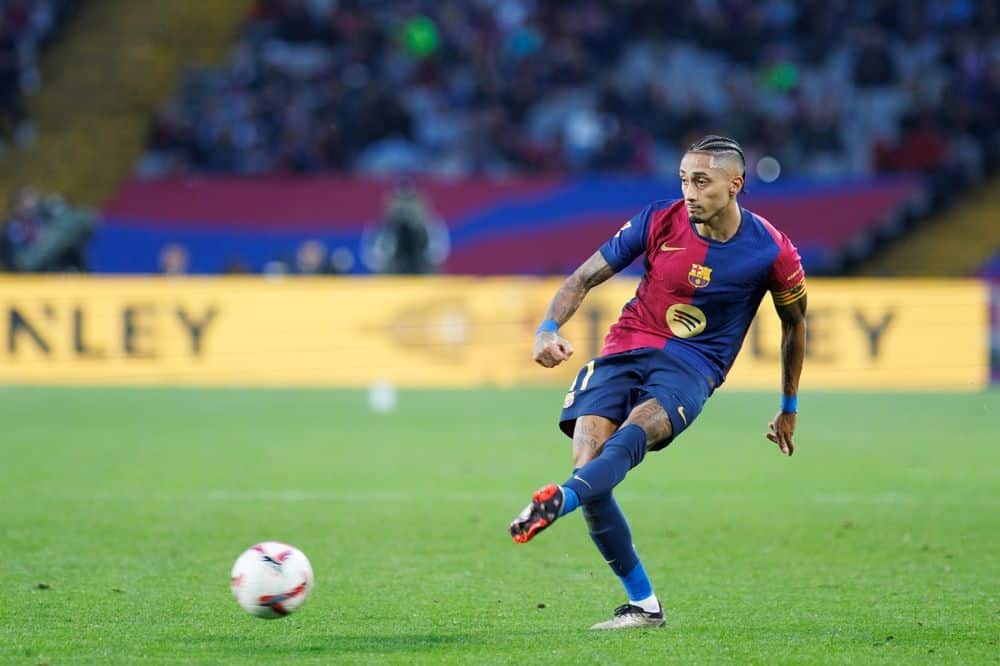
Striker Raphinha is officially out of Barcelona’s next commitment for the Spanish championship. The player did not participate in this Thursday’s collective training session and was banned by the medical department for the match against Mallorca, due to an overload in the adductor muscle of his right leg, felt during the match against Elche.
The athlete’s absence represents a significant tactical challenge for coach Hansi Flick, who now needs to find alternatives to maintain the team’s firepower. The technical committee is working with different options to compose the offensive sector, seeking a formation that minimizes the impact of the lack of its main scorer from last European season.
Frame it.pic.twitter.com/oDVuhFmsJ4
— FC Barcelona (@FCBarcelona)February 5, 2026
The club’s priority is the player’s complete recovery, avoiding any risk of worsening the injury. The athlete will follow a schedule of intensive treatment and physiotherapy, with his return to the field subject to full approval from doctors, without a previously stipulated date for his return.
Clinical assessment and care of the athlete’s muscles
In recent statements, technician Hansi Flick emphasized that caution is the watchword when treating Raphinha. The German coach highlighted that the season has been marked by an intense sequence of games, which increases the physical strain on the squad and requires careful management of each player’s minutes. The history of minor injuries serves as a warning that the attacker should not return before being in ideal condition, especially with decisive phases of other competitions approaching.
The recovery process involves meticulous monitoring, with periodic imaging exams and progressive load tests to evaluate the muscle’s response to stimuli. The Catalan club’s health team defined a plan based on active rest and specific strengthening exercises for the affected region. The daily evolution of the player’s clinical condition will be the main factor in determining the next steps and the transition to on-field training.
Performance and importance in the Catalan squad
The concern about Raphinha’s absence is justified by his impressive numbers and his technical influence since arriving at the club. In 166 matches played with the Barcelona shirt, the Brazilian striker accumulated 67 goals and 56 assists, consolidating himself as one of the team’s main offensive references. Sua capacidade de decisão ficou evidente na última campanha continental, na qual se sagrou o maior goleador do torneio com 13 gols marcados, além de liderar o ranking de assistências com oito passes decisivos. Sua tactical versatility offers the Hansi Flick multiple formation options, a quality difficult to replicate with available spare parts. His leadership on the field and his strong connection with the fans make him a fundamental part of the club’s ambitions for titles.
Other absences in the medical department
Barcelona is facing a delicate moment with its medical department, which works with several important athletes in recovery.
In addition to Raphinha’s situation, midfielder Gavi continues his long rehabilitation process after complex knee surgery.
Defender Christensen, treating a hamstring injury, and midfielder Pedri, who is carrying out individual muscle rebalancing work, are also confirmed absences.
This concentration of casualties has forced the coaching staff to integrate young people from the youth teams into the main team’s training to fill the gaps.
Expectations for the draw of Copa of Rei
In parallel with the challenges in the national championship, the club directs its attention to the draw for the semi-finals of the Copa of the Rei, which will take place this Friday. The classification obtained over Albacete in the previous phase brought momentary relief, but the definition of the next opponent increases the need to have the squad as complete as possible.
The board and technical committee hope that, by the time of the decisive cup games, some of the injured players will already be able to compete at a high level. A bigger opponent in the draw could intensify the pressure on strategic planning and squad rotation in the coming weeks.
Constant monitoring in training
The routine in the Barcelona sports city has been strict monitoring to prevent new injuries. Cada athlete uses a GPS device that measures displacement and intensity exerted during activities.
This data was crucial for the decision to replace Raphinha at halftime of the game against Elche, an action that avoided a more serious muscle injury, such as a fiber rupture.
For available players, training continues at high intensity, focusing on tactical fundamentals such as ball possession and post-loss pressure, concepts required by Hansi Flick to maintain the team’s competitiveness.
Tactical adjustments for the next clash
Without Raphinha’s speed and dribbling ability from the wings, Barcelona’s strategy against Mallorca must be changed. The tendency is for the team to adopt a more centralized approach, seeking control of the midfield to dictate the pace of the match and avoid exposure to counterattacks.
Players like Lamine Yamal take a greater role in creation, being the main bet to break the opponent’s defensive lines with individual plays. The defensive recomposition will also require a more disciplined positioning from the full-backs to compensate for the lack of defensive work from the Brazilian striker.



