
Comet 3I/ATLAS impact simulation in Madrid reveals scenario of destruction with millions of victims

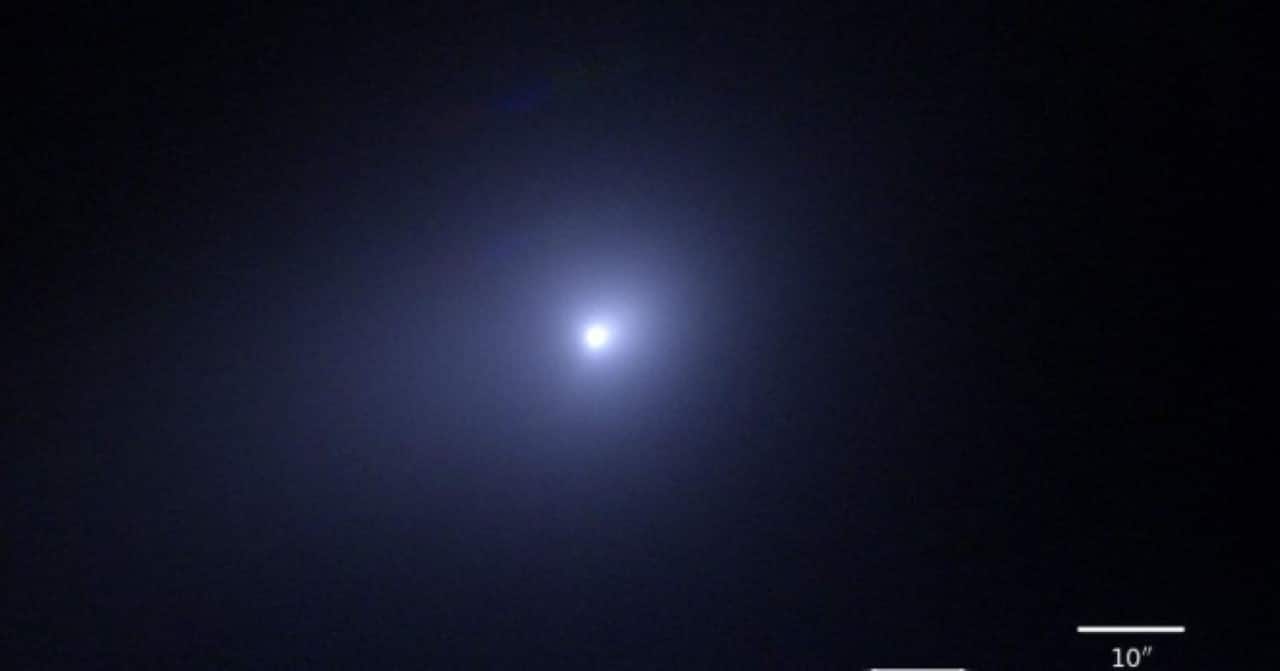
A hypothetical simulation details the catastrophic consequences that would occur if the interstellar comet 3I/ATLAS, a real object traversing our solar system, collided with a densely populated urban area like Madri. Embora space agencies, including NASA, ensure that the comet’s trajectory does not pose any threat to Terra, the popularization of online tools such as Asteroid Launcher allowed the public to visualize an extreme impact scenario, generating broad discussion about the importance of planetary defense programs.
Comet 3I/ATLAS was discovered in July 2025 and has since been the subject of intense scientific study due to its origins outside our solar system. The simulation, which uses known physical data from the comet, projects a mass destruction event, with the formation of a crater kilometers in diameter and a shock wave capable of devastating structures and causing an alarming number of victims within a radius of tens of kilometers. The virtual exercise, although fictional, serves as a powerful reminder of the energy contained in celestial bodies that travel through space.
Scientific analyzes of 3I/ATLAS continue, with telescopes such as Hubble and James Webb Space Telescope (JWST) collecting valuable data on its composition and behavior. The comet’s safe passage, at a minimum distance of approximately 1.8 astronomical units from our planet, offers a unique opportunity for science, but public interest has turned to the dramatic “what if” proposed by the simulators.
Discovery and trajectory of the interstellar visitor
Comet 3I/ATLAS was first identified on July 1, 2025, by the ATLAS astronomical survey system at Chile, appearing as an 18th magnitude point of light moving rapidly across the southern sky. Subsequent Observações allowed astronomers to calculate its orbit, which turned out to be hyperbolic, with an eccentricity greater than 6. The Essa characteristic is the definitive signature of an object that is not gravitationally bound to the Sol, confirming its interstellar origin and ensuring that it will leave our system after its passage.
The object’s trajectory was accurately mapped, indicating that its closest point to Sol, perihelion, occurred on October 29, 2025, at a safe distance of 1.356 astronomical units, beyond the orbit of Marte. Its excessive hyperbolic speed of 58 km/s is the highest ever recorded for an interstellar visitor, suggesting an origin in an ancient region of Via Láctea, possibly billions of years ago, before it was ejected on its cosmic journey.
Physical characteristics of comet 3I/ATLAS
Estimates of the size of the 3I/ATLAS core vary, with analyzes indicating a diameter of between 0.5 and 5.6 kilometers. Dados’s latest space telescopes Hubble and JWST point to a most likely size of about 2.6 kilometers, a mass considerably greater than that of previous interstellar visitors such as ‘Oumuamua and 2I/Borisov.
The comet demonstrates intense activity, with a coma (the atmosphere around the nucleus) rich in carbon dioxide and a notable presence of methane, as well as water vapor and atomic nickel. The high ratio of CO2 to water suggests that it formed in a very cold region of its original star system, beyond the so-called “ice line”.
Spectroscopic observations revealed that the comet began outgassing at surprisingly large distances from Sol, activating when it was 6.4 astronomical units away. Suas tails of ions and dust already extend for hundreds of thousands of kilometers, creating a spectacle for observatories.
The impact simulation on Madri
Using the online tool Asteroid Launcher, developed by Neal Agarwal, users configured a collision scenario to visualize the effects of a direct impact on the Spanish capital. The parameters inserted in the simulation were based on approximate data from 3I/ATLAS, although adjusted for an extreme event.
For the exercise, an object with 440 meters in diameter was considered, composed of cometary material (ice and rock) and traveling at a speed of 246 thousand km/h. The chosen point of impact was the iconic Puerta del Sol, in the heart of Madri.
The initial result projected by the model would be the instantaneous creation of a crater 3.8 kilometers in diameter and 439 meters deep. The energy released on impact would be equivalent to 826 megatons of TNT, a force that far exceeds the combined capacity of all the world’s nuclear arsenals.
Immediately after the collision, a shock wave would generate a deafening boom of 242 decibels, causing instant fatalities across a wide area. Ventos extremes would reach speeds of up to 4 kilometers per second, capable of pulverizing buildings tens of kilometers away from ground zero.
Devastating consequences in the hypothetical scenario
The simulation details a cascade of destruction that would follow the initial impact. Instant vaporization would annihilate central neighborhoods like Centro, Salamanca and Retiro. The main shock wave would cause severe lung damage within a radius of 18 kilometers, affecting neighboring municipalities such as Getafe and Leganés. At a distance of up to 15 miles, ruptured eardrums would be a common injury among survivors, while entire buildings would collapse within a radius of up to 25 miles. Além In addition, the impact would generate an earthquake of magnitude 6.4 on the Richter scale, increasing structural destruction and causing widespread collapses. Apenas the wave of hot air and pressure, known as “air blast”, would be responsible for more than 1.7 million fatalities. Embora Although the scenario is terrifying, statistically, impact events with objects of this size occur, on average, every 30 thousand years, which reinforces the importance of continuous sky monitoring systems.
The rare January 2026 lineup
A significant astronomical event occurred between January 19 and 26, 2026, when comet 3I/ATLAS positioned itself in a particular configuration, almost directly between Terra and Sol. Essa opposition geometry offered scientists a unique opportunity to study in detail the albedo (reflectivity) and structure of the comet’s surface.
During this period, space telescopes, such as TESS, monitored the object’s brightness variations, which made it possible to estimate its rotation period at approximately 15 to 16 hours. The low-angle phase facilitated observations that are rare and difficult to repeat, providing crucial data for understanding the nature of interstellar bodies.
Scientific mobilization for observation
The passage of 3I/ATLAS mobilized resources from several space agencies and observatories around the world. Telescópio Espacial Hubble captured images of the comet in July and November 2025, while JWST analyzed its chemical composition in August and December of the same year. Ongoing Missões spacecraft, such as Psyche, Lucy and Europa Clipper, have also recorded the comet from their unique vantage points in the solar system, contributing valuable data to a global analysis.
Importance for planetary defense
The safe passage of comet 3I/ATLAS, as predicted by monitoring systems, highlights the effectiveness of programs such as ATLAS itself and NEOWISE, coordinated by NASA to catalog objects close to Terra (NEOs) that could pose a potential risk. Cada detection and tracking improves humanity’s predictive models and responsiveness.
Beyond safety, studying visitors like 3I/ATLAS offers a window into the chemical makeup of other planetary systems. Sua anomalous composition, rich in volatiles, suggests a chemical diversity in the universe that goes beyond what is observed in our own solar system, helping scientists to refine models of planet and comet formation.



