
Fire at Darmstadt GSI center indefinitely postpones FAIR particle accelerator tests

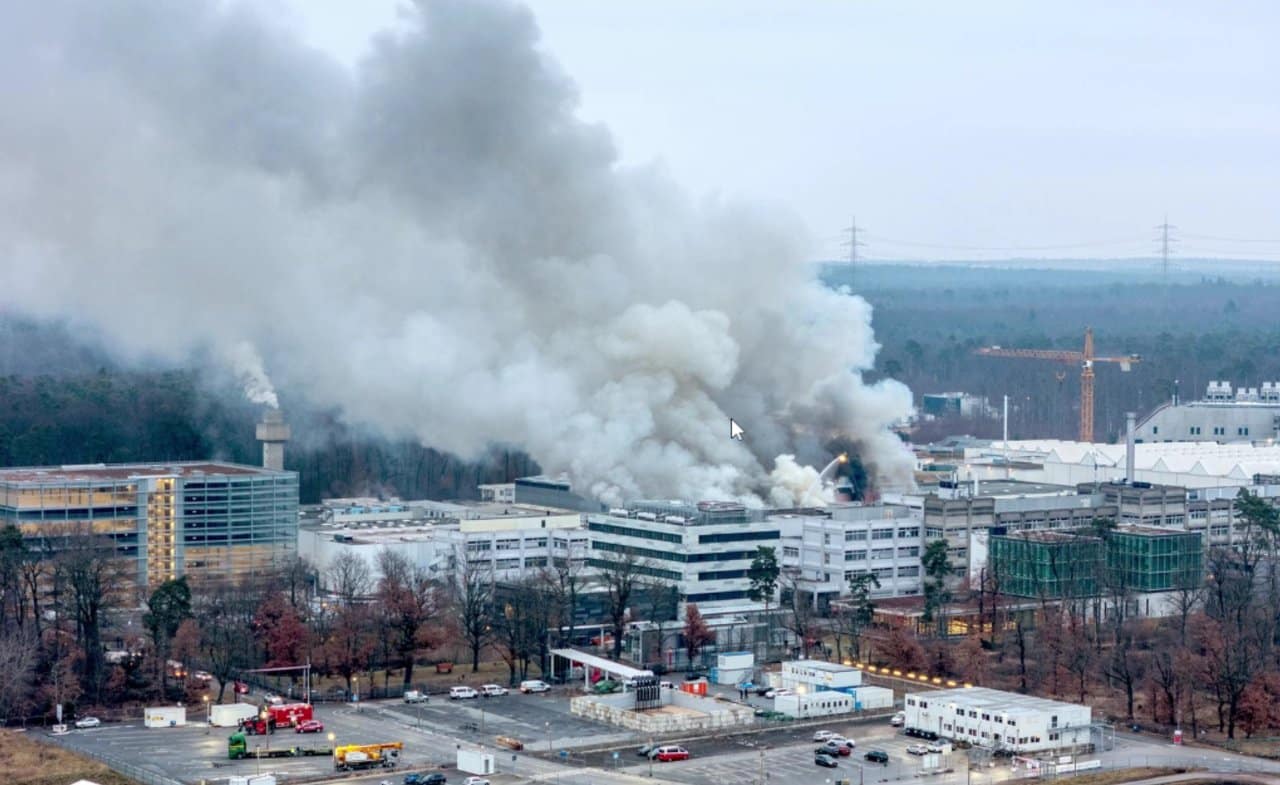
A vast fire that broke out in October 2023 at Centro of Pesquisa of Íons GSI, located at Darmstadt, The incident mobilized a large contingent of firefighters and had wide repercussions for the multimillion-dollar project, considered vital for international scientific research. The interruption compromises the agenda of a €4.3 billion undertaking, with a direct impact on the scientific community and expectations for advancement in the study of matter and the universe.
Equipment surrounding the Unilac linear accelerator, essential for providing the particle beam to FAIR, was severely damaged by the fire. Esta stoppage prevents the continuity of commissioning work, which had already been planned with great expectations for the following years. The minister of Ciência of Hesse,
Incident and emergency mobilization
The fire alert in the district of Wixhausen, in Darmstadt, was issued at around 6:30 am on a Thursday in October 2023, triggering a major operation by the fire department. An immense column of smoke could be seen from kilometers away, generating concern among residents of nearby areas. Cerca of 130 firefighters, with the support of teams from the districts of Darmstadt-Dieburg and Groß-Gerau, as well as factory fire brigades, worked tirelessly to control the flames.
The quick and coordinated response prevented the scenario from becoming even more critical. The authorities advised the population of Wixhausen, Weiterstadt and Erzhausen, through the Mowas alert system, to keep doors and windows closed and to turn off ventilation systems. Posteriormente, the alert was extended to other areas such as Mörfelden-Walldorf, Egelsbach, Raunheim, Kelsterbach, the Aeroporto of Frankfurt and parts of Felizmente, no injuries were reported during the incident, and no hazardous materials were released.
Direct impact on the FAIR accelerator
The FAIR project, one of the largest and most complex ion physics research facilities at Europa, is critically dependent on Unilac for its initial operation. Este linear accelerator is the “gateway” for particles that will later be accelerated in FAIR’s main ring, allowing cutting-edge experiments that seek to recreate conditions similar to those at the beginning of the universe. The destruction of the infrastructure around Unilac means that this fundamental step cannot be carried out as planned, delaying the entire schedule.
The stoppage of Unilac resulted in the indefinite postponement of the testing phase, initially scheduled for December 2025. GSI’s Fontes confirmed that the exact extent of the damage still required meticulous assessment after firefighters concluded the operation. Esta evaluation, which lasted for months, revealed the need for complex and time-consuming repairs, profoundly impacting the project schedule.
Delays in the completion and commissioning of FAIR are expected to extend for several years. Current estimates, considering the year 2026, point to a possible inauguration only between 2028 and 2030.
Official reactions and repercussions
The news of the fire and its consequences generated a wave of concern in the scientific and political community. The Centro GSI, through its spokespeople, described the situation as “dramatic”, underlining the seriousness of the incident for the continuity of its operations and for the FAIR project. The nature of the research carried out at GSI, focused on fundamental questions in physics and astrophysics, makes any interruption a significant setback to the advancement of knowledge.
The city of Essa measure demonstrated the commitment of local authorities to manage the situation and support the community affected by concerns about safety and the environmental impacts, even if temporary, of the smoke generated by the fire.
Even though FAIR’s main construction site was not directly hit by the flames, the interdependence between the installation’s components is crucial. The fire brigade operation commander, Christian Wagner, reiterated that the fire was contained in an industrial building, where offices and various equipment, including parts of Unilac, were affected. The integrity of FAIR’s main accelerator, although preserved, depends on the functionality of its supporting infrastructures, which suffered the damage.
The international scientific community has been closely monitoring developments, awaiting new information on recovery deadlines and the possible revision of the experiment schedule. FAIR is a collaborative project, involving multiple countries, and its delays imply readjustments for many researchers and partner institutions. Expectations now focus on recovery efforts and the search for solutions that minimize the long-term impact.
Details of damages and deadlines
The fire, whose cause initially remained undefined, was investigated to determine its exact origin. Those responsible for GSI confirmed that the site was evacuated and isolated immediately after the fire started, ensuring the safety of all employees, who were released to return home. The immediate priority was safety and fire control, followed by a thorough damage assessment.
GSI technical teams, in collaboration with external experts, performed an in-depth analysis of the damage to the Unilac infrastructure. The destruction of electrical systems, control cables and other support facilities requires complex and precise reconstruction work. Este process not only involves replacing equipment, but also rigorously verifying the safety and functionality of the entire system before operations can resume.
Research at GSI and the future of FAIR
The Centro Helmholtz of Pesquisa of The FAIR project, which will have the capacity to subject matter to extreme conditions similar to those that existed in the earliest moments of the universe, is the next generation of this research, promising innovative discoveries. The magnitude of the project and its scientific potential justify the efforts to overcome the challenges posed by the incident.
Even with the delays, the determination to complete and operate FAIR remains unwavering. The global scientific community eagerly awaits the results that the facility will provide. Research at GSI has already contributed significantly to particle physics, including the discovery of new superheavy elements. The future of FAIR, despite the setbacks, remains a promise of unprecedented advances in the field of fundamental physics.
Security measures and community support
The firefighting operation lasted a considerable period, with firefighters expecting it to be completed only at the end of that Thursday. The complexity of the industrial environment and the need to guarantee the total safety of the area after the incident required a prolonged effort from emergency teams. The immediate evacuation of the site was a crucial factor in ensuring that there were no casualties.
GSI and local authorities reinforced security procedures and community support, demonstrating the importance of effective communication and coordination between different bodies. The focus on the safety of workers and the surrounding population was a priority from the outset, minimizing risks and ensuring that information was made available in a clear and objective manner.



