
Lando Norris and Gabriel Bortoleto point out similarities between new Formula 1 cars and Formula 2

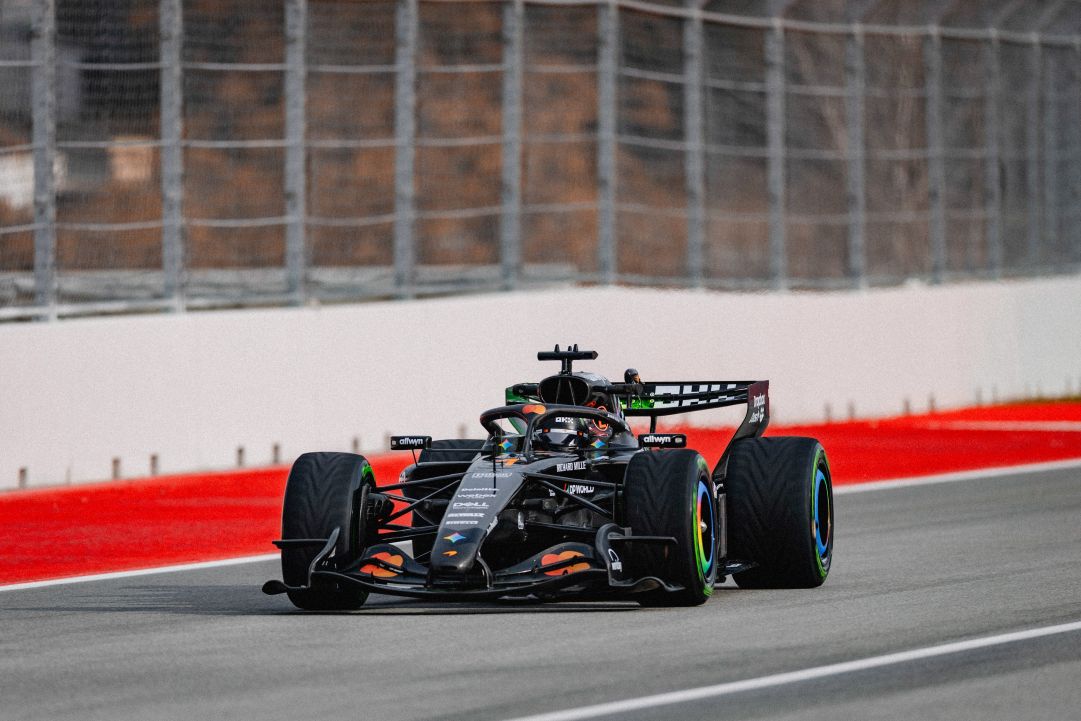
The British driver Lando Norris, current world champion of Fórmula 1, concluded two days of intensive testing with the new MCL40 on the Barcelona circuit, at Durante pre-season sessions held this week, the McLaren owner shared his first impressions of the handling and dynamic behavior of the machines debuting under the new technical regulations. The driver’s verdict highlighted significant changes in the way competitors must approach corners and power delivery on the track.
The technical analysis of Ele highlighted that although the high-speed corners in Barcelona offer an initial panorama, the real challenge will come on street circuits and uneven surfaces.
The new 2026 cars feature reduced dimensions and a lower total weight compared to previous generation models, and also incorporate active aerodynamic systems. The power unit has undergone a radical transformation, with almost half of the energy being generated electrically, which drastically changes the overtaking and defense strategy. Lando Norris emphasized that full understanding of the project will only occur in the next tests scheduled for Bahrein, where weather conditions and asphalt are more representative.
- Reduction in chassis size to increase agility on winding sections.
- Implementation of active aerodynamics to optimize drag on straights.
- Significant increase in dependence on electrical energy in the power unit.
- Change in riding style to compensate for the lower constant aerodynamic load.
Looking good,@ArrowMcLaren🤩https://t.co/D71N3ETwHs
— McLaren Mastercard Formula 1 Team 🧡 (@McLarenF1)February 4, 2026
Convergence of opinions between Lando Norris and Gabriel Bortoleto
Norris’s statements echo the impressions left by Brazilian pilot Gabriel Bortoleto, who also participated in track activities on the first day of testing in Barcelona. Bortoleto, who makes his definitive transition to the main grid, used similar terms to describe the sensation inside the cockpit, highlighting that the new regulations create a technical abyss in relation to what was seen in 2025. The young talent highlighted that the corner exit speed, driven by the 50% electric motor, is one of the most impactful points of the new era.
Both drivers agree that, despite appearing slower in nominal terms of initial lap time, the technological complexity is superior. Gabriel Bortoleto explained that adaptation is necessary, but that the essence of a racing car remains, requiring only a fine adjustment of sensitivity. Para the Brazilian, the transition between the base categories and the new F1 can become more intuitive due to these shared mechanical characteristics, although the raw power of the hybrid unit still places the F1 on an isolated level.
Response from the international federation on machine performance
Federação Internacional of Automobilismo reacted promptly to comments comparing the performance of the motorsport elite with the access series. Nikolas Tombazis, the entity’s director of single-seaters, stated that suggestions that the pace would be equivalent to that of the Fórmula 2 are technically incorrect and hasty. Ele explained that it is natural for the beginning of a regulatory cycle to present turnaround times slightly higher than those at the end of the previous cycle, aiming for gradual and safe development.
The organization’s strategy is to enable teams to regain performance through aerodynamic and mechanical development over the years. Tombazis reinforced that it would not be beneficial for the sport to start a new regulation by surpassing track records set by refined cars for half a decade. Segundo the driver, the time difference compared to the 2025 cars should decrease drastically once engineers understand the operating windows of the new components.
Time references and comparisons in Barcelona
During the tests carried out on the Spanish track, Lewis Hamilton set an unofficial benchmark of 1min16s348 with the new Ferrari model. Esse’s record was approximately five seconds slower than the pole position recorded in Grande Prêmio from the previous year’s Espanha, reflecting the early stage of data collection. On the other hand, the best time for the Fórmula 2 on the same circuit in 2025 was 1min25s180, which demonstrates a margin of almost nine seconds ahead of the main category.
Experts indicate that the asphalt will be in much better condition during the European summer, which should naturally reduce lap times. The current debate focuses much more on the driver’s agility and “feeling” than on the final speed in a straight line. Nomes, like Oscar Piastri and
Structural changes and new active aerodynamics
Engineers from McLaren and other teams are working to optimize the integration between the combustion engine and the energy recovery system. The massive use of the electrical part requires the driver to manage overtaking buttons and commands in a much more tactical way than in previous years. Norris mentioned that torque delivery is immediate, which can unbalance the car if the accelerator pedal is not applied accurately when exiting slow curves.
Active aerodynamics, which adjusts the front and rear wings in real time, aims to reduce aerodynamic drag to compensate for the loss of power that occurs when batteries run out on long straights. The Esse system is one of the greatest innovations in the history of the Fórmula 1 and requires extremely sophisticated software programming. The objective is to ensure that the car has maximum grip in curves and minimum resistance on straights, balancing the energy efficiency of the hybrid package.
Perspectives for the pre-season sequence at Bahrein
The next stage of preparation will take the grid to Circuito Internacional of Sakhir, where high temperatures and an abrasive track will test the reliability of the new engines. Norris believes that the definitive answers about the MCL40’s potential will come in the desert heat, where the batteries’ thermal management will be pushed to the limit. The Brit remains optimistic, reiterating that McLaren has the necessary resources to refine the project before the official opening of the championship.
The Woking team’s focus now turns to analyzing the data collected in Barcelona to adjust the chassis balance. The comparison with Fórmula 2, although technical, serves as a warning for designers to seek to recover the stability that characterized the 2022-2025 generation. The challenge will be to maintain the agility praised by some without sacrificing the downforce necessary to maintain the cornering speeds that define the visual identity of the modern Fórmula 1.
Adaptation of veteran and novice pilots to the new system
The 2026 season grid has an interesting mix of experienced champions and young talents fresh out of the academy. For Para veterans, the change represents a return to smaller car concepts, while for newcomers like Gabriel Bortoleto, the transition seems less drastic due to the technical proximity to the machines they recently drove. Essa early parity could result in a surprising start to the season, with lesser-rated names adapting faster to the new electrical controls.
Lando Norris reinforced that learning is constant and that no pilot can consider himself completely comfortable at the moment. The new power unit requires different logical thinking during the race, focusing on economy and intelligent energy expenditure to ensure competitiveness during the final laps. The expectation is that Bahrein will reveal not only who has the fastest car, but who managed to develop the most efficient software system to manage the electrical complexity of 2026.





